

Tennis String Gauge: 1.20, 1.25, 1.30, 1.35 mm
Gauge is the number a string buyer thinks about last and should think about first. It sets the trade between durability and feel more directly than material does, because it changes the cross-section that has to survive contact and the amount of material available to deform and snap back.
What the numbers describe
Gauge is diameter in millimetres, usually written in hundredths: 1.20, 1.25, 1.30, 1.35. Thinner string stretches more at impact, which produces more feel and more power at the same tension, and it also wears through faster at the intersections. Thicker string does the opposite on both counts.
That is a straight line, not a set of tiers. There is no “better” gauge, only a gauge matched to how often the player breaks string and what they are willing to pay for feel.
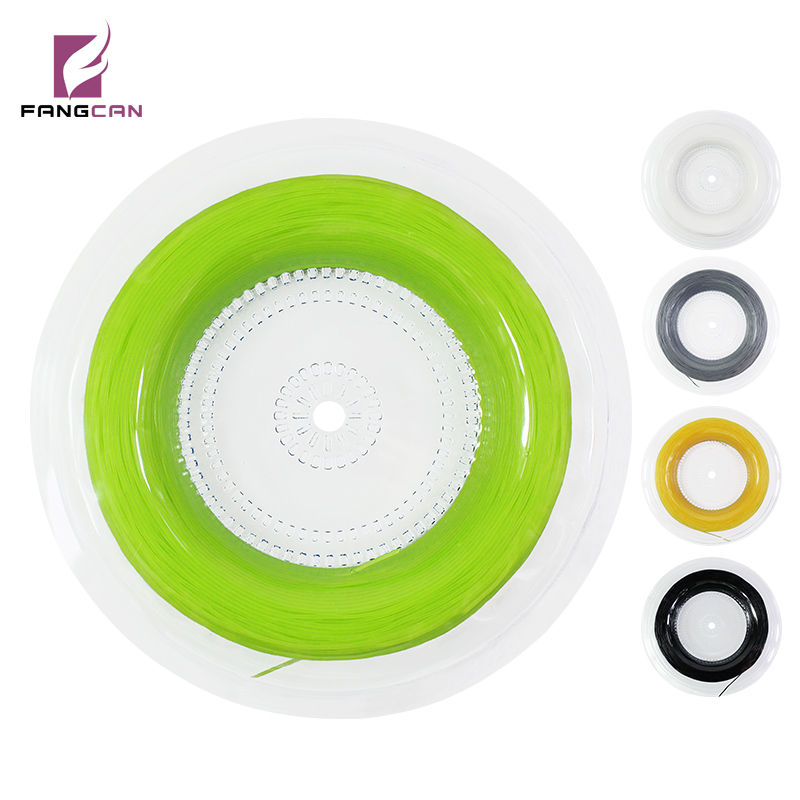
Where the break-even sits
The economics are simple arithmetic that most shops never do. A thinner gauge may cost the same per set and last half as long, which doubles the cost per hour of play. A thicker gauge that lasts twice as long at the same price is cheaper in use, even though it feels worse.
So the honest recommendation depends on one question: how often does this player break string? Weekly breakers should be on the thick end. Players who cut string out because it has gone dead should be on the thin end, because durability is irrelevant to them and feel is the whole purchase.
Texture and the rough finishes
Rough or textured string adds friction against the ball, which some players want for spin and which wears marginally faster against itself. The practical difference in play is smaller than the marketing suggests, and the practical difference in string life is real: a rough string at a thin gauge is the shortest-lived combination in the category.
For procurement, texture is a specification to be consistent about rather than a claim to make. A rough finish that varies batch to batch is a quality problem even when the string plays fine.
Reels, sets and the shop’s own habit
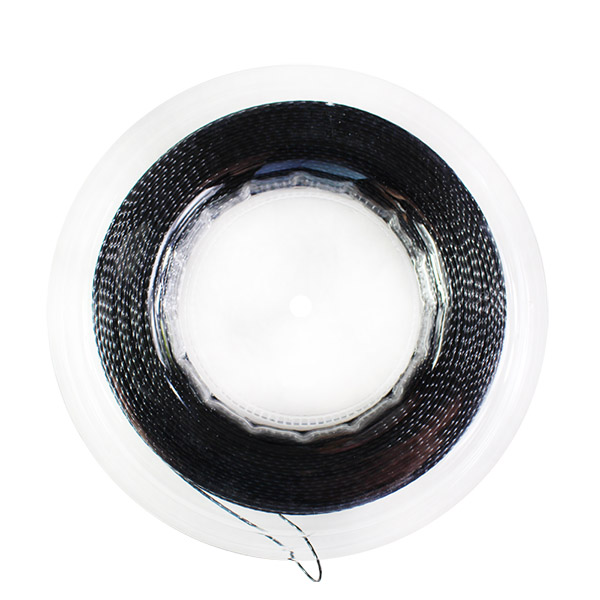
Gauge choices multiply quickly: four gauges across two constructions is eight lines before colours are considered. Most shops need two, split by customer type rather than by inventory logic: one thick durable line for breakers, one thin line for players who restring on feel.
Reels only make sense for the gauge that actually gets used. A reel of a thin gauge bought for a customer who asked once will sit and age, which is a worse outcome than paying the set premium.
What to put on the purchase order
- Gauge in millimetres, with a tolerance: string is extruded, not machined.
- Construction, stated precisely: monofilament, multifilament, or a hybrid component.
- Surface finish, smooth or rough, and how it is produced.
- Reel length and whether it is measured under tension.
- Colour, if it matters, and colour fastness.
- Recommended tension range, since gauge and tension interact.
Two lines cover most of the market, and they can be sold with a rule the customer remembers: thick for breakers, thin for feel. The 1.35 mm training line is the durable end of that rule; the harsh polyester sits at the performance end.
Both belong in the quotation with their reel cost visible, because the difference between them is a per-hour-of-play number rather than a per-set price, and that is the number a club buyer can actually defend.
Hybrid setups and gauge mixing
Hybrid stringing, one gauge or one construction in the mains and another in the crosses, is where gauge choice stops being a single decision. A thick main with a thin cross gives durability where the string wears and feel where it contacts, and it is the most common way experienced players spend their way out of the durability trade.
For a shop, hybrids are also a way to sell two reels instead of one, and to use up a thin gauge that would otherwise age on the shelf.
Tension and gauge together
A thinner gauge at the same tension plays softer and breaks sooner; raising the tension to compensate restores some control and shortens life further. The interaction is not linear, and the practical rule is to change one variable at a time, gauge first then tension, and to write down what was done.
Common mistakes on this specification
- Buying the thickest gauge “because it lasts”, then losing the feel sale.
- Stocking four gauges and turning over none of them.
- Treating a rough finish as a claim rather than a specification.
- Assuming a reel is cheaper without checking turnover.
- Recommending tension without reference to gauge.
The pair of rules that survives all five: thick for breakers, thin for feel, and one reel per rule.
The honest summary for a buyer: gauge is the fastest variable to change and the easiest to over-complicate. Two lines, one rule, written on the wall.
Buyers who restring on feel should be told plainly that their gauge will break more often: that is the purchase, not a defect.