

Overgrip Incoming Inspection and Shelf Life
An overgrip has a shelf life, and it is shorter than most buyers assume. Two things shorten it: adhesive that dries out, and polyurethane that hardens or discolours with heat and light. Both are invisible in a sealed carton and obvious in the hand six months later — which is why incoming inspection and storage conditions belong in a purchasing spec, not in a warehouse SOP nobody reads.
Incoming inspection: three checks that take ten minutes
One: thickness, per batch, with a gauge. The stated figure — 0.65 mm is a common performance baseline — is a nominal value with a tolerance. Measure a few strips from the middle of the carton, not the top layer. A batch that runs thin at the centre is a batch that will feel different to the customer.
Two: tack, by hand, against a reference. Keep one strip from the approved sample as a reference. Press a new strip and the reference between thumb and forefinger; if the new one is noticeably slicker or tackier, the surface treatment has drifted. This is a crude test that catches a real problem faster than a spec sheet.
Three: roll, adhesive and finishing tape. Check that the roll diameter is consistent, that the backing adhesive releases cleanly without lifting the strip’s edge, and that finishing tape is present, colour-matched and included in the count per carton.
If a batch fails any of the three, quarantine it before it reaches the shelf. Mixing a drifted batch into existing stock is how a supplier acquires a reputation problem it cannot trace.
Storage: what actually degrades a grip
- Heat. A container or a warehouse roof in summer will exceed 45 °C. Polyurethane softens and adhesive migrates; a batch stored hot can arrive looking fine and feel wrong.
- Direct sunlight. UV discolours light colours first, which is exactly the range that sells on colour.
- Humidity extremes. Damp promotes mould in paper cores and packaging; very dry conditions embrittle the adhesive.
- Compression. Stacked cartons deform rolls and can fuse adjacent strips in the pack.
The practical rule: a cool, dark, dry store, cartons off the floor, and no long-term stacking higher than the carton is designed for.
Shelf life, and how to manage it
As a purchasing rule, plan on using overgrips within 12 months of production and treat anything past 18 months as inspection-required before it goes out. Ask the supplier for the production date on the carton — not the shipping date — and for a batch code that lets you trace back if a complaint cluster appears.
Two habits make that workable:
- First in, first out, by production date rather than by arrival date. The two differ whenever a shipment sat at a port.
- Buy to the season, not to the discount. A larger order at a lower unit price is a false saving if a third of it is still on the shelf next year and has to be inspected strip by strip.
If a batch does drift
Drift happens; what matters is whether it can be traced. With a production date and batch code on the carton, three responses become possible:
- Quarantine and re-check the affected batch against the retained sample before deciding whether it ships.
- Segregate it from existing stock so a single bad run cannot contaminate the shelf — and so complaints can be matched to a batch rather than to the whole range.
- Feed it back to the supplier with the reference strip, rather than with a description. “Slicker than the retained sample” is actionable; “not as good as before” is not.
What to write into the purchase order
- Nominal thickness and tolerance, with the measurement method named.
- Production date on the carton and a batch code traceable to the run.
- Finishing tape, colour-matched, counted, and listed as a line item.
- Packaging format — bag, header card or bulk — stated at order stage, not at shipping.
- Storage and transport note: keep below a stated temperature and out of direct sun.
None of these clauses cost money at the order stage. All of them cost money later if they are missing.
Talking to a supplier about it
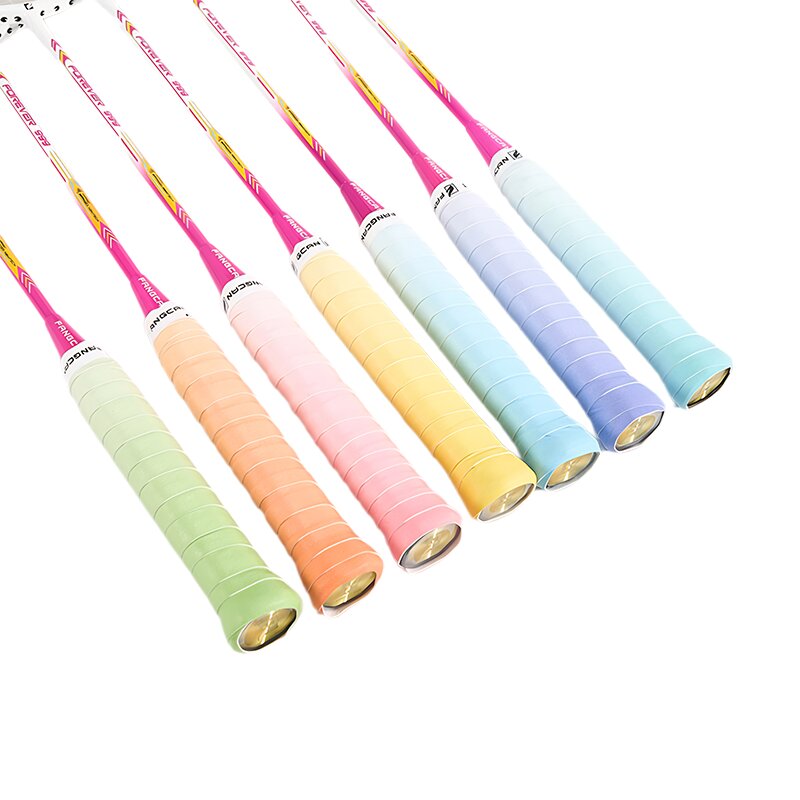
We produce PU overgrips — including seven stocked colourways at 0.65 mm, 1100 × 25 mm, with colour-matched finishing tape — and we put production date and batch code on the carton as standard. If you are writing an incoming-inspection clause or want to discuss how a batch is packed for long storage, send us your current specification and we will mark it up.
For the specification decisions that come before this — material, thickness, surface and colour coverage — see the overgrip sourcing guide.
Notes
- Shelf-life figures above are purchasing guidance, not a manufacturer’s warranty statement; confirm the warranty terms in your own supply agreement.
- Specifications quoted are product parameters.