

Small-Ticket Accessories: Where Your Margin Actually Leaks
Ask a distributor what a grip costs and you get a unit price. Ask them what a grip costs to sell and the conversation changes: the price on the invoice is only the first of four numbers, and on small-ticket accessories it is rarely the one that decides whether the range makes money.
This piece is about the other three. No platform dashboards, no store-level figures — just the arithmetic a buyer controls before the goods ever ship, and the places where margin quietly leaves on low-value items.
Four numbers, not one
One: unit cost. The invoice price. It is the number everyone negotiates and the one with the least room to move once a specification is fixed.
Two: the cost of making the item sellable. A grip that arrives with its own colour-matched finishing tape is a retail unit. One that arrives without it forces the buyer to source, pack and label tape separately — a cost that never appears on the grip’s invoice but lands in the same margin. The same logic covers polybag, header card, barcode sticker, and the labour to apply them.
Three: the cost of the order size being wrong. Minimum order quantity is not a purchasing convenience, it is a risk transfer. A large MOQ on a slow colour converts working capital into shelf stock; a small MOQ on a fast colour converts it into repeated air freight. Both are margin, and neither shows up in a unit price comparison.
Four: the cost of a defect. On a low-ticket item, one complaint can consume the margin of a dozen good units. Packaging that prevents crushed cores and lifted adhesive is therefore not cosmetic — it is the cheapest defect insurance available.
On a high-ticket product, unit cost dominates and the other three are noise. On a grip, a sock or a shuttle, all four are the same order of magnitude. That is the whole difference, and it is why price-only comparisons between suppliers mislead on accessories more than anywhere else.
Where small-ticket ranges actually leak
Packaging as an afterthought. Buyers often specify the product and leave the pack to the supplier’s default. The result is a unit that has to be repacked locally, or one that arrives looking improvised and sits at the back of the shelf. Fixing this at the specification stage costs a fraction of fixing it downstream.
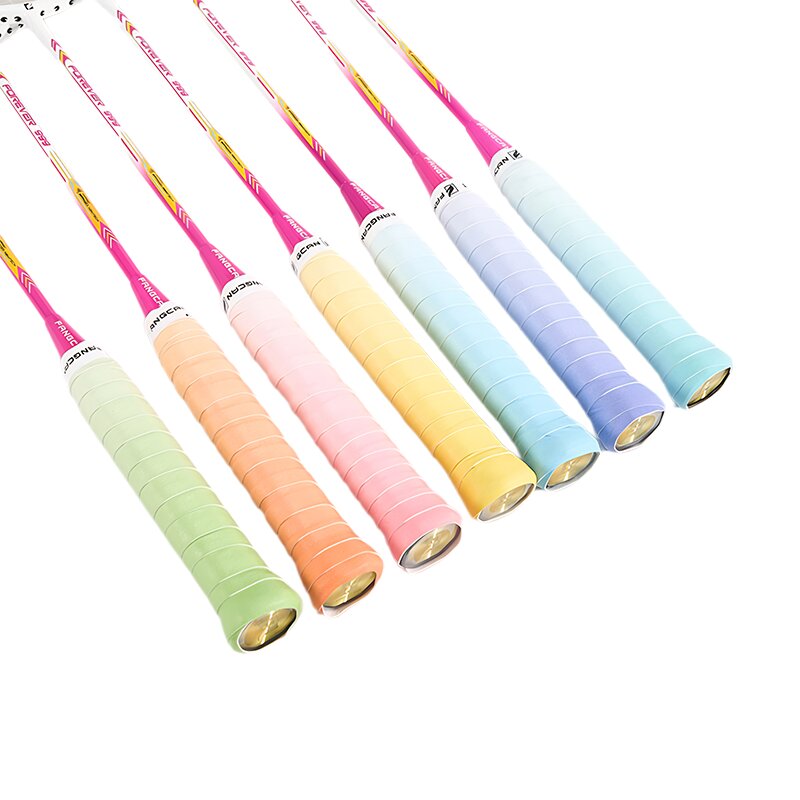
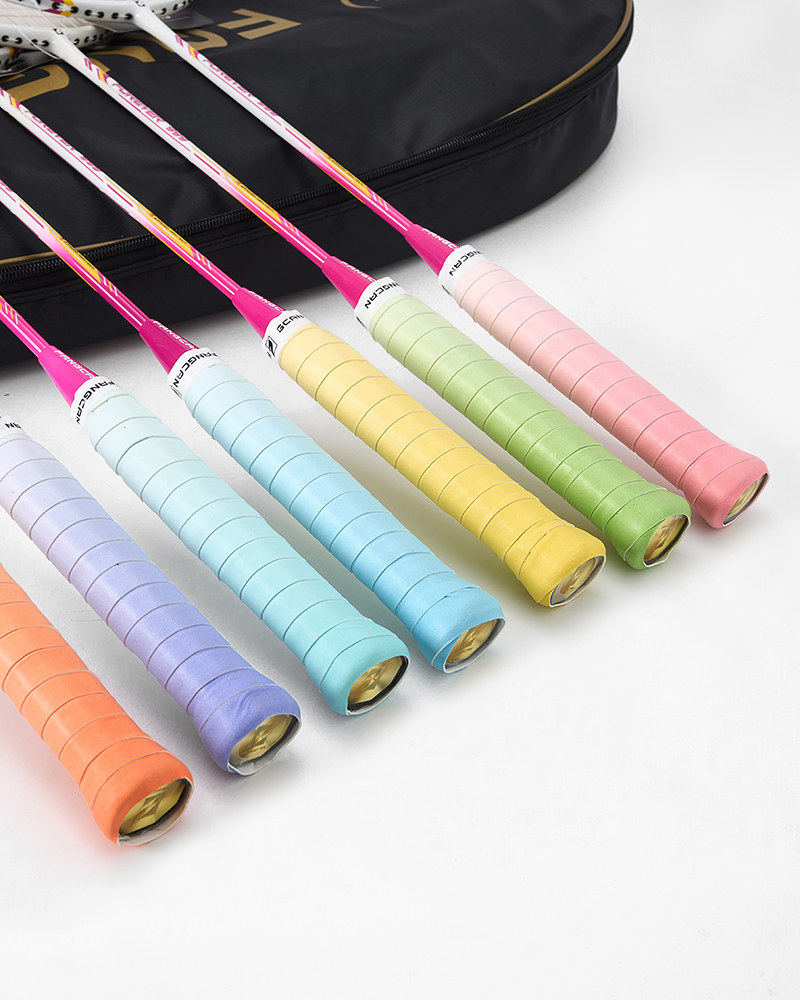
Colour breadth without stock behind it. A seven-colour range is a merchandising decision that only works if all seven exist as real, separate SKUs with stock. If only two colours are actually available, the buyer has bought a catalogue image rather than a range — and the missing five become back-orders, substitutions and, eventually, refunds.
Fill rate. A cheap supplier who ships 80% of each order on time costs more than a slightly dearer one who ships 98%. The shortfall is re-ordered in small quantities, at air-freight rates, at the worst possible moment.
Specification drift between batches. On a repeat-purchase item, a change in tack, thickness or surface does not read to the end customer as a new batch — it reads as a worse product. The loss is not one order, it is the reorder stream behind it.
What to put in the enquiry
The fastest way to close three of those four leaks is to make them part of the specification, not a conversation after the sample is approved:
- Material and dimensions, numerically. For an overgrip, polyurethane at a stated thickness — 0.65 mm is a common performance baseline — and a stated size, typically 1100 × 25 mm, which covers a badminton handle with enough length for a full wrap plus overlap.
- Packaging as a line item. Finishing tape included and colour-matched, polybag or header card specified, barcode applied by the supplier.
- Colour availability, confirmed per colour. Ask which colourways are held as stock SKUs and in what quantities, and ask to see the physical samples rather than a rendered sheet.
- MOQ per colour, and what happens below it. If a colour cannot be produced small, say so at the quotation stage; discovering it after a range is designed is the expensive version.
- Batch consistency method. Not “we are consistent” but how: incoming material checks, thickness tolerance, surface treatment control.
Buying structure beats buying cheap
Accessories are a reorder business. The first shipment is a test; the money is in the second, third and tenth shipment arriving identical to the first. A buyer who optimises the invoice price and ignores packaging, MOQ risk and batch consistency is optimising the smallest of the four numbers.
That is also why we publish our specifications in full rather than a price list: 0.65 mm PU, 1100 × 25 mm, seven stocked colourways with colour-matched tape, and colours produced to specification when a buyer needs their own palette. If you are building an accessory range and want the specification, packaging and MOQ settled as one decision, the sourcing guide covers the detail, and our team can quote against it.
A note on what is not in this piece
- No platform-level or store-level performance figures appear here. The arithmetic above is buyer-side and applies to any channel.
- Specifications quoted (0.65 mm PU, 1100 × 25 mm, seven colourways) are standard product data, not sales data.