

Badminton Socks: Cushion, Height and What to Stock
Overgrips are the first repeat-purchase item in a badminton accessory range. Socks are the second — and they are the one most often bought on price alone. That is a mistake worth correcting before the next stock order, because sock specification is visible to the player in the first five minutes of wear, and invisible on a unit-price sheet.
This is a specification piece, written from the manufacturing side: what actually varies between socks, which variables a buyer can specify, and what to ask before committing to a run.
Three variables that decide how a sock feels
One: the sole construction. Terry-loop (often called “towel bottom”) knits a loop pile into the sole and heel, which gives cushioning and sweat uptake at the cost of a little thickness inside the shoe. Flat-knit soles are thinner and closer to the foot — better for players who want direct feel and a tight fit. Neither is better; they serve different players, and mixing both in one range is normal.
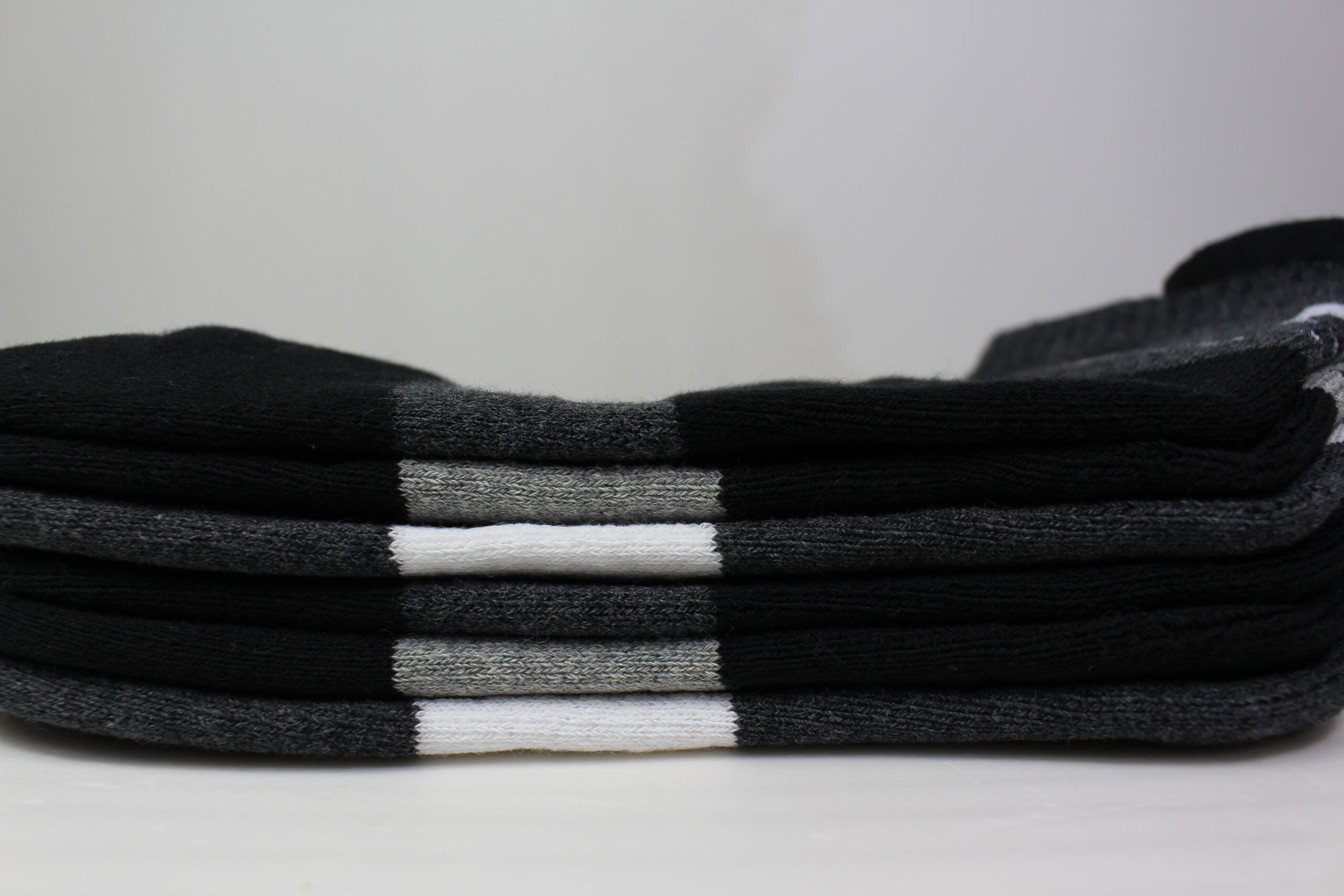
Two: height. In badminton the practical split is ankle, short crew and crew. Ankle suits players who want nothing above the shoe collar; crew covers the ankle bone and holds the shoe tongue in place through lunges. Height is a merchandising decision as much as a performance one — a range that only carries one height forces customers to go elsewhere for the other.
Three: reinforcement. Heel and toe reinforcement, arch banding and a ribbed cuff are what keep a sock from sliding down mid-rally and from wearing through at the heel in six weeks. These are cheap to specify and expensive to skip.
What to put in the specification
- Fibre blend, as a percentage. Cotton-rich wears soft but dries slowly; polyester-rich dries fast and holds shape. A common performance blend for badminton sits in the 60–75% cotton range with polyamide and elastane for recovery.
- Weight per pair, in grams. This is the single best proxy for whether a supplier is actually building a cushioned sock or a thin one. Ask for it per size.
- Terry density and pile height on the sole, if you are specifying terry-loop.
- Size run and the measurement behind each size. For the Asian market the usual run is 35–39 and 40–44; confirm the foot length each covers rather than relying on the label.
- Colour fastness and shrinkage, with the test method named. These two are what generate complaints a month after delivery, not on arrival.
- Retail unit. Multi-pair packs (5-pair and 6-pair are common) need the packing spec settled early: bag or box, header card, barcode placement, and whether the pack is pre-packed at the factory.
Building a range that fills the wall
Socks are merchandised as a block, not as individual styles. Three decisions shape whether the block works:
- Two sizes, not one. A 35–39 and a 40–44 covers junior through adult in most Asian markets. One size leaves half the wall empty.
- Two heights minimum. Ankle for players who want a low profile, crew for everyone who plays in a shoe with a soft collar. Carrying only one pushes the other half of the demand to a competitor.
- Two constructions, if the price band allows. A terry-loop sole as the performance option and a flat-knit as the value option lets one shelf serve two buyer types without doubling the SKU count.
With 2 sizes × 2 heights the range is already four SKUs; adding a second colourway takes it to eight. That is still a manageable wall — and it is the smallest configuration that reads as a complete sock offer rather than a token one.
What distributors get wrong
Buying on unit price only. A sock that costs a few cents less per pair but uses a lighter yarn will feel thin after three washes. In a category where the end customer re-buys on feel, that is the whole margin.
Skipping the size split. One size is not a range. If a store cannot serve both a junior and an adult foot, the sock wall stays half-empty and the reorder does not come.
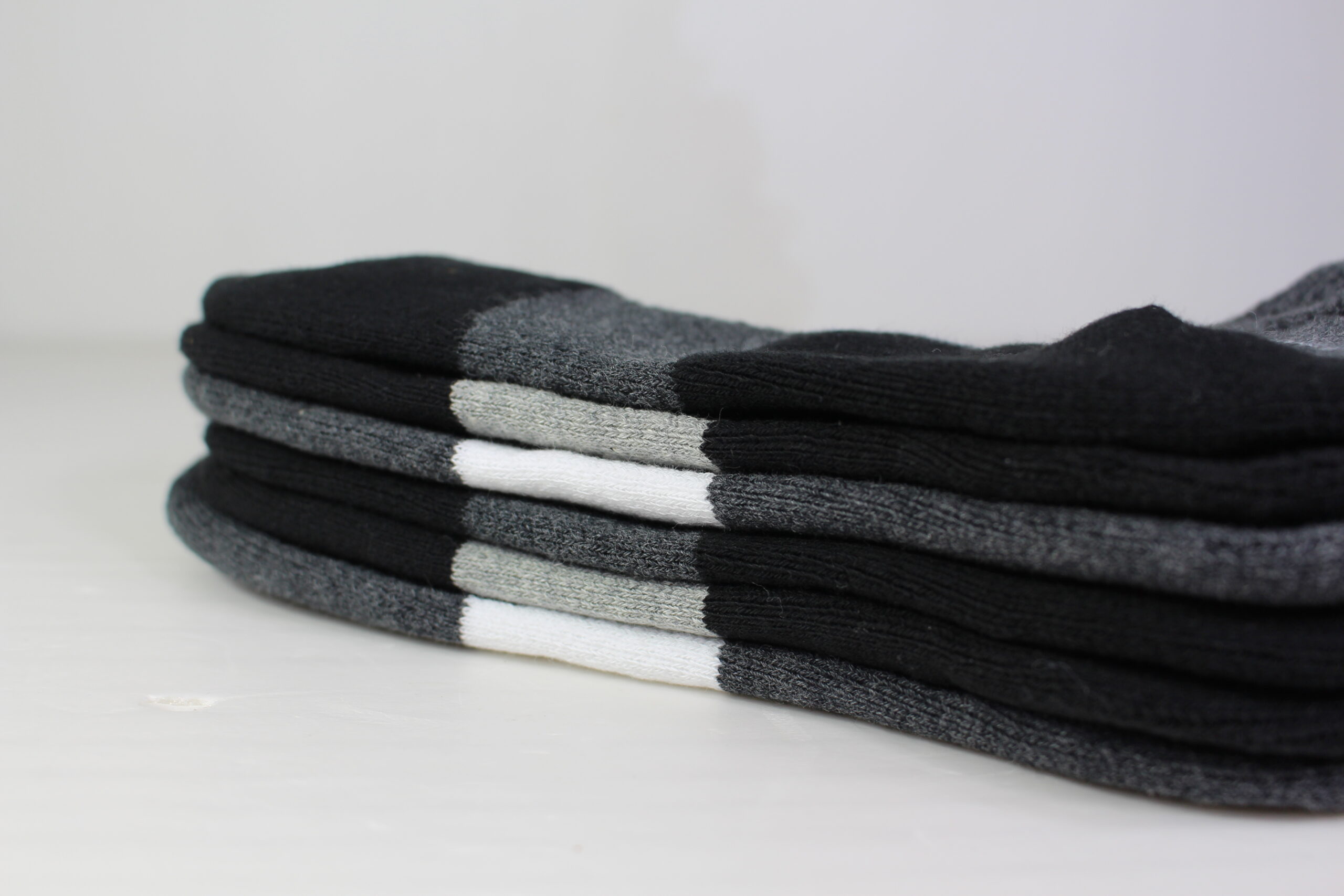
Treating packaging as an afterthought. A 5-pair pack that arrives unlabelled has to be repacked locally, and the labour is never in the quotation.
How socks fit into the rest of the range
Socks and overgrips behave the same way commercially: low ticket, high frequency, and the reorder is where the money is. That makes them natural shelf neighbours — a grip buyer is a sock buyer, and a store that stocks both places two orders instead of one.
We knit badminton socks in terry-loop and flat constructions, in ankle, short crew and crew heights, in single pairs and 5- or 6-pair retail packs, with heel and toe reinforcement as standard. If you are building or refreshing a sock range, send us your target market, size run and pack format and we will come back with a specification you can cost properly. For the grip side of the same shelf, the overgrip sourcing guide covers the equivalent decisions.
Notes
- Specifications in this piece are product parameters, not sales figures.
- Size runs quoted (35–39, 40–44) are the common Asian-market split; confirm against your own market before ordering.