

Carbon Fiber vs Graphite vs Aluminum: Which Racket Frame?
Carbon fiber, graphite and aluminum frames behave very differently under the same string tension. Choosing between them is less about ranking one material above another and more about which material matches a player’s strength, budget and how often they play. Here is how the three actually compare.
Carbon fiber: light and firm
Full carbon frames use carbon fiber across both the frame and shaft. The practical result is low weight combined with high torsional stiffness, which means the frame resists twisting under load and returns to shape quickly.
The trade-off is price, and the fact that carbon fiber transmits string energy efficiently — which some players read as a harder hitting feel. If you are moving up from aluminium or a basic composite, this is a noticeable step in power and in stability at high string tension.
Weight matters more than most buyers expect. A frame that is 10–15 grams lighter reduces the effort needed to swing fast through the shuttle, which compounds over a full match.
Graphite: the balanced middle
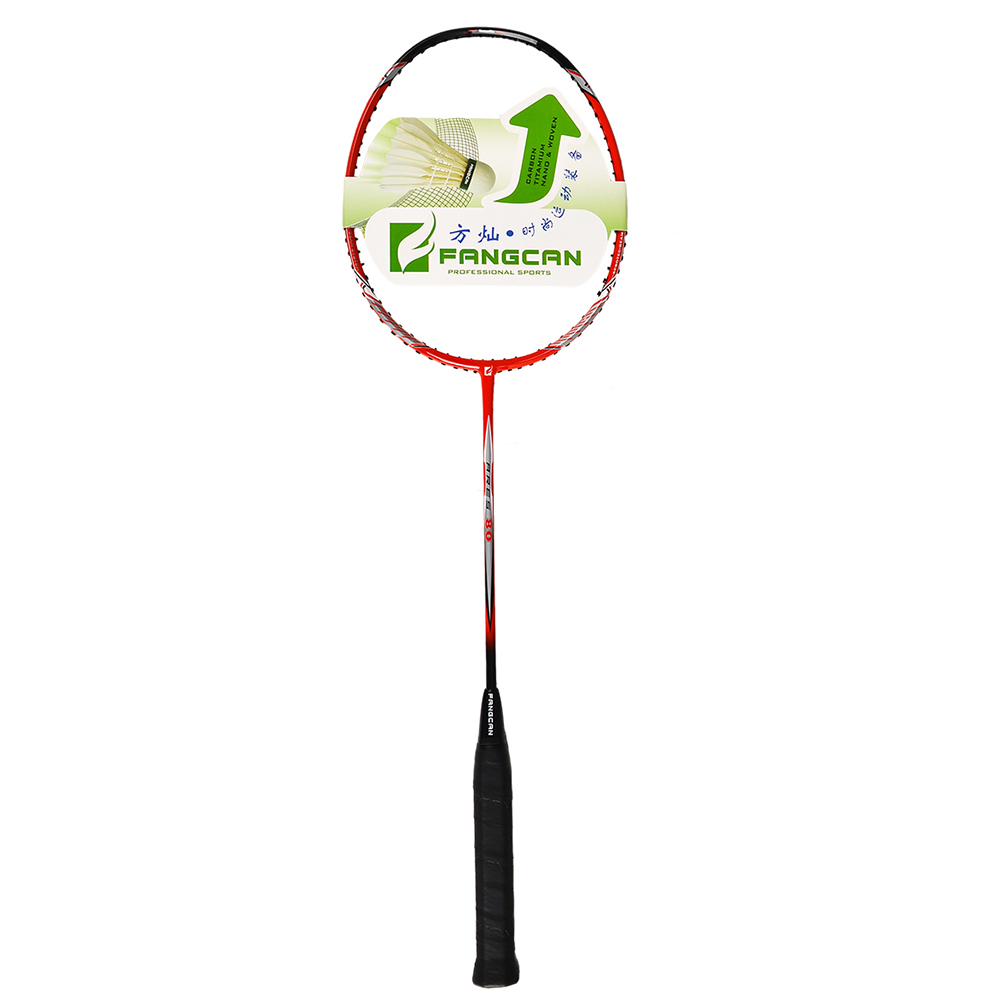
Graphite frames sit between full carbon and composite construction, typically pairing a graphite-based frame with a shaft of the same or similar material. They deliver most of the low-weight benefit of carbon while generally costing less, and they are more forgiving for players who are still developing power.
Within graphite, grade matters. High-modulus graphite is stiffer and transmits more energy than standard modulus. Many manufacturers now specify this explicitly, and it is worth comparing like with like — a high-modulus graphite shaft and a standard-modulus graphite shaft are meaningfully different products.
Aluminum: durable, affordable, entry-level
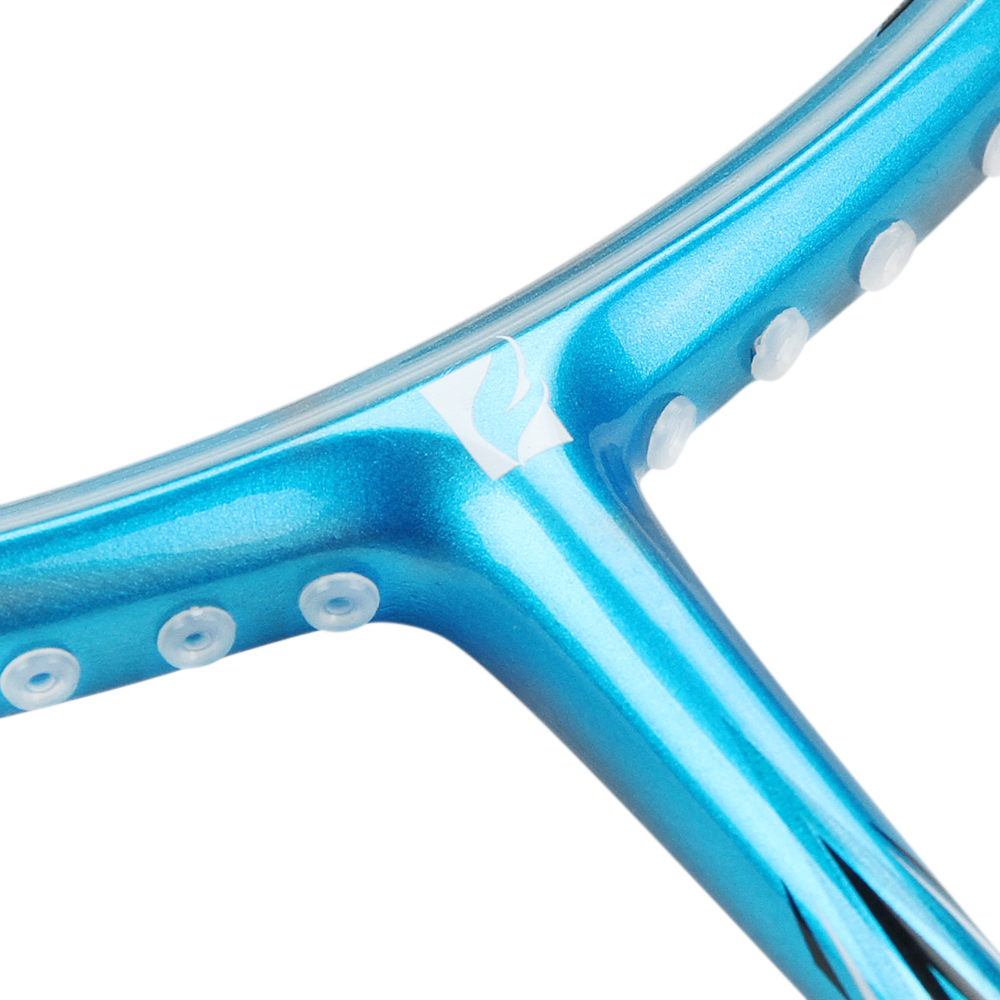
Aluminium frames are heavier and more flexible than carbon or graphite. In exchange they are cheaper, more durable against impact, and easier to repair. For beginners, casual players and rental or club bulk orders, aluminium remains a rational choice.
Aluminium also handles string tension differently: it stretches more under load and is generally not designed for the high tensions that carbon frames can hold. That is a functional limitation, not a quality judgment.
How the choice maps to the player
| Player profile | Sensible starting frame | Why |
|---|---|---|
| Beginner, occasional play | Aluminium or composite | Lower cost, more forgiving, durable |
| Regular club player | Graphite | Balance of weight, power and price |
| Advanced or competitive | Full carbon | Lowest weight, highest stiffness, strongest power at high tension |
| Junior player | Graphite, lighter balance point | Easier to swing, helps technique develop |
Two construction choices matter as much as material
Material is only half of what defines a racket. The other half is construction.
One-piece versus two-piece. A two-piece racket joins the shaft to the frame at a joint; a one-piece construction integrates them into a single continuous piece. One-piece designs offer better torsional rigidity and a more consistent hitting feel because there is no joint absorbing energy. Two-piece designs are easier to assemble, more forgiving in feel, and traditionally cheaper to produce. This is a meaningful difference in performance, not a marketing distinction.
Both approaches appear in current production, and the distinction is stated explicitly in the specifications rather than implied. Our TURBO CHARGING 77 is listed with the construction Full carbon one piece optic, while the N90III is listed as 40T two piece optic with an H.M. graphite + woven material — the same market tier, two different structures, and the specification sheet is where that difference is made verifiable.
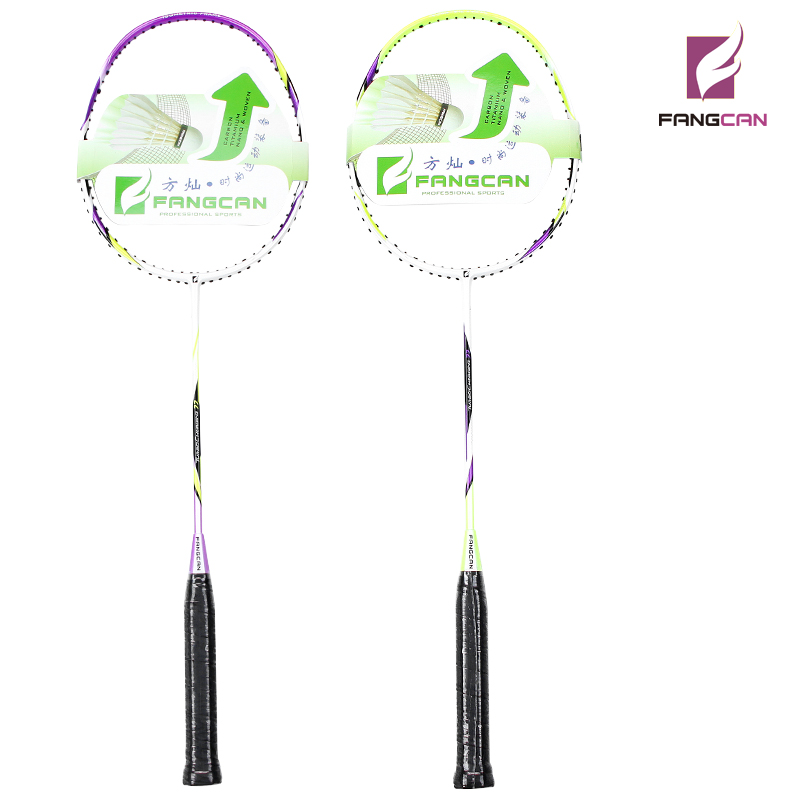
Balance point. The balance point is the position on the shaft where the racket is neutral in the hand. A head-light balance (closer to the grip) makes the racket easier to swing quickly and suits beginners and defensive play. A head-heavy balance (closer to the head) puts more mass behind the sweet spot and favours power. Weight class and balance are often confused with each other, but they answer different questions: weight class is how heavy the racket is, balance is where that weight sits.
Frequently asked questions
Is carbon fiber always better than graphite?
No. Carbon fiber offers lower weight and higher stiffness, which suits experienced players who generate their own power. For a beginner or a regular recreational player, a well-chosen graphite racket often performs better in practice, because it is easier to swing and less demanding.
Does frame material change how the racket feels?
Yes. Frame and shaft material determine how much energy is returned to the shuttle and how the frame behaves under tension. Graphite and carbon transmit more energy than aluminium, which is part of why they feel more powerful.
How much string tension can a carbon racket take?
Considerably more than aluminium. Entry carbon models commonly hold up to around 26–28 lbs; higher-grade frames can take more. Always check the manufacturer’s stated maximum for the specific model.
Does a one-piece construction really make a difference?
It does. Because there is no joint between shaft and frame, a one-piece racket resists twisting more consistently and typically feels more solid on off-centre hits. It also tends to be more expensive to produce.
Plan your next buying cycle with us
Material and construction are decisions worth making once, carefully, rather than repeatedly. If you are sourcing rackets for a store, a club or a distribution programme, tell us the player level, budget and target market and we will send a specification outline covering weight class, balance point, frame construction and the material options we can run on one production base.