

3U vs 4U Badminton Rackets: What the Weight Class Actually Changes
Walk into any badminton shop and the first real decision, after budget, is weight class. The two that matter for most buyers are 3U and 4U. The difference sounds trivial — a few grams — but it changes how the racket swings, how it feels on defence, how quickly a player tires, and, for a distributor, which customer each frame is actually for.
What the classes mean
Badminton weight classes are a convention, not a precision measurement. The standard ranges are:
- 3U: roughly 85–89 g (unstrung, without grip).
- 4U: roughly 80–84 g.
The step between them is small on a scale and large in the hand. A 3U frame is at the heavier end of what most club players use; a 4U is lighter and, for a growing share of the recreational and doubles market, the default.
Weight class is only half the story, because balance point interacts with it. A head-heavy 4U and a head-light 3U can feel closer than their gram ratings suggest. But weight class sets the baseline, and it is the spec buyers compare first.
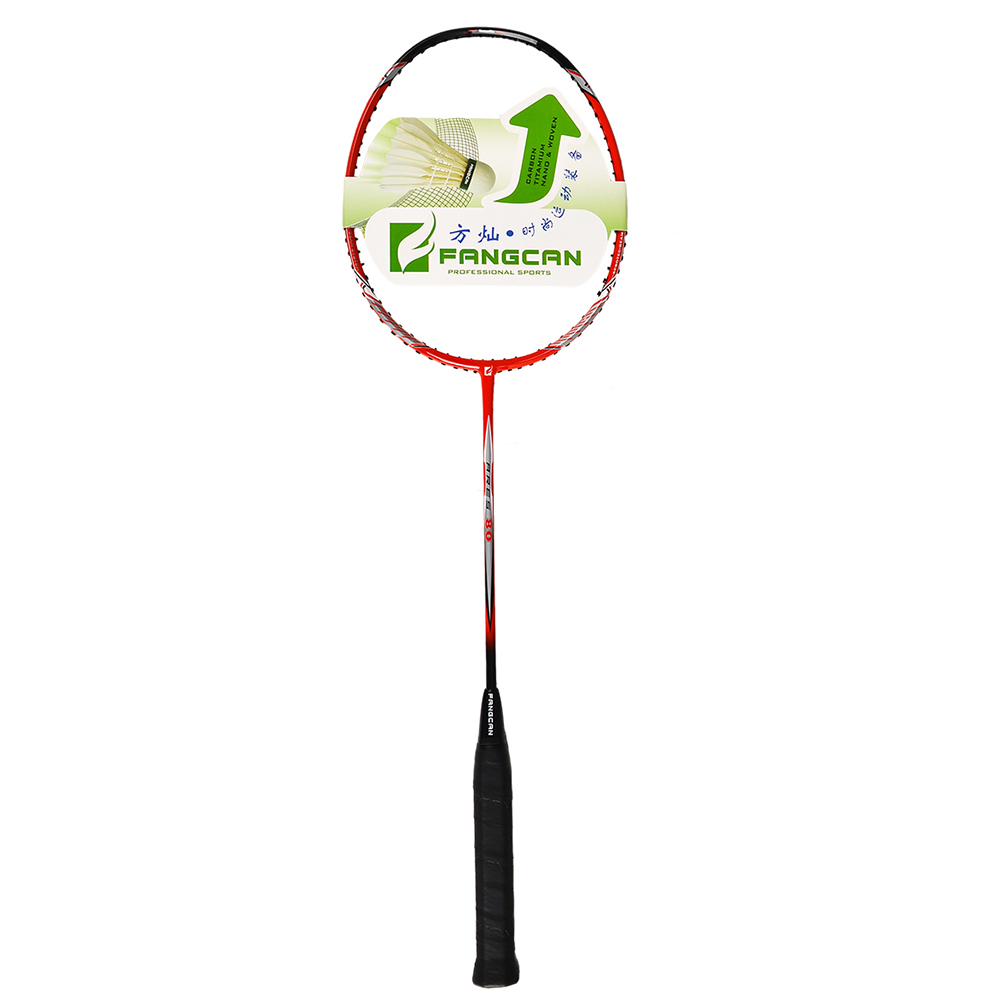
What heavier (3U) gives you
A 3U frame carries more mass, and mass is what generates momentum through the shuttle.
- More power with less effort on full swings. The extra weight does more of the work in a big overhead, which suits players who hit hard from the back court.
- More stability on impact. A heavier frame twists less on off-centre hits, so mishits stay closer to the intended line.
- A more “solid” feel. Many players, especially those coming from a power background, simply prefer it.
The cost is manoeuvrability. A heavier frame is slower to redirect, which shows up in fast doubles exchanges and at the net, and it tires the arm and shoulder sooner over a long session.
What lighter (4U) gives you
A 4U frame trades some raw mass for speed.
- Faster swing and quicker recovery. Easier to move the head through the air, easier to bring back for the next shot.
- Better defence and net play. The racket gets to the shuttle sooner, which matters most in doubles and in front-court roles.
- Less fatigue. Over a long match or a long recreational session, the lighter frame is simply easier to keep swinging well.
The trade-off is that lighter frames can feel less authoritative on a full-power clear or smash, and some players find them less stable against a hard-hitting opponent.
The short version, by player type
| Player profile | Usually better served by |
|---|---|
| Singles, back-court power, strong physique | 3U |
| Doubles, fast exchanges, front-court role | 4U |
| Recreational / beginner building consistency | 4U (or lighter) |
| Player with arm or shoulder fatigue issues | 4U (or lighter) |
| Advanced player wanting maximum smash weight | 3U, ideally head-heavy |
There is no universally “better” class. There is only the class that fits how the player actually plays — which is why a racket range that offers only one weight class is a range that turns away half its potential buyers.
Why this matters for a distributor’s range
Weight class is one of the clearest signals of market fit, and it is where a lot of ranges go wrong.
In much of Southeast Asia, the recreational and doubles-heavy market skews toward lighter frames. A player picking up the sport, or a club player who plays doubles three times a week, is usually better served by a 4U — and will often prefer how it feels on the very first hit, which is what sells a racket in a shop. A range built entirely around 3U power frames can look technically strong on paper and still underperform at retail, because it is answering a question most of the walk-in market is not asking.
The practical approach is to stock both, and to make the distinction legible. Label the weight class clearly, and pair it with a one-line use case — “3U for singles power, 4U for doubles speed” — so the buyer can self-select instead of guessing. A range that helps a customer choose is a range that converts.
There is a margin angle too. Rackets sit at the top of the basket, so a misjudged weight mix ties up capital in the wrong frames. Getting the 3U/4U split right, for your specific market, is a more valuable decision than shaving a little off the unit price. (On how the selling channel affects that margin, see what the Shopee Malaysia fee restructure means for sports sellers.)
A note on what the grams do not tell you
Weight class is a starting filter, not a full specification. Two 4U rackets from different makers can play very differently depending on balance point, shaft stiffness, frame profile and string tension. When you evaluate a supplier, ask for the balance point and stiffness alongside the weight class — those three together describe how a frame actually plays, and a supplier who can speak to all three is one you can build a coherent range with.
Build a range that fits the market
We manufacture badminton rackets and accessories, and we can supply frames across weight classes with the balance-point and stiffness information you need to build a coherent range for your market. If you are planning a racket line for Southeast Asia and want to talk through the 3U/4U split, get in touch with your target segment and price band.