

Racket Covers and Bags: What Oxford, Flannel, PU and EPE Actually Protect
Racket covers get the least attention on any purchase order: cheap, low risk, and apparently indistinguishable — oxford is oxford, and on the shelf they all look the same. The difference shows up later, when the damage rate climbs and the return reason reads “dent on the frame”. By then it is hidden in a lining nobody specified.
Five frames use oxford. Three different linings.
| Model | Shell | Lining / buffer | Capacity |
|---|---|---|---|
| FCBC-01 / 02 | PU leather-look | Non-woven | 1–2 rackets |
| FCBC-03 | Oxford | Non-woven | 1–2 rackets |
| FCBC-04 | Oxford | EPE | 1–2 rackets |
| FCBC-05 | Oxford | None | 1–2 rackets |
| FCBC-06 | Flannel | None | 1–2 rackets |
| FCBC-07 | Oxford | EPE | 5 rackets |
| FCBC-09 | Oxford | EPE | 1–2 rackets |
| FCTC-01 | Oxford | EPE | 1 racket (tennis) |
Five models use oxford. Their linings split three ways: EPE, non-woven, or nothing. That is the row a buyer should read first.
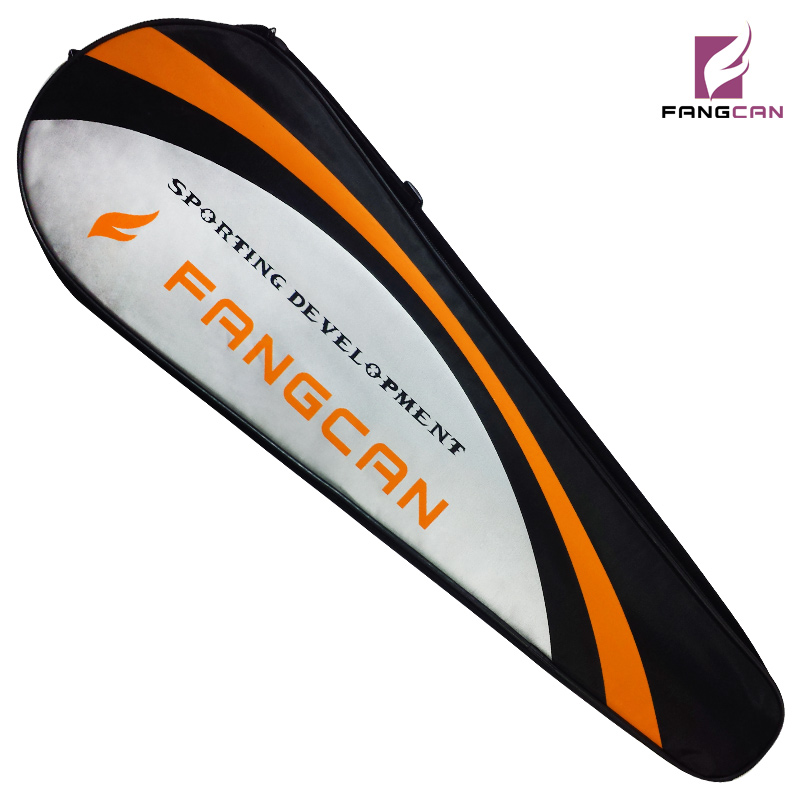
EPE and non-woven are not the same layer
EPE is expanded polyethylene — a foamed sheet with its own cell structure, and its job is to absorb impact. When the frame hits a luggage rail or sits under another carton, this layer takes the energy. Non-woven fabric is a thin pressed fibre sheet; it separates and prevents scuffing, and it absorbs almost nothing.
The gap widens in two situations. The first is cross-border shipping: parcels are thrown repeatedly along sorting lines, and a cover with EPE keeps the paint intact while one without produces the classic “no visible damage, but a dent on the frame” return. The second is retail display: a customer squeezes the cover, and a buffered one gives back while a non-woven one feels like cardboard. Conversion differs.
So the order of decision is: buffer first, shell second, colour last. Shell affects appearance and abrasion; buffer affects warranty cost — and warranty cost is the one that comes back.
Flannel and PU sell an occasion, not protection
The flannel cover (FCBC-06) works on a different logic. Its value is scuff protection and hand feel, which suits gifting, counter display, or inclusion with a premium frame. It is not waterproof and not crush-resistant; used as shipping packaging it will fail. Used as unboxing experience, it outperforms oxford comfortably.
The two PU models (FCBC-01, FCBC-02) chase a leather look: easy to wipe, formal, good for corporate gifting and set building. Their buffer is still non-woven, so their role is “presentable companion cover”, not “crush-resistant transit cover”.
On one purchase order these look interchangeable, and the temptation is to sort them by price. Sort them by use instead: EPE models for transit and self-use, flannel or PU for gifting and display, unlined models to hold cost on bundled giveaways.
The 5-racket bag is a different product, not a bigger cover
FCBC-07 holds five rackets, in oxford with EPE. It does not belong to the same category as the 1–2 racket covers: those protect a racket, this one carries a session — rackets, shuttle tubes, overgrips, towel, bottle.
Two commercial consequences. First, its customer is a player, not a racket buyer, so it belongs next to shuttle tubes and overgrips rather than hanging beside frames. Second, it is less price-sensitive, because the comparison is “does it fit everything” rather than “how much cheaper”. The 5-racket bag earns margin; the 1–2 racket cover earns attachment.
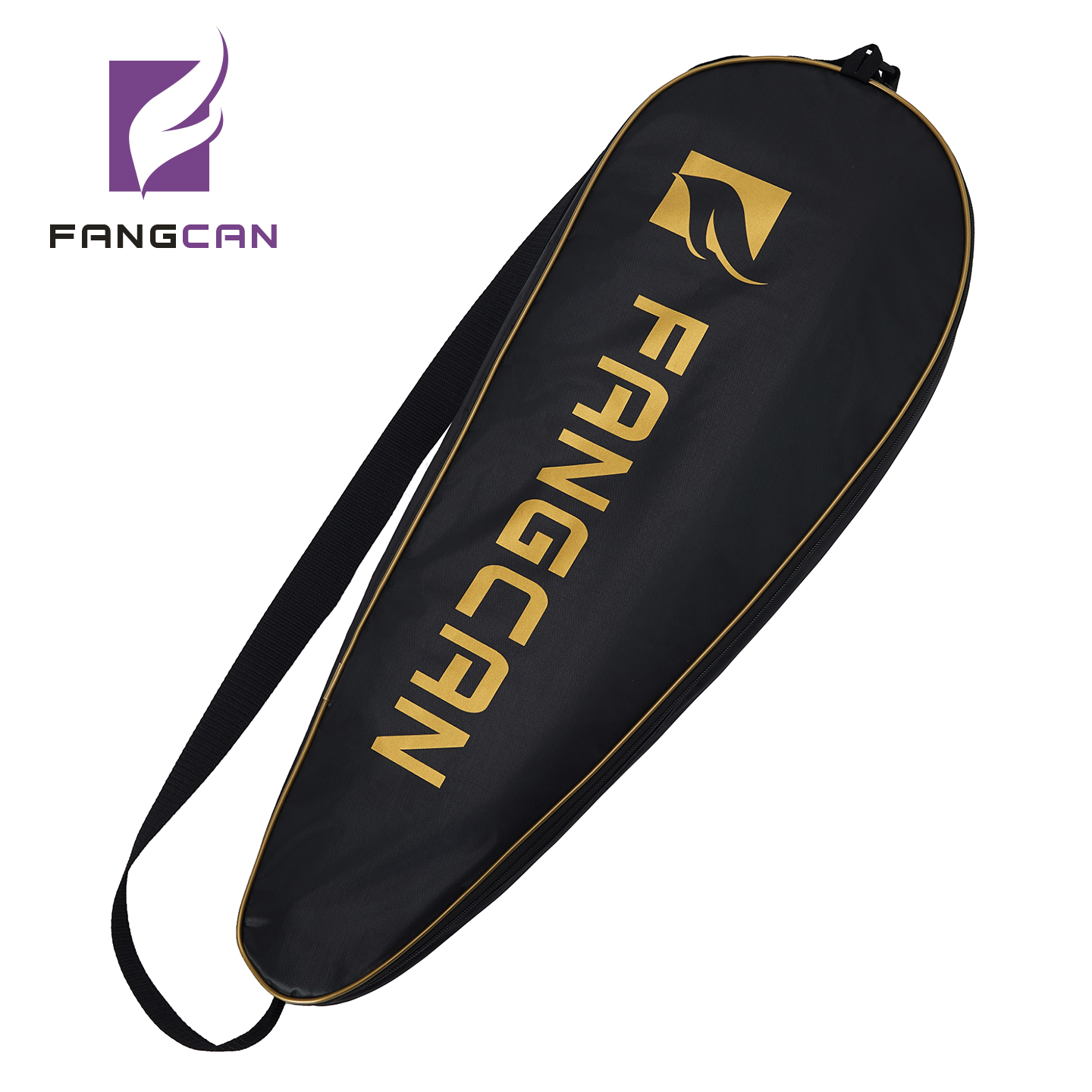
Colour is where covers get out of control
Covers usually come in five or six colours, and every colour is its own SKU. The classic low-ticket mistake is to stock the full palette: the mainstream colours run out while the slow ones occupy the warehouse. A workable rule is neutral colours (black, navy) everywhere, fashion colours only where you have display space, replenished in small quarterly batches.
One more note: covers are cheap per unit but not small, and volumetric weight makes them expensive to ship. Size the order so a batch fills a carton, not so the quantity looks round.
Frequently asked questions
Can a cover be used as shipping packaging?
Only EPE-lined models absorb anything, and they still need an outer carton for support. Flannel, PU and unlined covers prevent scuffs and nothing more.
1–2 racket covers or single?
Depends on how customers play. Doubles-heavy markets suit the 1–2 racket cover; singles or tennis suits the single cover such as FCTC-01.
Bundle the cover with the frame or sell it alone?
Do both. Bundling completes the product; a standalone SKU captures repeat purchase and accessory margin, especially on the 5-racket bag.
Should lining thickness be specified?
Yes. EPE thickness sets the protection level, and “with EPE” is not a specification — the cost difference between thicknesses is real.
Want a cover and bag stocking plan?
If you are setting next season’s cover structure — how many models, which lining, how many colours — send us your channels and customer base and we will return a combination built on buffer level and capacity. Talk to our team.