

Squash Ball Dot Colours Are Not a Grade Table
A squash ball’s dot colour is read by most buyers as a grade: blue for beginners, yellow for improvers, double yellow for the serious. The reading is common and it is not wrong in direction — but as a purchasing rule it fails, because on our own three balls the dot colour is the only thing in the spec sheet that differs.
Three balls, one set of numbers
| Model | Dot | Weight | Diameter | Rebound | Level |
|---|---|---|---|---|---|
| FCA-07 | Single blue | 23–25 g | 39.6–41.9 mm | 18.5–21.5 in | Intermediate |
| FCA-09 | Single yellow | 23–25 g | 39.6–41.9 mm | 18.5–21.5 in | Intermediate |
| FCA-06 | Double yellow | 23–25 g | 39.6–41.9 mm | 18.5–21.5 in | Tournament |
Weight, diameter and rebound all sit inside identical ranges. What separates the three is the dot and the level label. That is not laziness in the spec sheet: those three dimensions are internationally standardised with narrow tolerances, and the real difference lives in the rubber compound and its rebound behaviour — which does not usually appear as a number anywhere on a factory sheet.
So accept the constraint: the dot is a segmentation label, not a measurable parameter.
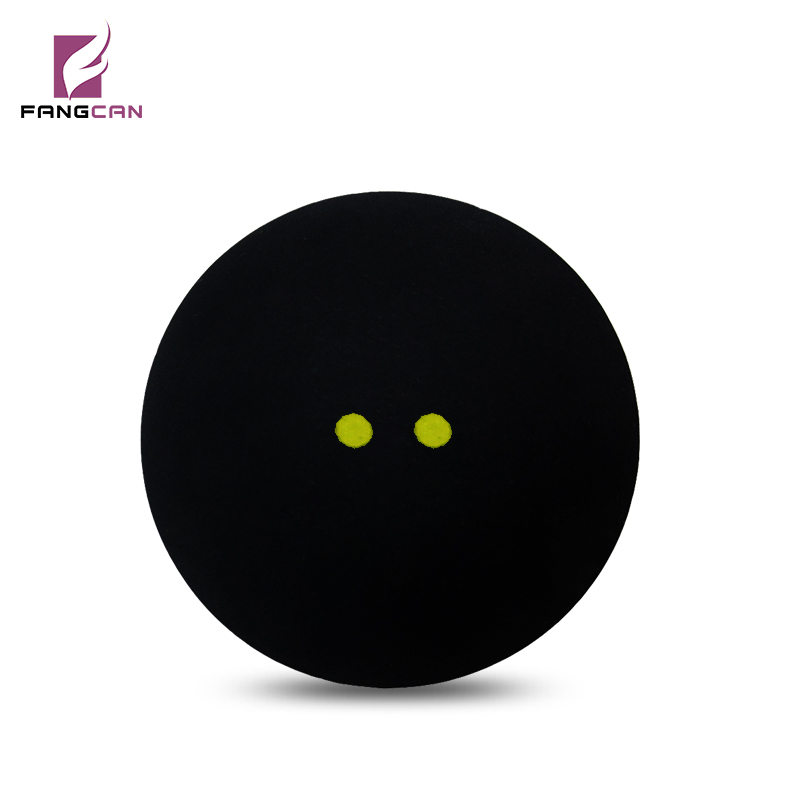
Why a dot-colour grading table does not transfer
Dot coding follows an industry convention, but a convention is not a shared register. Brands do not align their definitions perfectly, and some add colours of their own. Comparing quotations across brands by dot colour is therefore the beginning of a mismatch: one supplier’s single yellow may target an entirely different player than another’s, and any price gap measured between them means nothing.
The workable substitute is two things: your supplier’s stated level, and the actual spread of your customers. The first is given. The second you have to build from your own sell-through. Once both are on the table, the ratio between dots has a basis.
The variable buyers forget: temperature
Squash balls are temperature-sensitive. The same ball behaves noticeably differently on a cold court in the first ten minutes and on a warm court half an hour in — which is exactly why balls are warmed up before serious play. The purchasing consequence is that “the ball is dead” complaints should not be routed straight to quality control. Southern-hemisphere winters, unheated halls and freshly opened courts will all make a correctly graded tournament ball feel unplayable.
Read the other way, it is an assortment opportunity: the dominant dot should change with court conditions in a market, not just with player level. Warm climates with well-maintained courts will support the higher grades; cold venues churn through intermediate and entry grades faster.
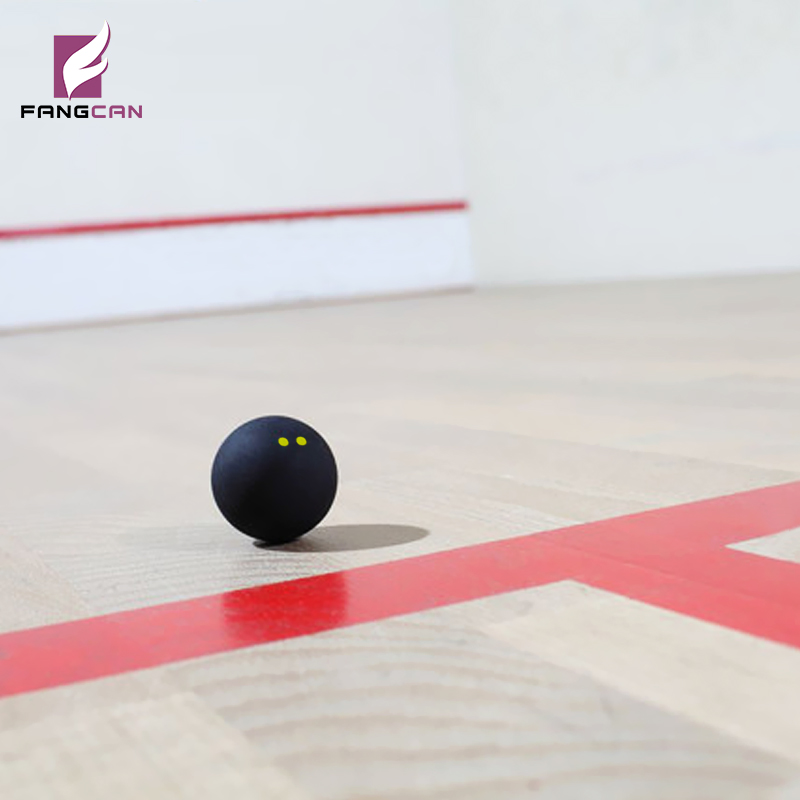
Planning the buy: three dots, split by customer
Start with who plays. Squash demand concentrates: club members, casual court bookings, school programmes. The first two split clearly by level, so carry all three dots weighted toward intermediate — intermediate is always the largest block. School programmes sit at or below intermediate, so a token quantity of tournament balls is enough.
Do not build the price ladder on dots. Production cost across the three is close. Marking the double yellow up invites comparison against a cheaper ball at the same level, and the customer will take the cheaper one. Build the ladder on the ball-plus-racket combination instead: entry balls with aluminium-composite frames, tournament balls with full carbon. That pairing is defensible.
Order quarterly, not annually. Squash balls are consumables whose burn rate tracks how active your customers are, and in-season versus off-season differs sharply. Quarterly orders keep stock on the right rhythm; a year at a time leaves you discounting through the quiet months.
Count turnover against rackets. Our squash frames split cleanly: the FCSQ-01 and FCSQ-02 aluminium-composite models are entry level, while the SILVER130 and DARKNESS 7 full carbon frames are professional. Ball grades and frame grades should line up, or you create the classic mismatch — an entry frame sold with a tournament ball, unplayable on the first session, returned with the note “ball problem”.
Frequently asked questions
Does more dot colours mean a fuller range?
No. It means finer segmentation. If your customers cluster in the middle layer, the extra colours add SKUs without adding volume. Three dots covers most channels.
Is a double yellow genuinely harder to play?
In the right direction, yes — and the gap widens on cold courts. Judge it against the court conditions your customer actually plays in, not the dot alone.
Should balls and rackets be stocked together?
Yes. Squash is a classic equipment-plus-consumable category with complete customer overlap; separating them loses the pairing sale and invites grade mismatches.
How do I check whether a supplier’s grades are real or just three colours?
Two checks: whether the stated levels are internally consistent with the dot system, and whether the balls behave perceptibly differently on a cold court. Balls that differ only in colour are one SKU sold three times.
Want a dot-by-dot stocking ratio?
If you are deciding how many of each dot to carry and which frame grade to pair them with, send us your market and customer mix and we will return a ratio built on the stated levels. Talk to our team.