

Custom Wristbands: Embroidery, Plastic Drop or Jacquard Patch
Wristbands sit in an awkward corner of sports accessories: low unit price, high customisation demand. Brands rarely want them for the wristband itself — they want one item in the range that carries a logo for a club, a tournament or an event. Which makes the logo process, not the styling, the decision that matters. The same mark embroidered onto terry cloth and moulded as a plastic drop read as two different price points.
Five models, and where they actually differ
| Model | Logo process | Size | Material | Colours |
|---|---|---|---|---|
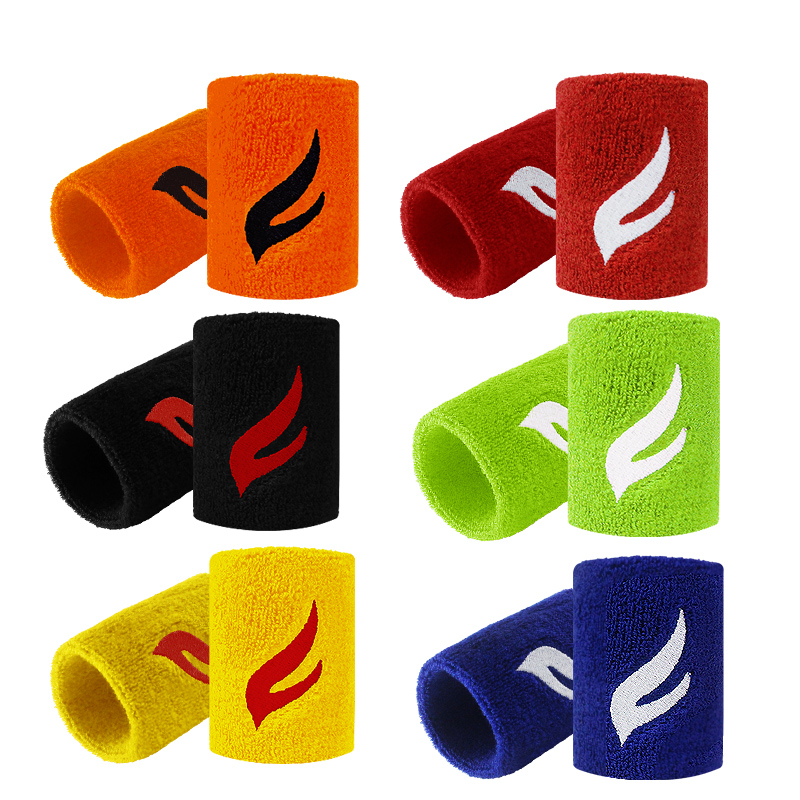
| FCSW-01 | Terry + embroidery | 80 × 80 mm | Cotton, polyester, rubber | 6 |
| FCSW-02 | Sweat-absorbing jacquard | 10 × 8 cm | 73% cotton + 18% nylon + 9% spandex | 3 |
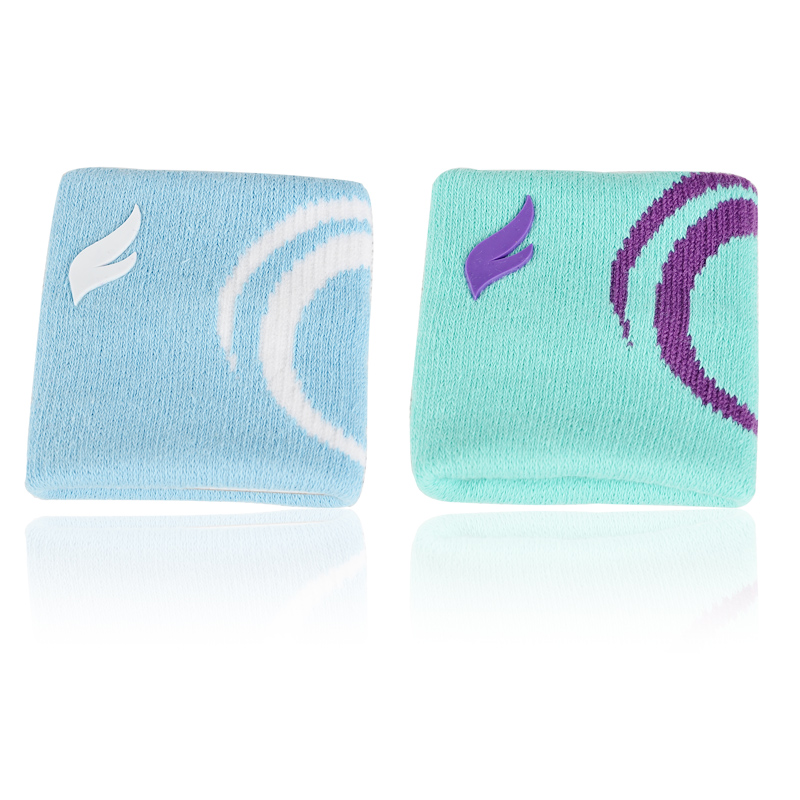
| FCSW-03 | Plastic drop + jacquard | 8 × 8 cm | 73% cotton + 18% nylon + 9% spandex | 2 |
| FCSW-04 | Embroidered patch + jacquard | 8 × 10 cm | 73% cotton + 18% nylon + 9% spandex | 2 |
| FCSW-05 | Composed embroidered patch | 8 × 8 cm | 73% cotton + 18% nylon + 9% spandex | 3 |
Four in the same blend, one in terry. Three logo processes. Four sizes. Each dimension solves a different problem, and mixing them up produces the wrong order.
Three logo processes, three kinds of mark
Terry with direct embroidery (FCSW-01). The mark is stitched into the looped pile. The advantages are real: the heaviest hand feel, the strongest sweat absorption, and a wristband that doubles as a towel — a genuine need in play. The limitation is resolution. Embroidery on looped pile cannot hold fine detail, so thin strokes blur; this suits bold, simple marks. It also carries six colours, the widest of the five, which makes it the natural choice for team colourways.
Embroidered patch on jacquard (FCSW-04, FCSW-05). The logo is embroidered as a separate patch, then sewn onto a jacquard-knit band. Patch stitching can be dense enough to preserve fine strokes, which makes this the highest-fidelity customisation available here. The difference between the two models is shape and role: FCSW-04 takes a single patch on an 8 × 10 cm band, FCSW-05 takes a composed patch on an 8 × 8 cm band — the composed version suits marks with two or three elements (a primary mark plus a secondary line).
Plastic drop on jacquard (FCSW-03). The mark is moulded in plastic and applied to the band: strong relief, saturated colour, high recognition at a distance. It suits a brand symbol rather than a full wordmark, since moulding resolves fine strokes worse than embroidery and multi-colour layering is limited. Commercially it is the lightest of the three.
The rule of thumb writes itself: fine strokes and lettering → embroidered patch; simple symbol that must read from across a court → plastic drop; a mark that should also wipe sweat → terry embroidery.
Size matters more than it looks
The five models run 80 × 80 mm, 8 × 8 cm, 8 × 10 cm and 10 × 8 cm. It reads like noise within one order of magnitude, but the use differs. 8 × 8 cm is the standard adult width, enough wrap for a wrist. 8 × 10 cm and 10 × 8 cm run longer for a double wrap or extended coverage. The 80 × 80 mm terry model covers more actual area because the pile adds thickness.
What a buyer has to watch: mixing sizes in one order means separate packaging and separate barcodes. A wristband is a low-ticket item, and once labels cross, the after-sales cost exceeds the goods value. Size belongs on the first line of the purchase order, not in a note on the last page.
What 73/18/9 actually buys you
The four jacquard models share one blend: 73% cotton, 18% nylon, 9% spandex. The division of labour is clear — cotton for absorption and skin feel, nylon for abrasion resistance and shape retention, spandex for elastic recovery.
The 9% spandex is deliberate. More would improve stretch but tighten the pressure, which becomes uncomfortable over a long session; less would go slack after a few washes. Nine percent sits in the band where the wristband recovers without gripping.
The terry model runs a different logic — cotton, polyester and rubber. Polyester keeps the loops from matting, rubber provides elastic support, cotton absorbs. Its strength is sweat capacity; its weakness is slow drying. Daily trainees are better served by jacquard; customers who want a towel on the wrist are better served by terry.
How to plan the buy: process first, colour last
Step one, decide what the logo needs to do. That choice fixes the process and the cost band. Starting from price instead ends in the familiar dead end: the mark cannot be reproduced in the process you budgeted for.
Step two, cut colours by channel. The five models offer 6 / 3 / 2 / 2 / 3 colours. Stocking all of them means sixteen SKUs. That is the classic low-ticket trap: mainstream colours run dry while fashion colours sit. Keep black and navy everywhere; add the rest only where you have display space.
Step three, merchandise alongside rackets and overgrips. The wristband customer and the overgrip customer overlap almost completely — both are consumables that get replaced after use. Bundled display outperforms a lonely hook.
Step four, settle packaging. All five ship one per OPP bag. If you intend to hang them on a retail card, agree the format before production, not after the cartons land.
Frequently asked questions
What are the limits for embroidered logos?
Minimum stroke width and minimum type size need confirming up front, and gradients cannot be embroidered — they must be reduced to solid colour layers. The more detail a mark carries, the more you want an embroidered patch rather than direct embroidery.
Can the plastic drop be multi-colour?
Yes, but each additional colour adds tooling and process steps, and unit cost climbs noticeably. Single or two-colour symbol marks are where it pays.
How should MOQ and sampling be discussed?
Both depend on process and colour combination, and the thresholds differ by process. Settle the process first, then the quantity — in the other order you will revise twice.
Stock wristbands with overgrips?
Yes. Same customer, same replacement rhythm, and combined stocking improves both display and replenishment.
Want a customisation plan for wristbands?
If you are specifying wristbands for a club, a venue or your own label — which process, how many colours, what size — send us the artwork and target price point and we will return a specification built on process and material. Talk to our team.