

Sealing Rings: The Part That Saves a Handle
The joint between a racket’s cone and its handle is the least glamorous and most abused part of the frame.
It is where the hand sits, where sweat collects, and where the grip tape ends. Three conditions that degrade a plastic ring faster than anything else on the product. That ring is the sealing ring, and replacing it is the cheapest repair in the category.
What it does
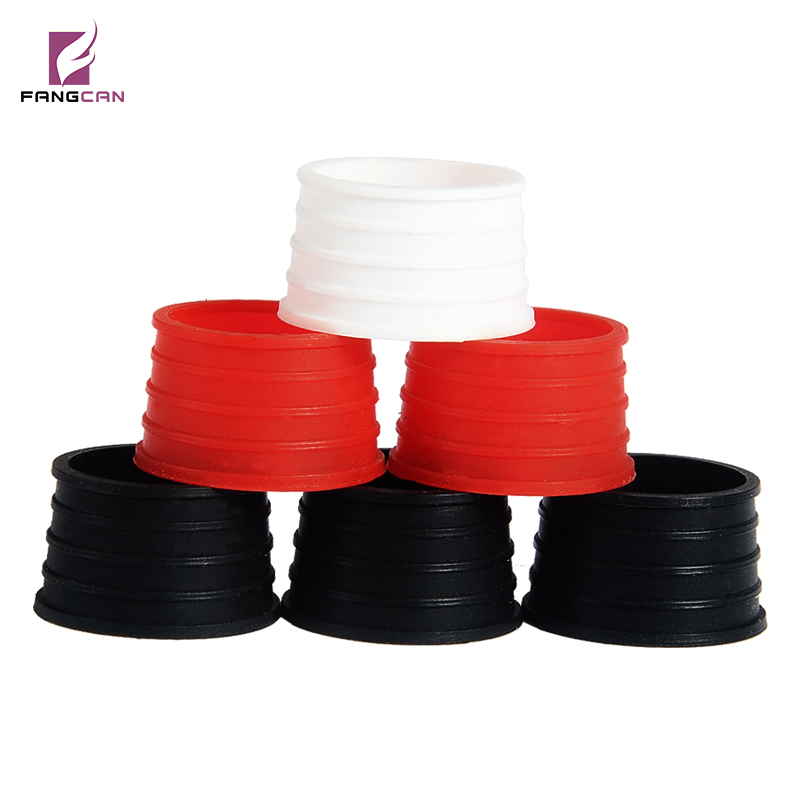
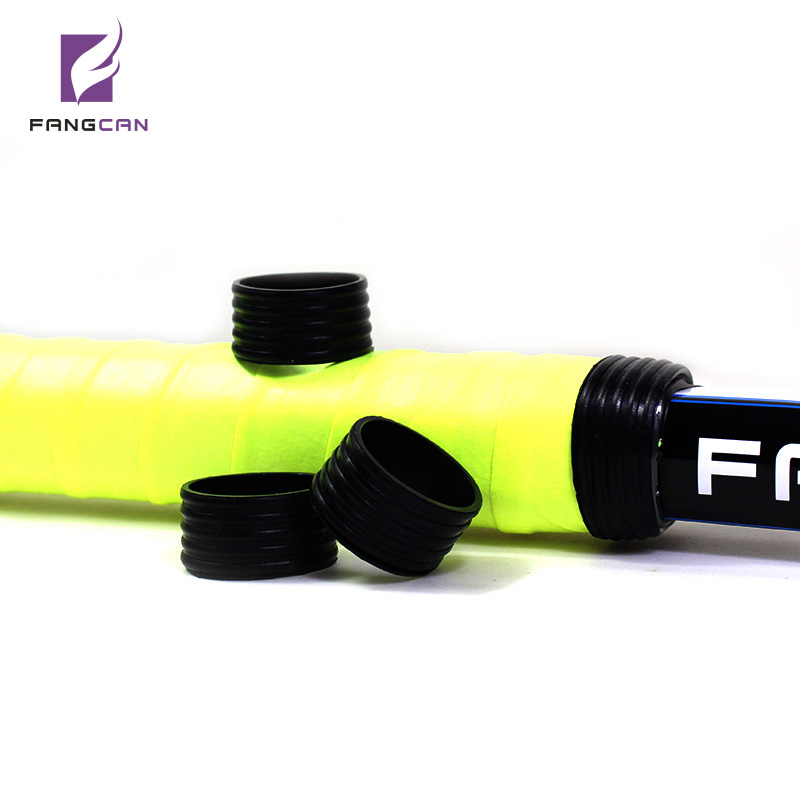
A ring covers the seam between the handle and the shaft cone.
Without it, the seam collects sweat and dirt, the grip tape lifts at the bottom edge, and the handle’s finish wears through where the hand contacts. With it, the wear lands on a part that costs almost nothing and takes seconds to change.
Selling them singly makes no sense. A player who replaces one will need another within a season, and a shop that fits them during a restring will use several a week.
Where they fail
Three failure modes, in order of frequency.
The ring splits at the moulded seam. Usually after someone stretched it over a cone slightly larger than the nominal fit. The ring then hardens and stops gripping, which lets it slide down the handle. Or the wrong diameter, which is a purchasing error rather than a product failure.
Diameter is the specification that matters, and it is not universal. A badminton frame and a tennis frame have different cone dimensions, and within each sport the dimension varies by model.
Selling one ring for all frames produces the sliding failure that customers describe as “it does not fit”.
Material and the hardening problem
Rings are made from PVC or from a thermoplastic elastomer. PVC is cheaper and harder; elastomer grips better and tolerates being stretched repeatedly.
In a hot climate the difference shows up within a season, because PVC that has been through a car boot will not return to its original shape.
For a buyer, this is a specification worth one question: which material, and what is the elongation at break.
A ring that can be stretched to twice its diameter without splitting is a ring that will be fitted correctly by a shop in a hurry.
Pack count as a commercial decision
Three per pack is the structure that works, for a reason worth stating: the ring is fitted during a restring, the customer takes the spare home, and the spare is what brings them back to the shop rather than to a marketplace.
One per pack removes that loop. Five per pack turns a consumable into a drawer item that is never repurchased.
What to put on the purchase order
- Inner diameter and the frame families it is confirmed to fit.
- Material, with elongation at break.
- Colour, matched to the handle finishes sold alongside.
- Pack count, and barcode on the retail bag.
- Carton quantity, since this is a light, bulky item by volume.
The two sports need separate SKUs, and pretending otherwise is where most of the returns come from: a badminton ring and a tennis ring differ in diameter, and the customer cannot tell which one they need.
Stock both next to the overgrips, because that is the moment the ring is noticed. The tape comes off, the worn ring is visible, and the sale takes ten seconds.
If it is not there, the customer will retape over the damage, and the handle will fail in a way that becomes a grading argument nobody wins.
Fitting them during a restring
The commercial value of a sealing ring is not in the ring. It is in the fact that it can be fitted in ten seconds during a restring, when the grip tape is already off.
Shops that keep a box at the stringing table sell them without trying; shops that keep them in a drawer sell none.
The case favours a display unit rather than a shelf position, and for a pack size a shop can open and sell from, not a sealed carton that only gets opened for stocktake.
Colour range and dead stock
Rings come in colours to match handle finishes.
Matching all of them creates dead stock in every colour except the two that sell. Matching the two or three that correspond to the most popular frames keeps the range clean and the fitting seamless.
Common mistakes on this specification
- One ring size offered for two different sports.
- No elongation figure, so fitting a ring becomes a gamble.
- Storing them in a drawer rather than at the stringing table.
- Pack sizes that a shop cannot sell from.
- Colour ranges that create dead stock in every shade but two.
The item is trivial; the placement and the fit are not.
For a first order, take one size per sport in the three-pack, and see whether the shop actually fits them. If it does not, the problem is placement, not the product.