

Volumetric Weight: Why Light Bulky Goods Land at Double Cost
The same shipment can land at double the cost by air versus sea, and the difference is rarely the freight rate. It is volumetric weight. Rackets, bags and trainers are light but bulky: cheap by weight, expensive by volume.
A buyer who does not run this number finds out only when the freight invoice arrives — by which time the goods have already left the factory.
Three numbers are all it takes
Volumetric weight is length × width × height (cm) divided by a divisor. The divisor depends on the mode — commonly 6000 for air and LCL sea, 5000 for express. Confirm with your carrier, but the method is the same.
The critical point: use the carton, not the product. Factories quote product dimensions; billing uses the carton. On long items like rackets the gap is wide — a 68 cm frame typically ships in a 72–75 cm carton.
Worked example: a trainer with a 32 × 20.5 × 7 cm inner box, packed 12 to a 66 × 43 × 37 cm carton, gives roughly 8,750 cm³ per unit — about 1.46 kg at a 6000 divisor. The product itself may weigh 0.6 kg. Volumetric weight is more than double the actual weight.
Which categories lose
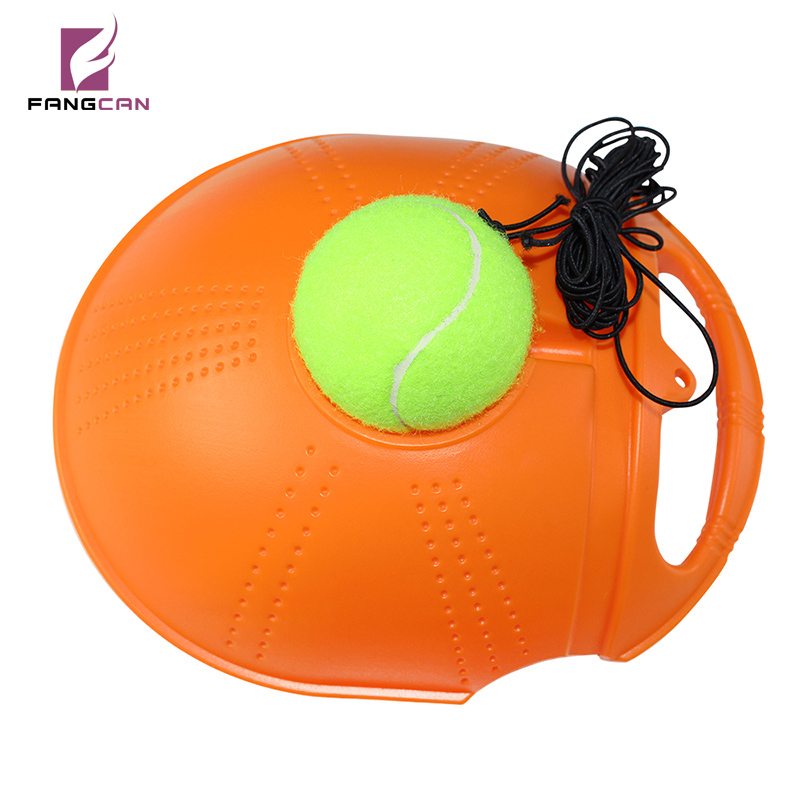
Three types stand out: long items (rackets, covers), large cross-sections (trainer bases, rolled blankets) and light bulks (covers, rolled blankets, bags). All share one trait — actual weight far below volumetric.
Balls and string sit the other way: a carton of basketballs or reels hits the weight limit before volume runs out. That makes mixed containers the single most effective lever — heavy goods fill the voids left by light bulky ones, the shipment bills on weight, and the volume gets used.
If you can only ship one category, the only lever left is packing compression: can covers fold flat, can trainer bases nest, can blankets be rolled tighter. All of that has to be negotiated at quotation stage; changing it after production costs far more.
Units per carton: the overlooked lever
Packing 12 units instead of 20 into a carton can change unit volumetric weight by 15–25%. The reason is geometry — the carton does not scale linearly, so more units means a lower share of dead space.
It cannot be pushed indefinitely: there is a manual-handling limit and a stacking-damage limit. The practical band is a gross carton weight of 18–22 kg — enough compression to matter, not enough to crush the goods.
Ask directly: what is the minimum packing unit, and can units per carton be adjusted. Most factories will accommodate it, because it changes only a carton spec, not a mould.

The right order for landed cost
Most buyers add freight to goods value, guess duty, and call it landed cost. That order misses the knock-on effects of volumetric weight.
A sounder sequence: volumetric weight per carton → freight per carton → cost per unit → add duty and charges → landed cost per unit. Every step is traceable, and you can see immediately which line dominates.
One more point that gets missed: volumetric weight amplifies damage cost. Compress the packing to save volume, damage rises, and the return freight bills at the same volumetric rate — a double loss. Packing optimisation needs a floor: structural protection like corner guards does not come out.
How to put this into practice
One, put carton dimensions and gross weight in the RFQ. Carton, not product. If you do not ask, everything downstream is an estimate.
Two, calculate the volumetric weight yourself. Use the formula before the forwarder quotes. Within ten percent accuracy is enough to decide.
Three, mix containers where possible. Light bulky goods plus heavy goods is the only lever that lowers both unit freight and damage at once.
Four, treat units per carton as a negotiation item. A carton spec change is cheap; its effect on volumetric weight is not small.
One more line that gets left out: storage and re-handling. Bulky goods also occupy space, and if they cannot be distributed promptly after arrival, detention and storage bill by volume or pallet. Landed cost includes that leg, not just freight plus duty.
Frequently asked questions
Is the divisor 5000 or 6000?
It varies by carrier and channel: express commonly 5000, air and LCL sea commonly 6000. Use the contractual figure; the method is identical, only the denominator changes.
Can I estimate from product dimensions?
Only roughly. A racket carton runs 5–8 cm longer than the frame, and the error compounds past ten percent.
Does a mixed container raise handling cost?
Yes, but usually far less than the freight saved. Plan the loading sequence so nothing needs re-handling at the warehouse.
How much compression is too much?
Watch the damage rate. If damage rises by more than the freight saved, it is too much. Structural protection — corner guards, compartmentalisation — is not part of the trade.
Want a landed cost model?
If you are comparing landed cost across categories — how much volumetric weight differs between frames, bags, balls and accessories — send us the categories and destination port and we will work it from carton data. Talk to our team.