

Pickleball Paddle OEM: What to Specify Before the First Sample
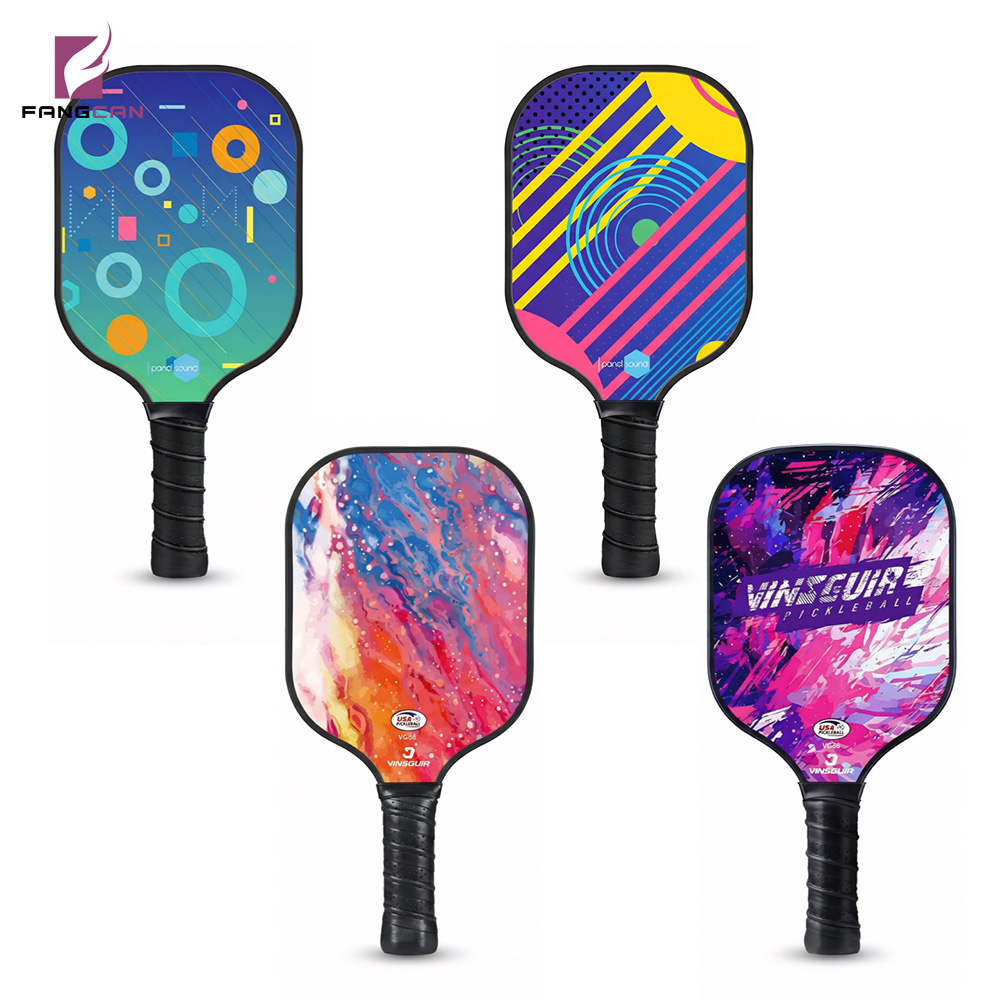
Why the spec sheet decides the order, not the price
Search for a pickleball paddle manufacturer and you will get hundreds of trading companies quoting within a day. Most of those quotes are not comparable, because none of them describe the same object. A paddle is not one product: the face, the core, the weight, the balance and the grip are five independent decisions, and the combination is what a buyer is actually paying for.
In our own mould bank, two paddles can weigh within five grams of each other and still play nothing alike. That is the whole argument for writing the specification down before anyone cuts material.
The four decisions inside one paddle
1. The face: fiberglass or carbon
Fiberglass is the softer, more forgiving face. It gives more of its energy back on slow swings, costs less, and its textured surface is the usual route to spin — but that texture is also the first thing to wear. A T700 carbon face is stiffer: less deflection at impact, a more direct feel, and a thinner face for the same strength, which buys weight back for the core.
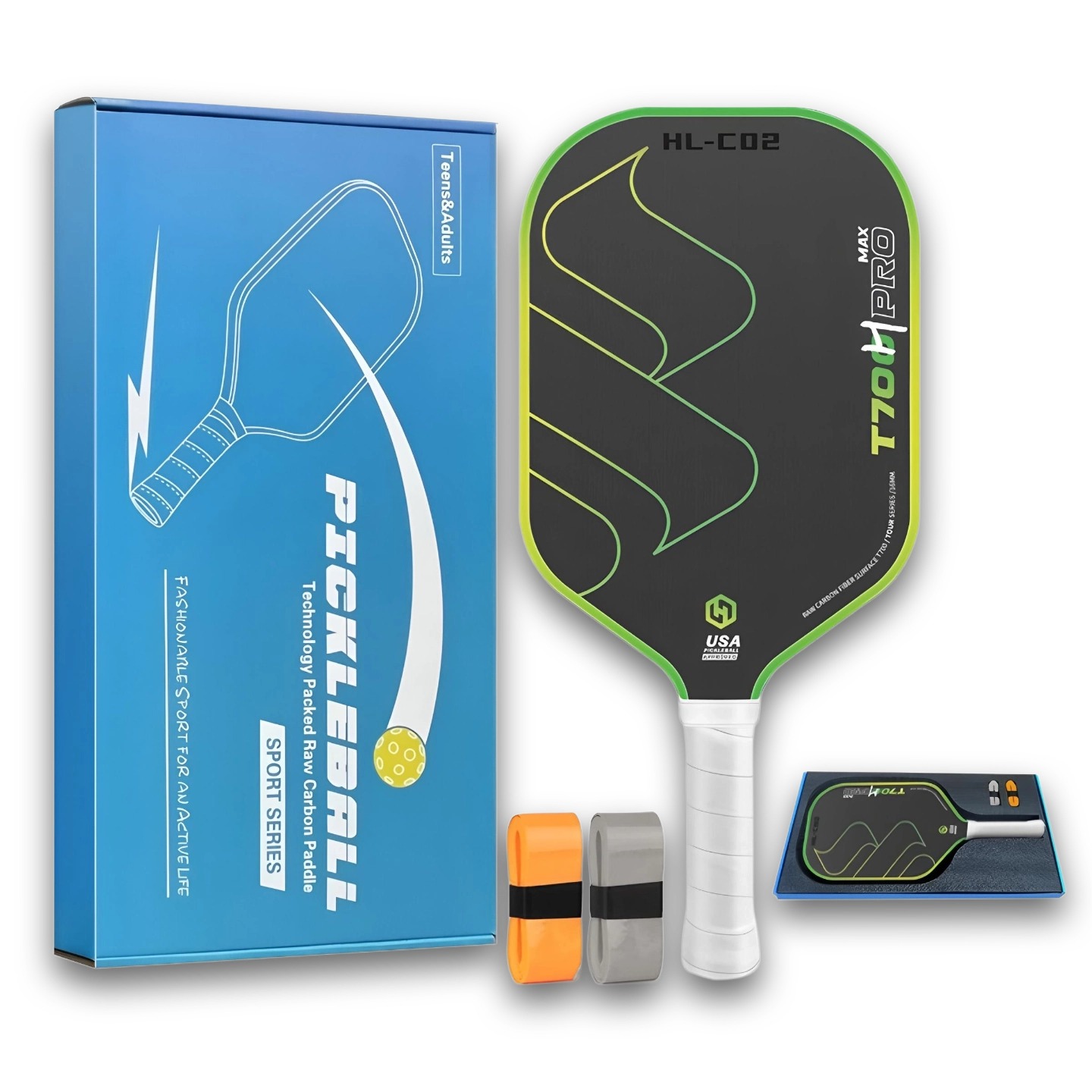
In our range that choice shows up as two models: the FCPP-11 fiberglass paddle at 215±5 g, and the FCPP-21 T700 paddle at 210±5 g. Five grams apart on paper, different products in the hand.
2. The core: honeycomb material, foil thickness and total thickness
This is the number buyers ask about least and feel most. Both FCPP models run a 16 mm core. Move up the range and the core changes: the JP25 uses an aluminium honeycomb built from 2 × 0.05 mm foil, the JP26 uses a paper honeycomb. Both weigh 220±5 g without the edge guard and 235±5 g with it — identical on the scale — yet their balance sits at 225±10 mm and 230±10 mm respectively. Same weight, different weight distribution, different swing.
So when you approve a sample, approve the core by name, not by “honeycomb”.
3. Weight and balance — and which weight you mean
A paddle weighed bare and a paddle weighed with the edge guard fitted are two different numbers, and the gap is not a rounding error: 15 g in the JP series. Decide which figure your specification refers to and make the factory print that definition on the sheet. Otherwise your incoming inspection will fail a shipment that is, in fact, correct.
4. Grip circumference and handle length
Handle length is not a comfort detail — it changes what the paddle can do. The FCPP-11 carries a 125 mm handle; the FCPP-21 goes to 140 mm, with a grip circumference of 10.80 cm (4.25 in). The longer handle supports a two-handed backhand and shifts the balance point further from the head. Pick the handle length first, then tune the balance to it; doing it the other way round usually means a second sample.
Check the dimensions against the rulebook you sell into
Under the USA Pickleball equipment standard, a paddle may not exceed 17 inches in length, and length plus width may not exceed 24 inches; there is no weight limit. Our two FCPP platforms measure 400 mm (15.8 in) and 420 mm (16.5 in), which sit inside that envelope with room for the edge guard. If you intend to sell into a market with its own equipment rules, confirm the limits before the mould is cut — a paddle that is 2 mm too long is not a cheap mistake.
What we send back before a price
Every quotation we issue is built on a specification table, and that table then becomes the inspection standard for the whole order. For a paddle it carries: face material, core material and foil thickness, bare weight, weight with edge guard, balance, grip circumference, handle length, overall length and width, and packing.
If a supplier cannot send that table, the quote you received is a guess. You can see the format we use on our OEM spec sheet page.
Packaging is part of the specification
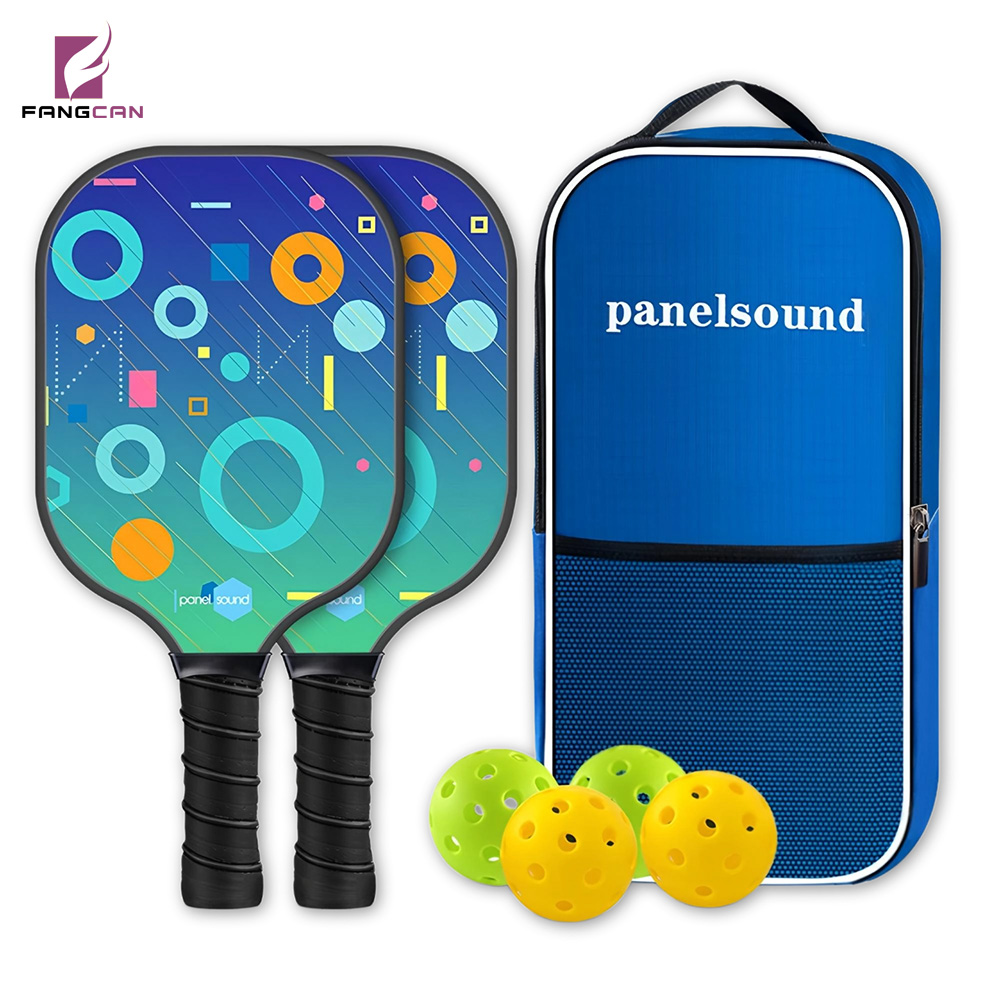
Two structures exist in our own range and they serve different channels. The FCPP-21 ships as one paddle in a box with two overgrips inside — a single-unit retail build. The FCPP-11 ships as a set: two paddles, four balls and a carry bag. Sets sell as gifts and as entry kits; single paddles sell as upgrades. Decide the channel before you decide the carton, because the carton changes the landed cost per unit more than most buyers expect.
The order of operations
One: approve the spec table. Two: sample against it. Three: seal the approved sample — that sealed unit, not the drawing, is what mass production is measured against. Four: produce. Five: pre-shipment inspection against the same table. Minimum order and lead time are quoted per model rather than published as a fixed number, because an existing mould and a new mould with tooling cost are not the same project. Our OEM and ODM process follows exactly this sequence.
FAQ
Is a 16 mm core always better than a 13 mm core?
No. A thicker core is softer and more forgiving; a thinner core is livelier and quicker at the net. It is a trade, not an upgrade. Pick the thickness for the player you are selling to, then hold it as a tolerance item on the sheet.
Can we combine a carbon face with a paper honeycomb core?
Yes, where the mould allows it. That combination is exactly the difference between our JP25 and JP26: same face, different core, same total weight, different balance.
Where can our logo go?
On the face, printed. The edge guard and the butt cap offer limited space and are usually left neutral. Send artwork with the specification, not after the sample — face printing is far cheaper to fix on a drawing than on a production run.
How long does a sample take?
It is quoted with the specification, because it depends on whether the mould exists and whether the face material is in stock. We do not publish a flat number that we would then have to break.
If you already have a target weight, balance and face, send them through our contact page and we will reply with the table before the price.