

Stocking a Stringing Shop: Reels, Tape, Base Film and Rings
Opening a shop that takes stringing work is a different purchase list from ordinary retail. A retailer stocks for “who will buy this”. A stringing shop stocks for “can I finish the job today” — and one missing accessory stops the job dead. The one that stops it is usually the cheapest item on the invoice.
Four categories, four jobs
| Category | Typical models | Spec | Role |
|---|---|---|---|
| Main string | BG (badminton), TS (tennis), TM (squash) | Mostly 200 m reels | The working stock |
| Finishing tape | FCOG-04 | 10 m / 20 m, 1 cm wide | Closing item; without it the job cannot ship |
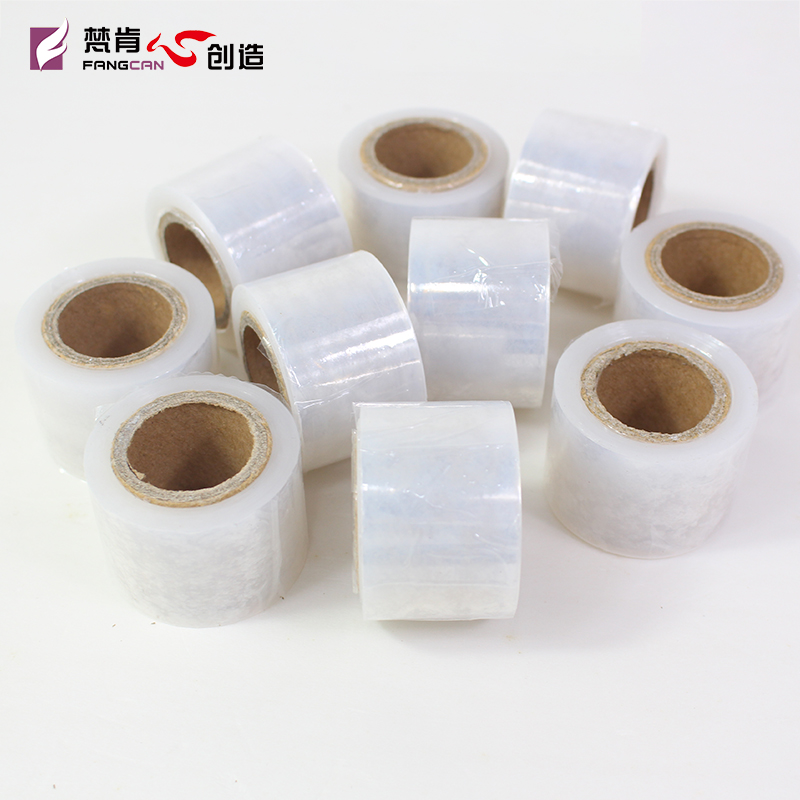
| Base film | FCA-17 PE base film | 25 m × 3 cm × 2C, polyurethane | Under-wrap before a grip |
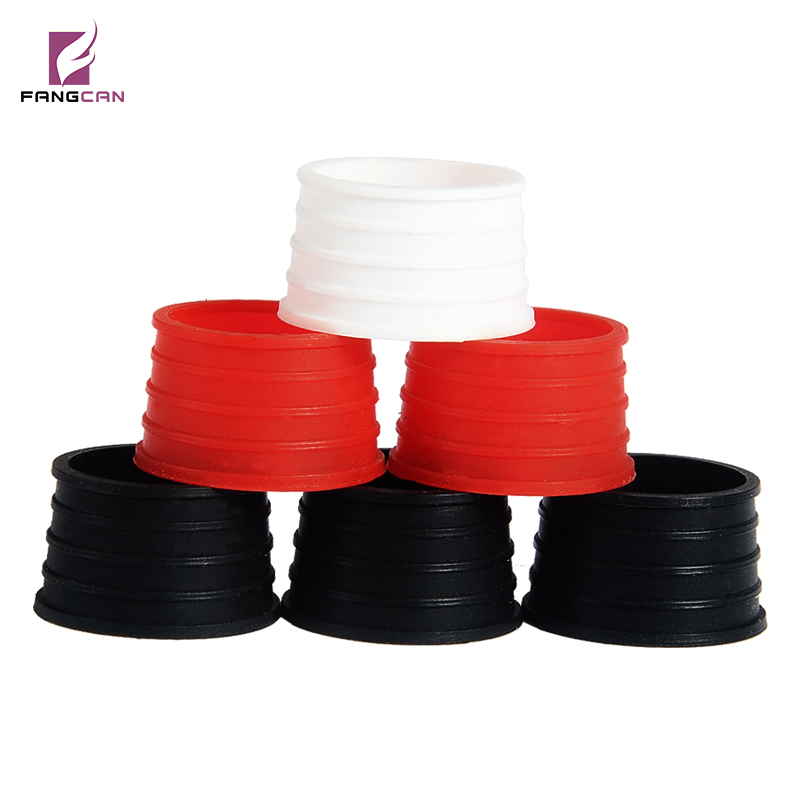
| Sealing ring | FCA-08 (badminton/squash), FCA-41 (tennis) | 3 pcs per pack | Closes the butt end |
String is where the money goes; the other three cost almost nothing. Yet those three decide whether a walk-in can be served today: a customer arrives wanting a restring, a new grip and a closed butt end, and missing any one of them means asking them to come back.
Reels are efficiency, sets are flexibility
A stringing shop should hold its main lines as reels, for a simple reason: lower unit cost and no interruption mid-job. Our BG range covers five gauges (0.66 / 0.68 / 0.69 / 0.72), TS splits into filament nylon, harsh polyester and rough 1.35 mm, and TM is 1.20 mm in two materials.
Reels assume one thing, though — you know what your customers actually play. A new shop should hold one reel of each main gauge and bridge the rest with sets, then convert once the real mix appears. A wrong reel does not move for six months.
One more point that gets missed: few shops take badminton, tennis and squash work at the same volume. Reel the primary sport, carry sets for the secondary ones, and capital efficiency improves immediately.
Finishing tape: cheapest, least dispensable
Finishing tape is the PVC strip that locks a wrapped grip down. FCOG-04 comes in 10 m and 20 m, 1 cm wide — four colours at 10 m, black and white at 20 m.
It costs so little that it barely registers, yet it is the switch that decides whether a service can be delivered. Plenty of shops stock dozens of grip models and one roll of tape; when it runs out, the customer waits in front of them.
Stock it against grip volume as a fixed ratio and never let the shelf fall below two rolls. The 20 m suits back-of-house work; the 10 m suits front-of-house retail add-ons.
Base film and sealing rings: what “professional” actually looks like
PE base film (FCA-17, 25 m × 3 cm × 2C, polyurethane) goes on the bare handle before a grip. It does two jobs: it stops grip adhesive from damaging the original grip, and it adds a barrier for players whose hands sweat heavily. The customer never sees it being applied — but they see it when the grip comes off, and a clean original handle is where a professional impression comes from.
Sealing rings (FCA-08 for badminton and squash, FCA-41 for tennis, three per pack) close the butt end. The governing property is ductility — the spec says good ductility, not easy to snap — which only matters under repeated fitting and removal. A brittle ring cracks on first installation, and the customer concludes the workmanship is poor.
Neither item is expensive, but together they turn “replace a grip” from a one-off into a repeatable service. Repeat business comes from repeatability, not from a low price on the first job.
A minimum stock list
At a workload of roughly ten rackets a day, a workable minimum looks like this:
String: one reel per main gauge — two or three gauges for badminton, depending on customers — plus two or three sets for secondary sports.
Grips: two tacky models and two dry models, with depth on the core colours. In humid regions the dry share matters more than the model count.
Accessories: at least two rolls of finishing tape, one roll of base film, two to three boxes of sealing rings.
The shape of that list is high string, low accessory — yet an accessory stock-out costs far more in idle time than it costs to buy. Accessories need a minimum stock line, not a “grab some while ordering” approach.
How to plan the buy
One, define the service scope. Badminton only, or all three sports? That decides how many reels and which sealing rings you need.
Two, reels for the main line, sets as a bridge. Start on sets to find the structure, convert to reels once it stabilises.
Three, set minimum stock lines. A threshold per accessory — top up when it drops — beats replenishing by feel.
Four, bundle the service. Restring plus grip plus base film plus sealing ring is one job; pricing it as a package sells better than summing the parts and makes accessory consumption predictable.
Frequently asked questions
Is base film necessary?
Not strictly, but advisable. It protects the original grip and adds a barrier for sweaty hands — a low-cost upgrade in perceived professionalism.
Can sealing rings be reused?
A ductile ring can be removed and refitted, though grip tightness declines with each cycle. Treating it as a consumable is safer.
Are reels always better value than sets?
Lower unit cost, heavier capital. Where turnover is uncertain, sets are the safer choice.
Should I stock all three string families from the start?
Not advisable. Gauges and tension systems differ, and spreading capital thin helps nobody. Get the primary sport right first.
Want a stocking list for a stringing shop?
If you are opening a shop or extending the service, send us your scope and average daily volume and we will return a list with minimum stock lines for string and accessories. Talk to our team.