

Basketballs: PU vs Rubber, and Two Models With Identical Specs
Basketballs give the tidiest spec sheet of the three ball sports we carry: all size #7, all 600–650 g, all 75–76 cm circumference, and the usage line reads the same on every model — cement floor, playground, rubber court, indoor and outdoor. So tidy that nothing looks different. The one real difference is the cover: one PU, two rubber.
Three models side by side
| Model | Position | Cover | Weight / circumference |
|---|---|---|---|
| FCB-01 | Senior training | PU | 600–650 g / 75–76 cm |
| FCB-11 | Standard competition | Rubber | 600–650 g / 75–76 cm |
| FCB-12 | Standard competition | Rubber | 600–650 g / 75–76 cm |
Start with the thing a buyer has to resolve: FCB-11 and FCB-12 are identical, cover included. Twin models on identical specs usually differ in colourway, surface texture, channel or some invisible process step. Ask the supplier to name it before ordering — and if they cannot, it is one ball under two numbers, and there is no reason to carry both.
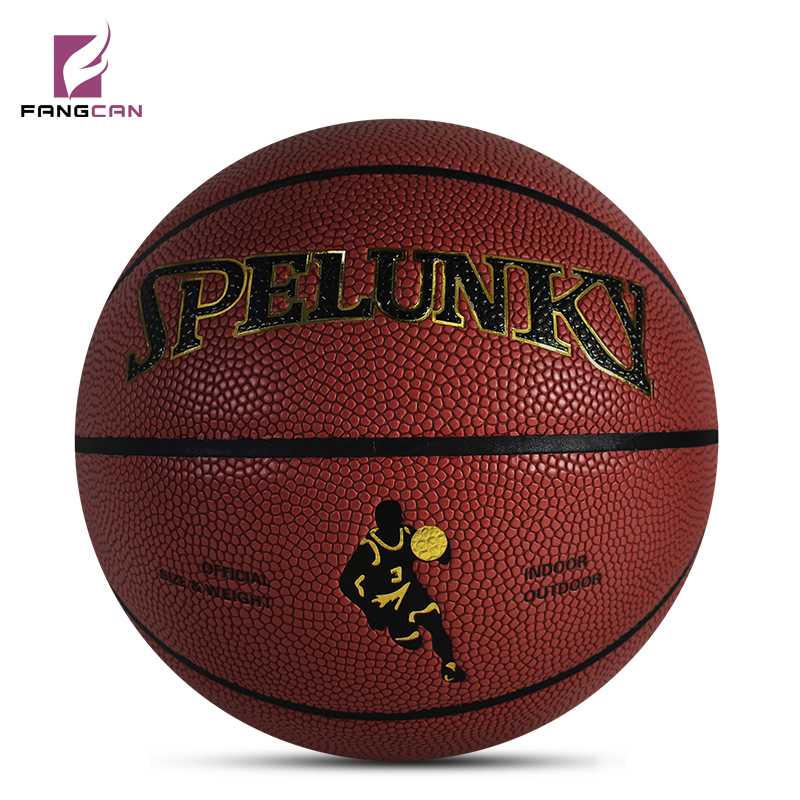
PU and rubber: two directions, not two tiers
A PU cover feels finer, with a leather-like grain and better moisture behaviour: friction falls off more slowly once hands are sweaty, so control holds. The cost is abrasion resistance — on rough concrete the surface wears visibly faster.
Rubber takes the other road. Grip comes from the rubber’s own coefficient of friction, durability is strong, and on concrete or asphalt the lifetime is clearly longer. The cost is a bouncier, coarser feel, more slip on indoor timber, and a tendency to pick up dust.
The dividing line is therefore not premium versus basic — it is which floor the ball will live on. Indoor timber and synthetic courts favour PU; outdoor concrete and playgrounds favour rubber. That single rule prevents more complaints than any marketing claim.
Note also that all three list the same usage line: cement, playground, rubber court, indoor and outdoor. That is boilerplate, not a guarantee that all three behave identically everywhere. A buyer should not be persuaded by it — it is the spec-sheet equivalent of “works anywhere”.
Weight and circumference: real differences hide inside the tolerance
600–650 g and 75–76 cm is the standard band for a size #7 ball. The band looks wide, but within one batch the measured values should cluster near the middle. If half a carton reads 600 g and the other half 650 g, that is a batch consistency problem, not “within tolerance”.
Buyers rarely request this, and it directly shapes customer experience: a 50 g spread is perceptible on the first shot. At volume, ask for a sampling record of measured weight and circumference. It costs nothing and filters out factories with loose process control.
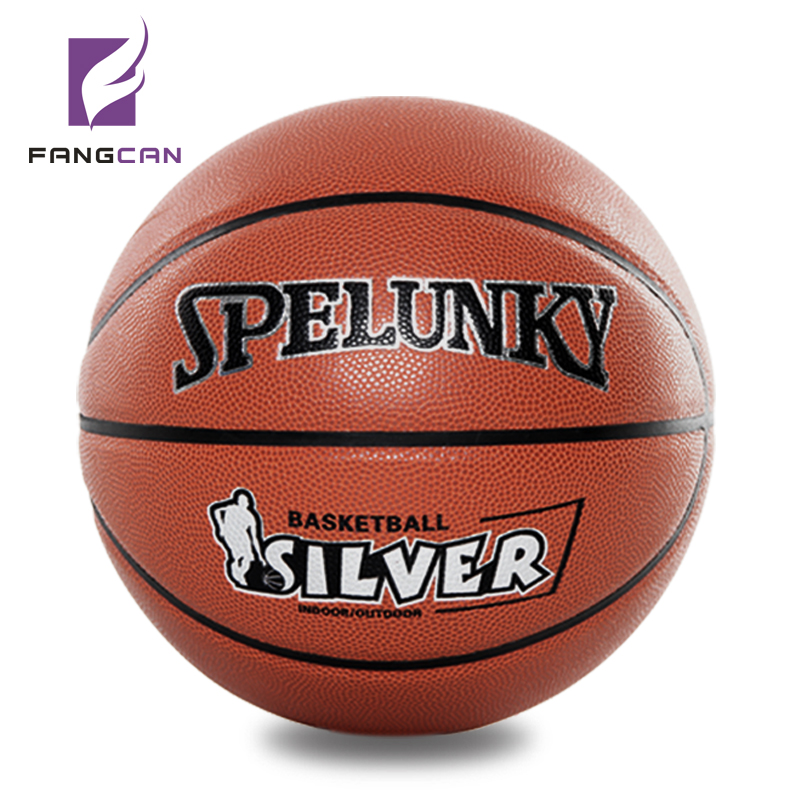
Size #7 is the adult standard — but adults are not the whole market
All three models are size #7, the adult men’s standard. That means the line currently serves one customer type: adult training and competition. Where the base includes juniors, school programmes or women’s groups, sizes 5 and 6 are the volume lines and #7 is the small holding.
So the first question is not which colour but what share of your customers are #7. Below roughly seventy percent, the line needs additional sizes rather than another #7 SKU. Multiple models on one size is not coverage; a missing size costs sales far more than a missing colour.
How to plan the buy
One, make the supplier explain 11 against 12. If they cannot, keep one. It is the easiest wasted SKU to remove.
Two, set the PU/rubber ratio by floor type. Outdoor-heavy channels lean rubber; indoor and school gyms justify more PU.
Three, sample-check weight and circumference. Not every ball, but a documented sample. Batch consistency is a precondition for durability.
Four, look at size coverage. #7 is the standard, not the range. Junior customers need 5 and 6, and a missing size hurts conversion more than a missing colourway.
Storage and inflation decide lifespan more than the cover does
Two operational habits decide how long a ball stays round. The first is inflation: a ball kept slightly under pressure feels soft and loses shape, one over-inflated puts stress on the seams. Retail buyers should ship with a stated pressure and tell staff to check it monthly.
The second is storage. Balls stacked against a rough wall or left in a hot vehicle deform and harden; a deflated ball stored flat holds shape far longer than a fully inflated one on a shelf. Neither habit is a product feature, but both sit behind a large share of “this ball went bad quickly” complaints — which is why they belong in the buying conversation, not only in the returns process.
Frequently asked questions
Can a PU ball be used outdoors?
Yes, with a shorter life. Rough ground accelerates wear on the PU surface, so long-term outdoor use points to rubber.
Is rubber cheaper?
Usually, but the difference comes from cover process and raw material, not from “grade”. Compare cost per session in the intended use, not price per ball.
Do new balls need breaking in?
Yes. A new cover is slicker for the first few sessions; that is normal behaviour, not a defect.
How do I choose between 11 and 12?
Ask for a verifiable difference — colourway, texture, channel, process. If none is offered, carry one.
Want a stocking plan for basketballs?
If you are setting the basketball line — how much PU against rubber, how deep to go on #7, whether to add sizes — send us your floor mix and customer base and we will return a combination built on cover and spec. Talk to our team.