

Tennis Equipment for Buyers: The Spec Sheet Trap and Three String Types
Tennis equipment is easier to get wrong than badminton, because the spec sheet looks more standardised than it is. Head size 102 sq.in, tension 50–55 lbs, length 27 inches — almost every supplier writes the same lines. What actually separates two suppliers is a detail hidden in the line nobody reads carefully: tension and frame stiffness squeezed into the same field.
Start with the trap in the spec sheet
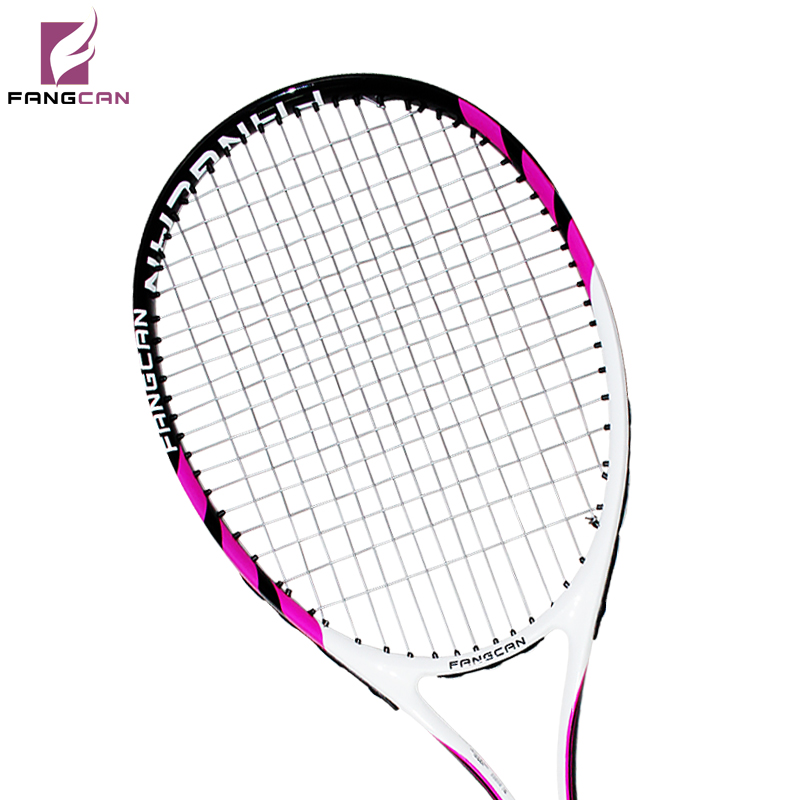
Our two carbon-composite tennis frames are listed as: 102 sq.in head, 19×16 string pattern, tension 50–55, weight 320 ± 5 g unstrung, balance 330 ± 5 mm, length 27 inches, grip size G2#, PU grip.
Note the RA that trails the tension figure. RA measures frame stiffness — it is not a tension value. Writing the two in one line is a common industry shorthand, and for a buyer it is a hazard: you specify a string against “50–55”, the supplier reads “50–55 lbs and RA within some band”, and when the two readings diverge the after-sales argument has no resolution.
The fix costs nothing: ask for tension and RA on separate lines. One request removes an entire class of dispute later.
Three string types, three playing profiles
| Type | Material | Bias | Packing |
|---|---|---|---|
| Filament nylon | Nylon | Elastic, soft feel | 12 m set, 200 m reel |
| Harsh polyester | Polyester | Durable, stable control | 12 m set, 200 m reel |
| Rough training string | 1.35 mm rough | High surface friction, training bias | Mostly 200 m reel |
These are not a good-better-best ladder; they are three directions. Nylon gives elasticity from the material itself, so it plays easily and suits beginners and casual players. Polyester deforms less and returns slower — better control, but harsher on the arm, which suits players with settled mechanics. The rough 1.35 mm gains friction from surface treatment, and 1.35 mm is itself a thicker gauge, so durability comes before feel.
The buying test is simple: how much of your customer base is “just started” against “plays three times a week”. Mostly beginners means nylon should dominate; mostly regulars means polyester is the volume line. Fix that ratio and the SKU structure follows.
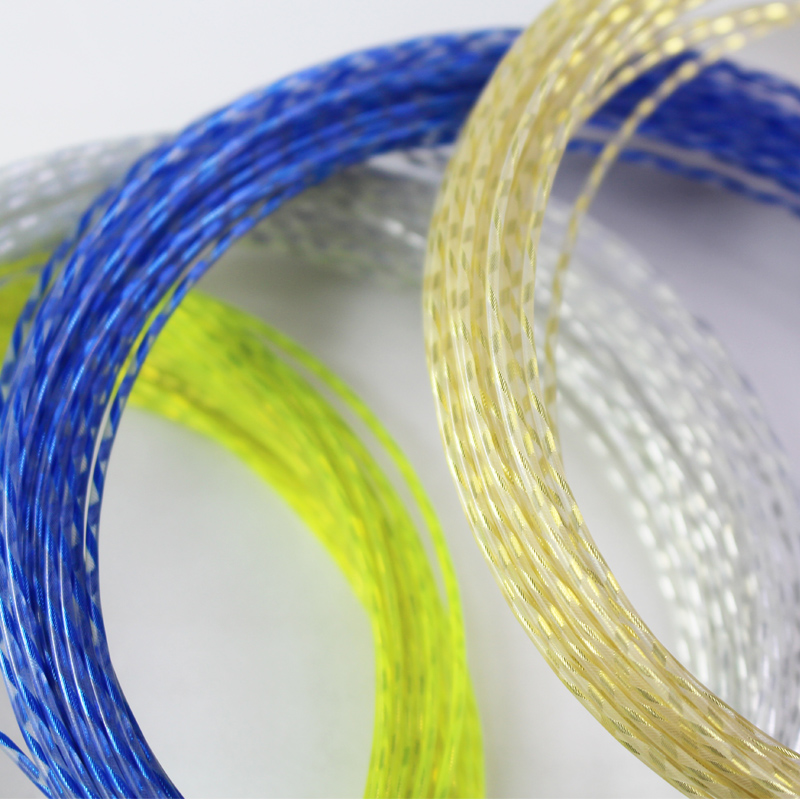
12 metre sets and 200 metre reels are two customer types
A 12 m set is enough to string one racket. It serves the walk-in customer who buys a string and takes it to a club or shop. A 200 m reel serves whoever owns a machine: clubs, pro shops, stringing studios.
The two order patterns barely overlap. Reels are bought once and reordered quarterly — high value, low frequency. Sets travel with racket sales — low value, high frequency. Merging them into one volume plan produces the familiar result: reels sitting for six months while sets run out.
One more point that gets missed: reels lower unit cost but raise capital exposure. Two hundred metres strings a lot of rackets, so a wrong bet does not move for half a year. In a new market, enter with 12 m sets, find out which string type actually sells, then convert the main line to reels.
The frame side: two models on the same specs
Our SUPER A6 and SUPER A8 sit very close: both carbon plus aluminium, 102 sq.in, 19×16 pattern, 320 g, 330 mm balance, 27 inches, G2# grip. Twin models on identical specs are common in a range, and their job is usually channel or colourway segmentation rather than performance tiering.
So don’t force a hierarchy. Ask two questions instead: where the two actually differ — colour, paint, or a component — and whether their target channels overlap. If the difference is colour, split by channel. If the channels overlap too, one model is enough; the second only adds inventory.
A 102 sq.in head is on the generous side: more forgiveness, a larger sweet spot, friendly to beginners. Paired with a 50–55 lb tension window it is a coherent “easy to start” package — and with a single-racket cover such as FCTC-01, it becomes a complete retail unit.
Planning the buy in three steps
One, pin the specs. Tension and RA on separate lines, gauge stated, packing stated. Those three lines prevent most of what goes wrong later.
Two, set the string mix by customer. Beginner-heavy markets take nylon as the volume line; advanced markets take polyester. Rough training string is a supplement, not a full wall from day one.
Three, sets before reels. Enter with 12 m sets, find the preference, then commit to reels. Size reels by how many rackets they string, not by how many rolls look reasonable.
Frequently asked questions
Can nylon and polyester be sold side by side?
Yes, and they should be. They serve different customers and together cover the range from beginner to advanced. Just avoid two similar options at the same price point — that only makes the customer hesitate.
Is 102 sq.in right for advanced players?
It is on the large side. Big heads forgive more but steer less precisely, and advanced players usually prefer smaller. If your base skews advanced, revisit the head size mix.
Why must tension and RA be stated separately?
Tension is the stringing pull; RA is frame stiffness. They are independent values. Combining them makes quotation and delivery disagree, which is one of the most common sources of purchase disputes.
Is 12 m really enough for one racket?
For conventional patterns, yes. Dense patterns or generous margins can make it tight, so test-string one before committing to volume.
Want a stocking plan for tennis equipment?
If you are setting the tennis line — which frame, how many string grades, how much in sets against reels — send us your customer base and channels and we will return a combination you can order directly. Talk to our team.