

Squash String: Polyester vs Nylon Semi-Gut, and What Cross Colour Really Sells
Squash string specs look unusually clean next to badminton: all four of our models are 1.20 mm, all are Grade A. Nothing to choose — except the two columns that matter most and get read as cosmetics: material and colour process.
Four strings, identical gauge and grade
| Model | Type | Material | Colour | Packing |
|---|---|---|---|---|
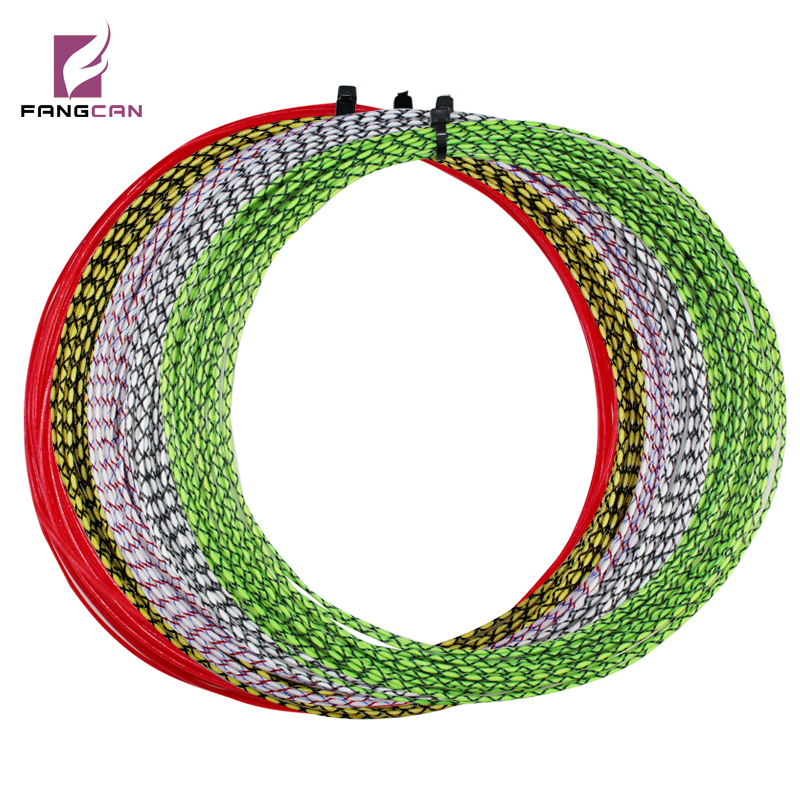
| TM101 | Multifilament | Polyester | Cross colour (red+blue+white / black+white / yellow+black / green+black) | 10 m set |
| TM102 | Multifilament | Nylon, semi-gut | Single colour (green) | 10 m set |
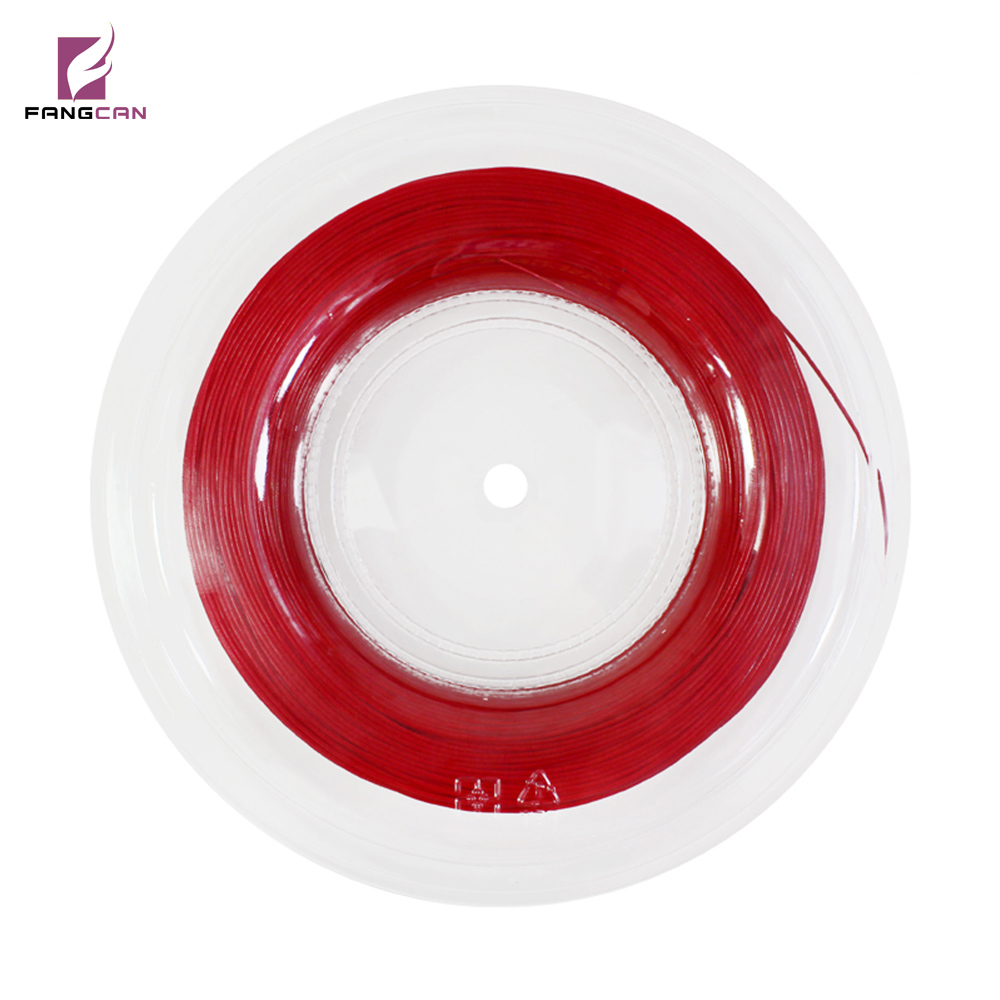
| TM201 | Multifilament | Polyester | Cross colour (as TM101) | 200 m reel |
| TM202 | Multifilament | Nylon, semi-gut | Single colour (green) | 200 m reel |
1.20 mm is the standard squash gauge and Grade A is our uniform quality mark. That leaves two real variables: polyester or nylon, set or reel. Cross colour is not a third variable — it is a marketing one, and it gets its own section below.
Polyester and nylon semi-gut: two feel profiles
Polyester deforms less and returns slower, which makes the direction of the ball more predictable — at the cost of a firmer, harsher feedback into the arm. Squash is a short-distance, high-frequency exchange game where placement matters more than ball speed, which is why polyester dominates the category.
Nylon semi-gut takes the other route. “Semi-gut” describes an attempt to reproduce the elasticity of natural gut: more deformation, faster return, softer contact. It suits players with less arm strength or sensitivity to vibration, and it is a sensible first stringing for beginners.
There is no need to rank them. Allocate by customer: polyester for advanced and club players, nylon semi-gut for entry and casual. The two bases barely overlap, so stocking both creates no internal competition.
Cross colour sells being seen, not playing better
Cross colour is two or more colours interwoven, so the strung frame shows a visible pattern. Its function is singular: to let a racket be recognised from the sideline. That has genuine value in clubs, schools and coaching groups where frames pile up and a student needs to find theirs at a glance.
It is not a performance feature, and it should not be priced as one. Priced up as a premium tier, it invites immediate comparison against the cheaper single-colour string in the same material, and conversion suffers. The better structure is same material, different colour, same price — let the customer choose by preference rather than by tier.
The practical complication is SKU count. Cross colour comes in four combinations (red+blue+white, black+white, yellow+black, green+black); single colour comes in one. Four combinations are four SKUs, and stocking all of them complicates inventory. Carry one or two, and produce the rest to order.
Sets and reels follow the same logic as badminton
A 10 m set strings one squash racket and serves walk-in customers; a 200 m reel serves clubs and pro shops with machines. Their reorder rhythms differ completely, and merging them into one volume plan goes wrong the same way it does in badminton.
Squash has one peculiarity: consumption is far lower than in badminton. A squash player keeps a frame for a long time and breaks strings rarely, so reel turnover is slower and the inventory risk is higher. Enter a new market with sets, establish which material sells, and only convert the main material to a reel.
Don’t forget the frame’s tension ceiling
The string is 1.20 mm and can take substantial tension, but squash frames vary widely. Our two aluminium-composite models are rated to 26 lbs; the full carbon DARKNESS 7 is rated to 35. That means an entry frame strung with 1.20 mm at 30 lbs or more is at risk.
String and frame ratings should agree when you build the assortment: entry frames at conventional tension, advanced frames for high tension. This is exactly the badminton logic, but the squash spread — 26 to 35 lbs — is wider, so the alignment matters more.
How to plan the buy
Set the material ratio first. Club and advanced customers mean polyester dominates; schools and casual players mean nylon semi-gut.
Then the packing. Start a new market on 10 m sets. Add reels only where you have a stable stringing channel, and only for the main material.
Carry one or two cross colours. Four combinations is too wide for a niche category; two covers the “I want to be recognised” demand.
Align tension with the frame. No high tension on entry frames — putting that line into the order saves a batch of after-sales work.
Frequently asked questions
Does cross colour play better?
No. Colour changes appearance; material and gauge decide performance. The same material in single colour and cross colour plays identically.
Is 1.20 mm suitable for every squash frame?
The gauge is universal, but it is constrained by the frame’s tension ceiling. High tension in an entry frame risks the frame, and that has nothing to do with gauge.
Can squash string be used in a badminton racket?
Not advisable. Gauge, elasticity and tension systems differ, and cross-use affects both feel and lifespan.
How do I control reel overstock?
Estimate by how many rackets a reel strings, not by how many rolls feel right. Squash string moves slowly — replenish in small quarterly batches rather than a year at once.
Want a stocking plan for squash string?
If you are setting the squash string range — how much polyester against nylon, how sets and reels split — send us your customer base and stringing channels and we will return a combination built on material and packing. Talk to our team.