

Sports Protection: Tape Widths, Bandage Materials and the SKU Explosion
Sports protection is the category most often bought by the roll: low unit price, small footprint, apparently little to choose between options — so the purchase order says “some bandages, some tape”. The problem surfaces at the shop, where one model hangs in three widths and eight colours, and only two of them actually sell.
Start by untangling width
| Product | Spec | Material | Colours |
|---|---|---|---|
| Kinesiology tape | 3.8 cm × 5 m | 100% cotton + acrylic glue | 8 |
| Kinesiology tape | 5 cm × 5 m | 100% cotton + acrylic glue | 8 |
| Kinesiology tape | 7.5 cm × 5 m | 100% cotton + acrylic glue | 8 |
| Bandage, cotton | 5 cm × 4.5 m stretch | 85% cotton + 9% glue + 6% spandex | 8 |
| Bandage, non-woven | 5 cm × 4.5 m stretch | 85% non-woven + 9% glue + 6% spandex | 9 |
| Underwrap foam tape | 6 cm × 20 m stretch | 100% polyester amine | 1 |
What is easy to miscalculate is colours multiplied by specs. Three tape widths at eight colours each is 24 SKUs; two bandage materials at eight and nine colours is 17 more. Spread a low-ticket line that wide and the cost of clearing slow stock exceeds the margin it was supposed to earn.
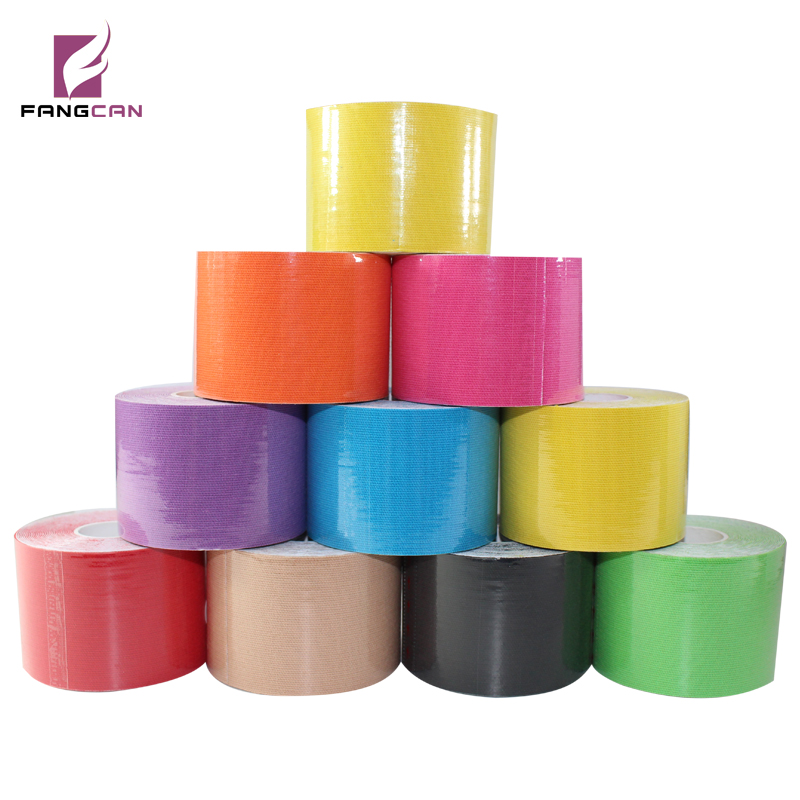
Width maps to a body part, not to small-medium-large
The three widths are not a size ladder; each corresponds to how a joint is taped. 3.8 cm suits wrists, fingers and ankles — small joints that need no trimming. 5 cm is the general width for knee, elbow and shoulder. 7.5 cm covers large muscle groups such as thigh and lower back, where the strip has to span the support area.
That means set the width mix from where your customers get injured, not from price. In ball-sport channels, wrists and ankles far outnumber backs, so 3.8 and 5 cm should carry the range and 7.5 cm sits as a small holding. Fitness and rehab channels are where 7.5 cm earns more space.
Get the mix wrong and the consequence is concrete: the volume widths run out while the large ones pile up. Tape is a consumable — a stock-out sends the customer to another brand, and they rarely come back.
Cotton and non-woven: two hands, two situations
Both bandages share the same spec — 5 cm wide, 4.5 m stretched — and nearly the same composition (85% substrate, 9% glue, 6% spandex). The only difference is whether the substrate is cotton or non-woven.
Cotton conforms better and feels softer; it follows a joint and holds well over long wear or direct skin contact. Non-woven is lighter, breathes more and tears cleanly, which suits rapid wrapping and single use. Both have a place: cotton for training and rehab, non-woven for events and first response.
The foam underwrap (6 cm × 20 m) plays a different role. It is more than four times the length of a standard bandage and made of polyester foam; its job is a base layer under a holding bandage, reducing skin friction. It is not a substitute — it is an accessory, and buyers often forget it, leaving customers with a bandage that does not work as expected.
Consumption maths: 5 metres and 20 metres are different businesses
A 5 m roll of kinesiology tape covers a handful of applications; a 20 m foam underwrap lasts a long time. The reorder frequencies differ by an order of magnitude, so the planning should be separated.
Tape is high-frequency: replenish often, order small. Foam underwrap is low-frequency and durable: stock deeper in one go. Put them on the same replenishment cycle and you get the classic mismatch — tape out of stock, underwrap sitting.
One more factor: the acrylic adhesive is sensitive to storage conditions. Heat and humidity degrade it before its time, which matters most in tropical markets. Keep tape batches modest there.
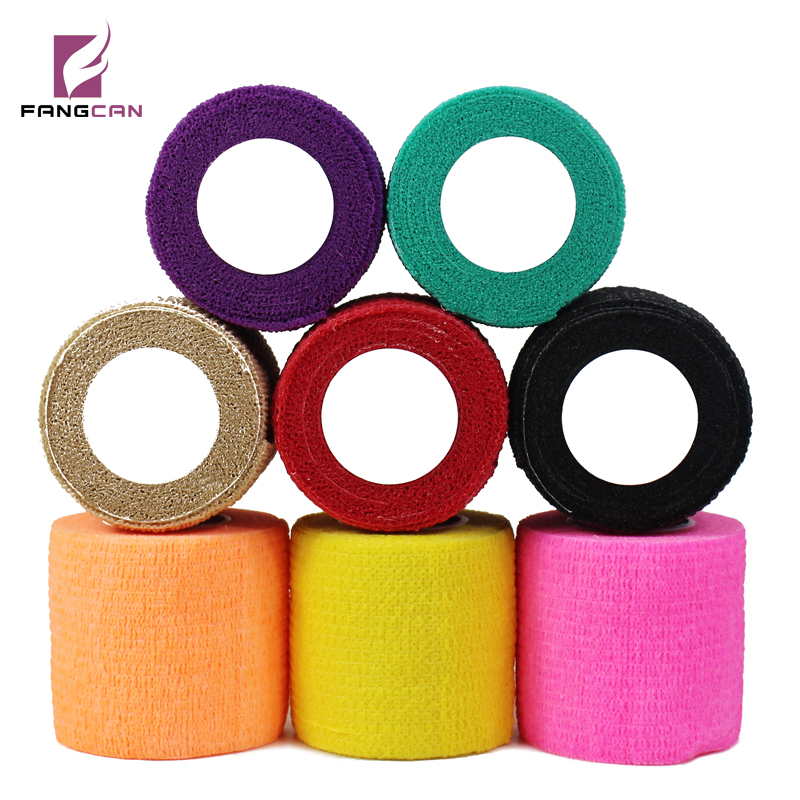
Colour is where you should cut, deliberately
Eight tape colours and eight or nine bandage colours is where this category gets away from a buyer. Colour does carry meaning here — skin tone for situations that call for discretion, brights for visibility at events — but carrying all eight is not realistic.
A workable set is skin tone, black, and one or two brights. Skin tone and black cover almost all everyday demand; brights serve events and social content. Produce the rest to order. That alone takes the list from the mid-twenties to under ten, and turnover cleans up immediately.
Frequently asked questions
Do I need all three tape widths?
Depends on the customer. Ball-sport channels need 3.8 and 5 cm with a small holding of 7.5 cm; fitness and rehab channels justify more of the wide one.
Cotton or non-woven bandage?
Not better or worse — situational. Cotton conforms and suits long wear; non-woven is light, breathable and easy to tear for quick work.
Can foam underwrap replace a bandage?
No. It is a base layer that reduces friction and is used together with a holding bandage.
How long can tape be stored?
It depends on conditions. Heat and humidity degrade acrylic adhesive early, so tropical markets should order small and reorder often rather than hold six months.
Products mentioned above
Want a stocking plan for sports protection?
If you are setting the protection line — how many tape widths, how many bandage colours, whether to carry foam underwrap — send us your channels and customer base and we will return a combination built on spec and material. Talk to our team.