

Badminton String From a Chinese Factory: How to Read the Spec Sheet
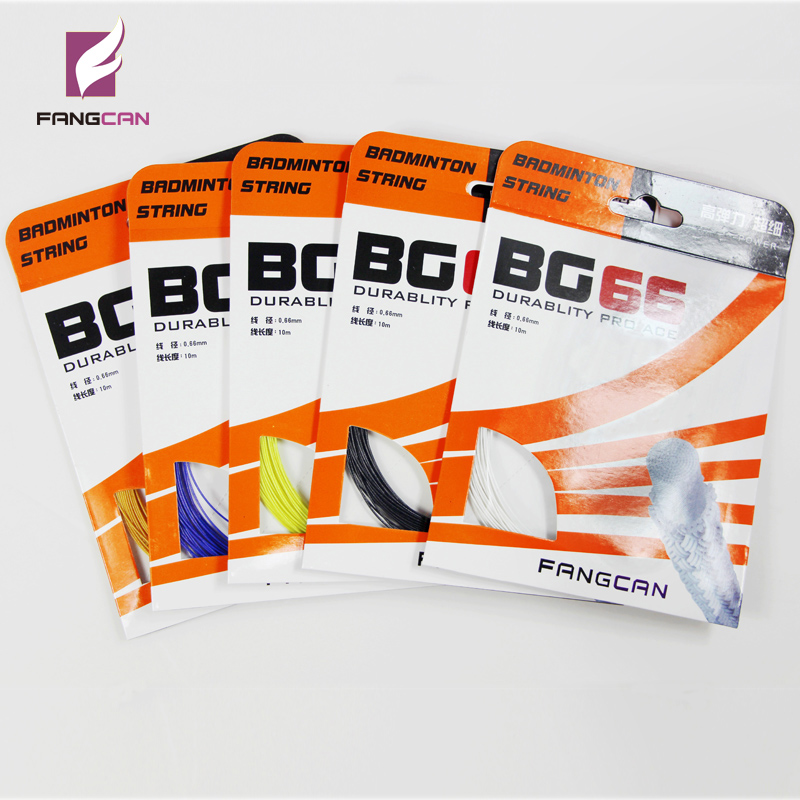
Six lines on a string spec sheet, and only two of them are marketing
A badminton string is the cheapest item in a racket and the one that decides whether a customer comes back. When buyers search for a string manufacturer in China they usually receive a price list; what they should receive first is a specification, because gauge and construction set the ceiling on everything else — including how long the string survives at the tension your market actually plays.
1. Gauge, and what it costs you
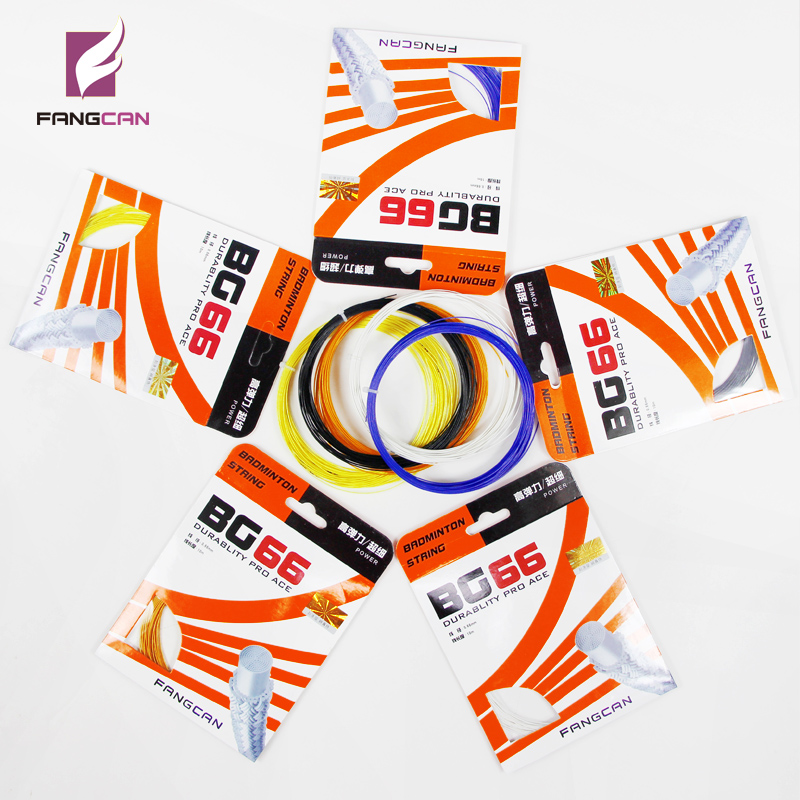
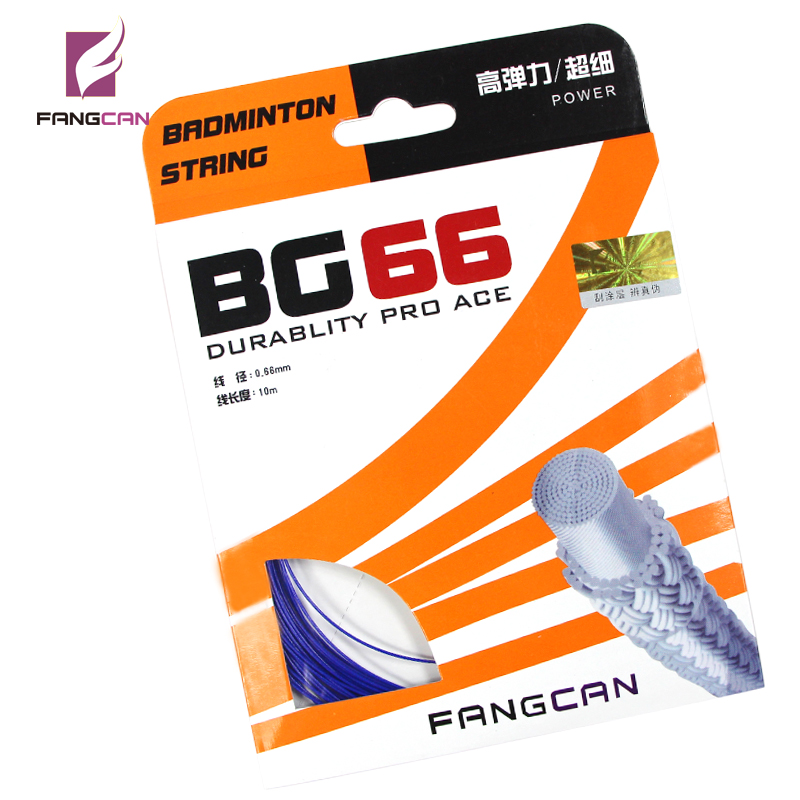
Gauge is the first number and the only one most buyers check. Our BG66 is 0.66 mm; the BG2006 reel is 0.72 mm. Six hundredths of a millimetre is the difference between a string that bites the shuttle and a string that survives a season of club play. Thin strings feel better and break sooner; thick strings last and feel duller. There is no correct answer, only a target player.
The commercial consequence is simple: a thin string sold into a school or club programme generates complaints, and a thick string sold to a competitive player generates returns. Match the gauge to the end user before you negotiate the price.
2. The tension ceiling is a specification, not a suggestion
Every string model carries a maximum tension, and it is printed for a reason. BG66 is rated 22–24 lbs; BG2006 is rated 22–26 lbs. String a 0.66 mm string at 30 lbs because a customer asked for it and the failure is not covered by anything — the sheet said 24.
This is also where a factory’s honesty shows. A supplier who quotes a single “max tension” for an entire catalogue has not tested the catalogue.
3. Construction: what the gauge does not tell you
Two strings at 0.66 mm can behave completely differently depending on core and outer construction — multifilament versus monofilament, the number of outer wraps, whether the surface is textured. Ask for the construction in writing, and ask for the approved sample to be sealed. In our range the same nominal product family runs from nylon training string to multifilament and cross-colour competition string, and the sheet names which is which.
4. Reel or set: the packing is a cost decision
The same string ships two ways. A 10 m set is one restring for one customer — good for retail, good for a stringing shop’s counter, expensive per metre. A 200 m reel serves roughly twenty restrings and is the only sane format for a stringing shop doing volume. Both formats exist in our catalogue; the reel carries a printed label with the specification, which matters more than it sounds: an unlabelled reel in a shop is an anonymous string by the second week.
5. Colour as a stocked item
BG66 runs five colourways and BG2006 runs four in our standard build. Colour is not decoration in this category: a shop that stocks one colour loses the customer who wants the racket to match. But every extra colour is a separate SKU with its own minimum, so decide the colour count with the same discipline you apply to gauge.
6. What to verify before a bulk order
- Measure the gauge. A micrometer on three points of the same coil. Nominal 0.66 mm that measures 0.69 mm is a different string.
- String one at the rated ceiling. Not above it. If the sample fails at its own published maximum, the sheet is wrong and the batch is suspect.
- Check coil memory. A string that arrives with tight, springy coils is harder to string cleanly and points to how it was wound and stored.
- Confirm the reel label and inner box printing. If you are private-labelling, this is the part that most often gets missed between the sample and the shipment.
What the sheet should contain
Gauge, core and outer construction, colourways, maximum tension, packing format (10 m set or 200 m reel), and the printing on reel and box. Our OEM spec sheet shows the same table used for rackets, and the string version is shorter by design: there are fewer variables, so there is less excuse for leaving one out.
FAQ
Is a thinner string always more powerful?
It is more elastic at the same tension, which most players read as power, and it loses tension faster. At equal tension a 0.66 mm string will feel livelier in week one and deader in week six than a 0.72 mm string.
Can we order a custom colour?
Yes, subject to order quantity, because a custom shade is a dye lot. Standard colourways ship without that commitment.
Do you supply the same string on both reel and set?
The construction is the same; the packing and the label differ. Confirm which one you are approving on the sample, because a reel sample does not prove the set winding.
What is the minimum order?
Quoted per model and per packing format — a new colour or a new label is a different project from a repeat of a standard build. We quote it with the specification rather than publish one number that would be wrong for half the catalogue.
Send your target gauge, tension ceiling and packing format through the contact page and we will send the specification table back before we discuss price.