

Private-Label Sports Socks: Yarn Ratio, Size Run and Logo Method
A sock is a knit with four variables, and buyers usually specify one
Sports socks look like the simplest item on a racket-sports order, and they are the item most likely to come back. Not because factories are careless, but because the buyer specified a colour and a logo and left the yarn ratio, the size run and the panel layout to whoever was running the machine. Those three are the product.
1. Yarn ratio: the number that decides the second order
Read the ratio on the label before the price. In our range the SW952 short sock is 85% cotton, 12% polyester, 3% elastane; the SW905 terry-back sock is 80% cotton, 17% polyester, 3% spandex. Four points of cotton is not a marketing difference — it changes absorbency, drying time and how the sock behaves after twenty washes.
Elastane is the smallest number and the one that fails first. Below roughly 2% the cuff gives up early; the exact figure is a decision for the buyer, but it should be written down, not inherited.
2. Where the terry goes matters more than how much
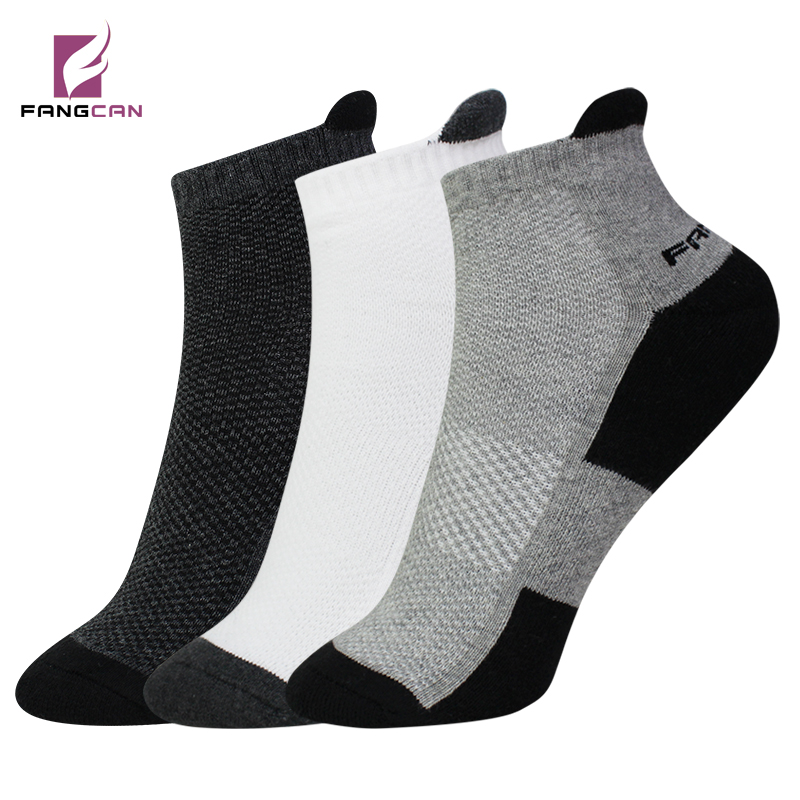
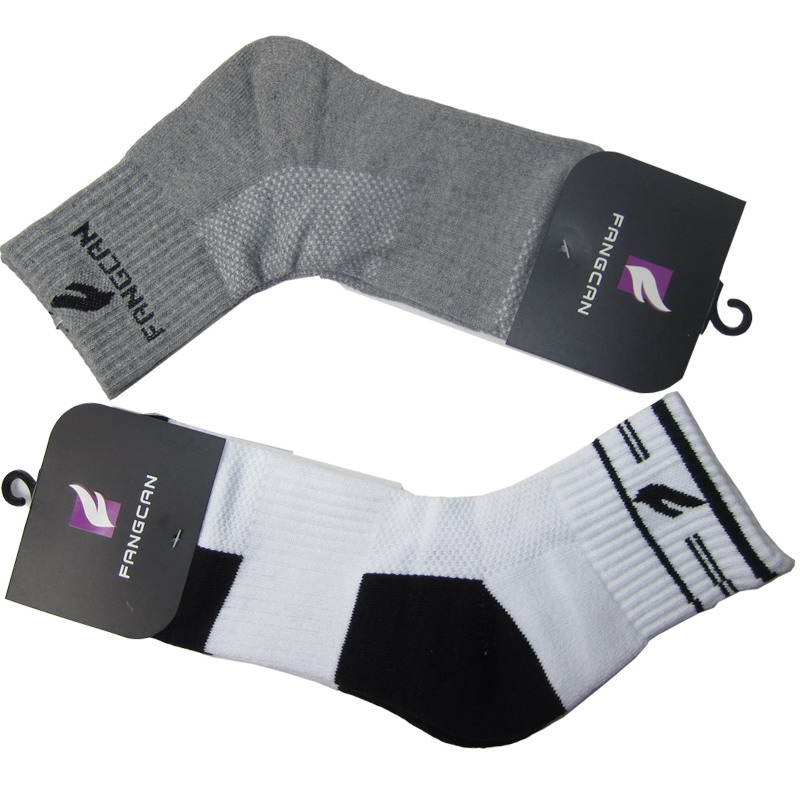
“Terry” appears on almost every sports sock listing and describes almost nothing. The useful question is where the loop pile sits: a full-sole terry cushions the whole foot; a heel-and-toe terry puts the pile where impact happens and keeps the arch thin so the shoe still fits. Our SW951 boat sock builds the pile at the sole and keeps the body in mesh, which is a specific answer to a specific problem — heat, not impact.
3. Size run, and the cost of a short one
Adult 39–43 is our standard run for men’s models, and it is a compromise: it covers most of the market and fits nobody perfectly. If your channel sells to schools, clubs or a single national market, ask for the run that matches it. A two-size run costs more per unit and returns fewer pairs; that trade is worth doing the arithmetic on before the order, not after.
4. Logo method: jacquard, embroidery or plastic drop
This is where private-label orders are won or lost, because the three methods are not interchangeable quality tiers — they solve different problems:
- Jacquard — the logo is knitted into the fabric. Flat, permanent, no added weight, best on a sock where the logo repeats or wraps.
- Embroidery — a raised, stitched mark on a finished sock. Reads as premium, adds a small stiff patch, needs a suitable ground fabric.
- Plastic drop — a moulded PVC mark. Sharpest edges and strongest colour, and the heaviest and least breathable of the three.
Our SW906 women’s model is built around embroidery as the standard logo route; the jacquard and plastic-drop builds sit on other models in the same line. Pick the method with the artwork in hand, because a four-colour gradient will not survive jacquard at sock gauge.
5. Packing decides the channel
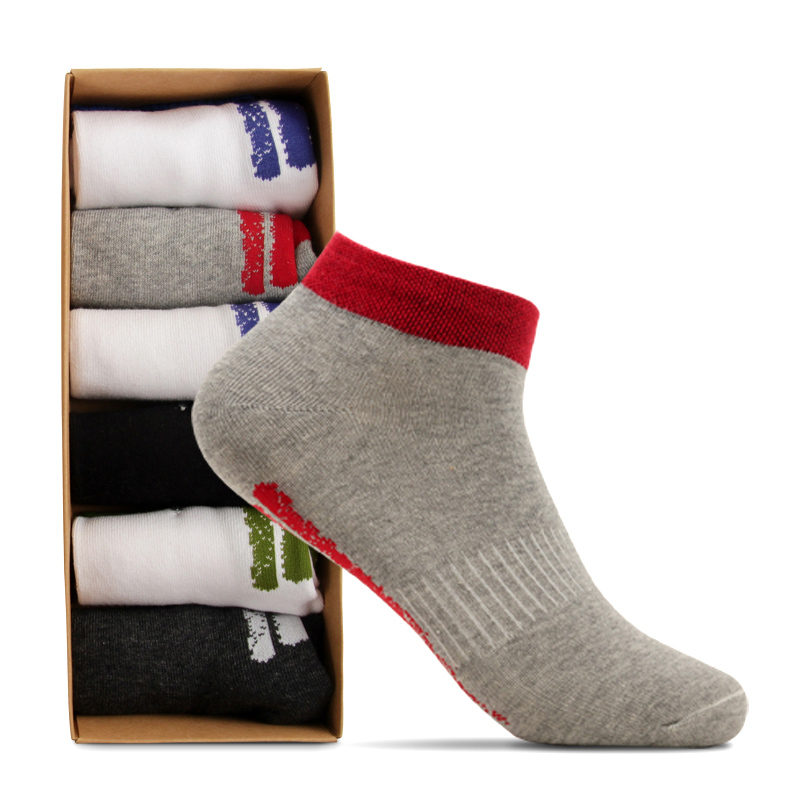
One pair per OPP bag is the wholesale default; five pairs per box is the retail set. The same sock sells as both, at very different price points, and the packing is the only difference. Decide the packing with the channel, and put it on the sheet — a carton specification that arrives after production is the most expensive change in the whole order.
What goes on the specification
Yarn ratio, terry placement, size run, colour blocking with a panel drawing, logo method and artwork, and packing. That table becomes the inspection standard: a shipment is correct or not against those lines and nothing else.
Our spec sheet page shows the format we use across categories — the sock version replaces frame and tension fields with yarn and size run, and keeps the same discipline.
FAQ
Can the yarn ratio be changed on an existing model?
Yes, within what the knitting gauge can hold. A large shift in cotton content changes the hand and the shrinkage, so it needs a new sample rather than a note on the order.
Is embroidery possible on a thin summer sock?
It is possible and usually a mistake: the stitch density stiffens a thin knit. On light socks, jacquard is the better route; save embroidery for the heavier models.
Can we mix men’s and women’s sizes in one carton?
Yes, and it is common for club orders. It has to be declared on the packing line of the specification, because it changes the carton count and the labelling.
What is the minimum order?
Quoted per model, per logo method and per packing. A jacquard programme and an embroidery programme have different minimums, so the two are never quoted as one number.
Send the artwork, yarn preference and size run through the contact page; the specification table comes back before the price does.