

Base Grip vs Overgrip: Two Layers, Two Jobs
Two products, both wrapped around a handle, both sold by the metre, and buyers routinely quote one when they mean the other.
The base grip is part of the racket’s structure. The overgrip is a consumable the player replaces. Almost every handle complaint that reaches a supplier starts with those two being treated as one item.
The distinction is not pedantic. It decides who owns the problem, what thickness to specify, and what the customer should be told at the counter.
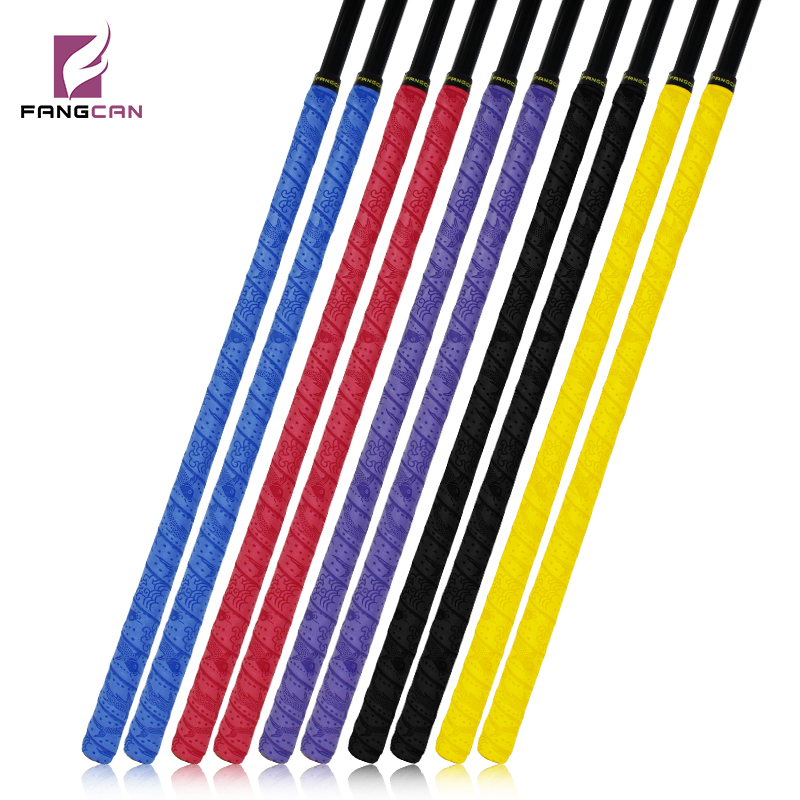
The base grip is a structural layer
The base grip sits directly on the handle core and stays there for the life of the frame.
It sets the handle’s finished circumference, provides the tack that keeps the racket from turning in the hand, and absorbs shock before it reaches the wood or foam core. It is fitted at the factory, with an adhesive backing and a defined overlap, and it is not designed to be removed by the player.
Because it sets circumference, it is also the layer that determines what grip size the frame actually is. A frame specified at a 4 1/4 inch handle with a 1.9 mm base grip is not the same handle as the same core with a 1.5 mm grip.
The overgrip is a consumable
The overgrip wraps on top of the base grip to give the player a fresh surface, more tack or less, and a slightly larger handle.
It is expected to wear out; that is its function. It is thinner, it is replaced every few sessions, and its job is to protect the base grip from sweat and dirt while delivering the feel the player wants.
Typical figures put an overgrip around 0.5 to 0.75 mm and a base grip around 1.5 to 1.9 mm. Two or three wraps of overgrip therefore change the handle by about one grip size, which is a large change in a specification where a single size step is 1/8 inch.
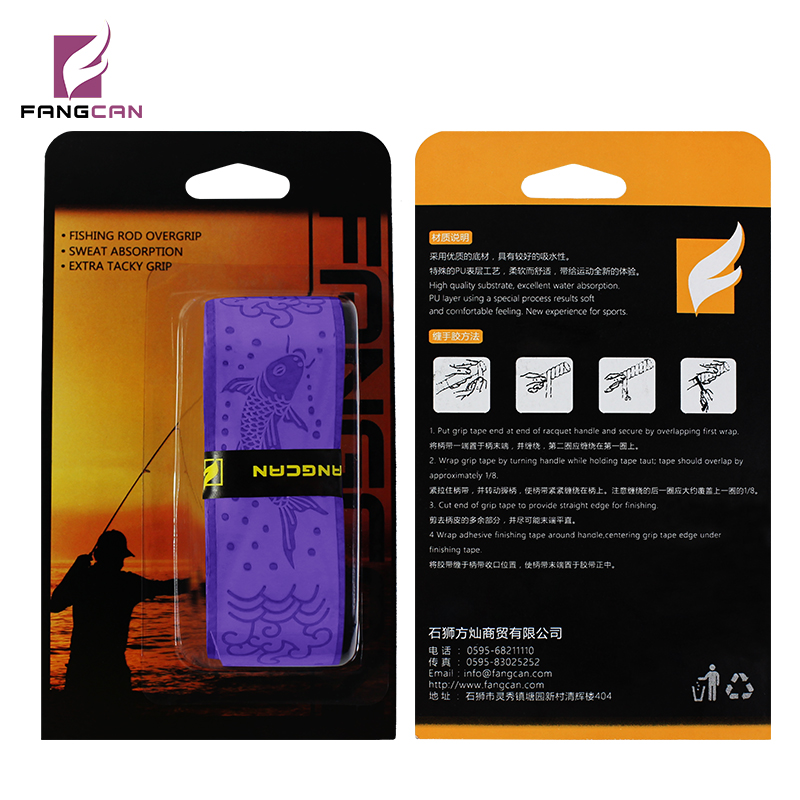
Why the two get confused
Both are called grip. Both are sold in rolls and strips. Both are described by thickness, and both appear in the same product photography. A buyer who has only seen retail packaging has no reason to know that one is fitted in the factory and the other is bought by the dozen by the player.
The confusion becomes visible in orders: a purchase order for “grip, 0.6 mm” is ambiguous until someone asks whether the customer intends to fit it to a bare handle or over an existing grip.
The dimensional maths nobody publishes
Handle size is quoted as a circumference in inches or a letter code, and the layers add to it.
A 0.60 mm overgrip adds roughly 1.2 mm to the circumference per wrap, which sounds trivial until it is compared against the 3.2 mm that separates one grip size from the next. Two wraps and a player has effectively moved up a size without anyone measuring anything.
That is the arithmetic behind the frequent complaint that a racket “feels bigger than the one I tried”. It usually is bigger, by exactly the thickness of what the shop wrapped onto it. The full conversion is set out in this note on overgrip thickness.
What each layer should specify
- Base grip: material, thickness, adhesive type, and the handle circumference it produces.
- Base grip: whether it is replaceable and whether the replacement is supplied.
- Overgrip: thickness, length, and the overlap the length is calculated for.
- Overgrip: surface type, tacky, dry, perforated, or keel, as a specification, not a preference.
- Base film, where one is used, since it changes adhesion and removal.
The fifth item is the one that separates suppliers who understand their own product from those who assemble a catalogue. A PE base film is a thin barrier between the handle and the wrap; it changes how the base grip bonds, how cleanly it comes off, and how much moisture the handle core absorbs over a season.
Merchandising the pair
Presented properly, the two layers answer different questions. The 1500 mm overgrip is bought by the player who wants to re-wrap often and wants enough length for a two-handed backhand or a long handle. The base grip is bought by the shop that is rebuilding a frame, or by the brand that wants a consistent handle out of the factory.
Replacement cycles decide the SKU plan
A player who plays twice a week replaces an overgrip every two to four weeks and a base grip roughly never. That ratio is why the two products belong in different order quantities and different pack sizes: overgrip in multi-packs and rolls, base grip in single units or small shop packs.
Getting the ratio wrong shows up as dead stock. A shop that stocks them one-to-one will sell out of overgrip and sit on base grips for a year, which is a merchandising error rather than a demand problem.
Selling them as one category and one price band is why the category is unprofitable. They have different replacement cycles, different buyers and different margins, and a range that treats them separately will price both correctly.