

Head Protection Tape: Width, Adhesion, Pack Count
A racket frame fails in a predictable order. The string breaks first, the grommets wear second, and the paint at the top of the hoop goes third — usually from being scraped on a court floor during a low pickup, not from any impact the frame was designed to absorb. Head protection tape exists for that third failure. It is the cheapest component in the whole assembly and the one most often left out of a purchase order.
Buyers who treat it as a generic consumable tend to buy the wrong thing twice: first too thin, then too short. The specification is only three fields wide, but each one changes what the product can do.

Width sets where the tape can sit
The strip has to cover the outer edge of the hoop without spilling onto the string bed or onto the side wall where the frame flexes. Too narrow and the top edge stays exposed; too wide and the tape lifts at the corners the moment the frame is strung, because the string tension pulls the frame section inward.
For a buyer, width is really a compatibility question. A strip sized for a thin aero section will not sit flat on a box-section frame, and a strip sized for a wide beam will overlap the grommet strip. If your range covers more than one frame family, the practical answer is two widths rather than one compromise width — a compromise strip fits nothing well and generates the returns that eat the margin on a low-ticket item.
Adhesion is a temperature and surface story
Every tape specifies an adhesive, and almost no buyer asks which one. Acrylic adhesive holds better on painted frames and tolerates heat; rubber-based adhesive grabs faster on bare surfaces but creeps in a hot car. Since the tape lives on the outside of a frame that spends its life in bags, cars and tropical warehouses, heat resistance matters more than initial tack.
Two things follow for procurement. First, ask for the tape to be tested after 24 hours rather than immediately — a strip that peels on day two was never really stuck. Second, specify that the frame surface must be cleaned and dry before application, and put that instruction on the retail packaging. Most complaints about “the tape does not stick” are surface contamination, not adhesive quality, and a one-line instruction removes the complaint at the source.
Why it is sold by the piece, not by the metre
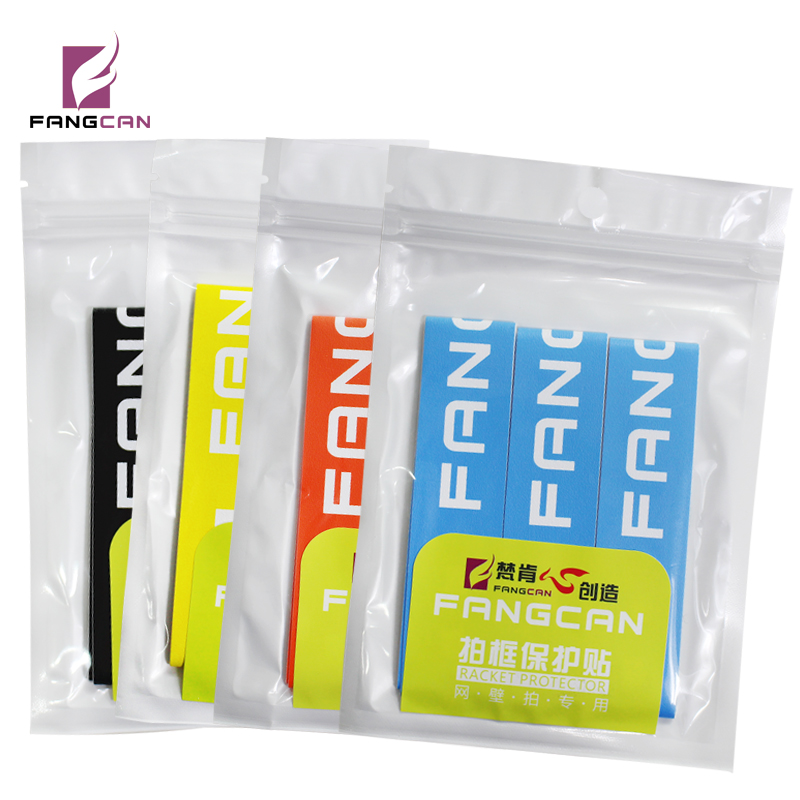
A player replaces this strip once or twice a season, not once a week. Selling it as a single long roll creates a product that outlives the racket and never repurchases. Selling it as one, two or three strips per pack matches the actual replacement rhythm and gives the retailer three price points without three SKUs of different material.
That pack structure is also a service to the buyer’s own customer. A three-strip pack covers a full season for one player, or one strip each for a small club order. A one-strip pack is the impulse unit at the counter. If your range only offers one pack size, you are forcing a stocking decision on the retailer that they will resolve by not stocking you.
What to write on the purchase order
- Width in millimetres, and the frame families it is confirmed to fit.
- Adhesive type, plus a 24-hour peel check as the acceptance test.
- Colour and gloss level, matched to the frames it will be sold alongside.
- Pack count per bag, and the barcode on the retail bag rather than the carton.
- Carton quantity, so the per-unit freight is visible before the price is agreed.
None of these fields are difficult. The reason they get skipped is that the item is cheap, and cheap items get bought from a photograph. That is exactly how a distributor ends up with a carton of strips that lift at the corners — a defect that only appears after the goods have crossed a border.
Where it sits in the accessory mix
This is not a product that sells itself. It sells when it is placed next to the stringing service, next to the overgrip, or inside the same pack as a replacement set. Treated as a standalone line it will look like a slow mover; treated as an attachment it improves the average value of every stringing transaction without adding labour.
For a distributor building an accessory range, the honest framing is this: head protection tape will never be a volume driver, and it will almost never be returned if the width and adhesive are right. That combination — low ticket, low return, high attachment — is worth more than its line on the invoice suggests. Order it in the same shipment as the two-strip pack, and set the three-strip pack as the club-facing unit. If you are still shaping the wider accessory order, the grading logic in our returns note applies here too: define what counts as a defect before the first carton lands.
Two mistakes that cost more than the tape
The first is ordering one width for a mixed range and accepting that it fits most frames. “Most” is the word that generates returns: the customer whose frame is the exception has no way of knowing before they buy, and the strip that does not sit flat looks like a defective product rather than an incompatible one.
The second is treating colour as decoration. A strip in a colour that clashes with the frame will not be applied, and an unapplied strip is not repurchased. Match the strip to the two or three frame colours you actually sell, and let the rest of the palette be a special order.