

Patella Straps: Pressure Point, Width and Closure
Knee supports fall into two families, and buyers conflate them constantly. A sleeve surrounds the joint and applies broad compression. A patella strap is a narrow band that sits below the kneecap and concentrates pressure on the patellar tendon. They are not interchangeable, they do not sell to the same customer, and the strap is the harder of the two to specify correctly.
This article is about the strap. It is also, deliberately, not a medical claim: a strap supports a joint under load. It does not treat a condition, and any supplier who tells you otherwise is selling you a liability.
Placement: below the kneecap, not over it
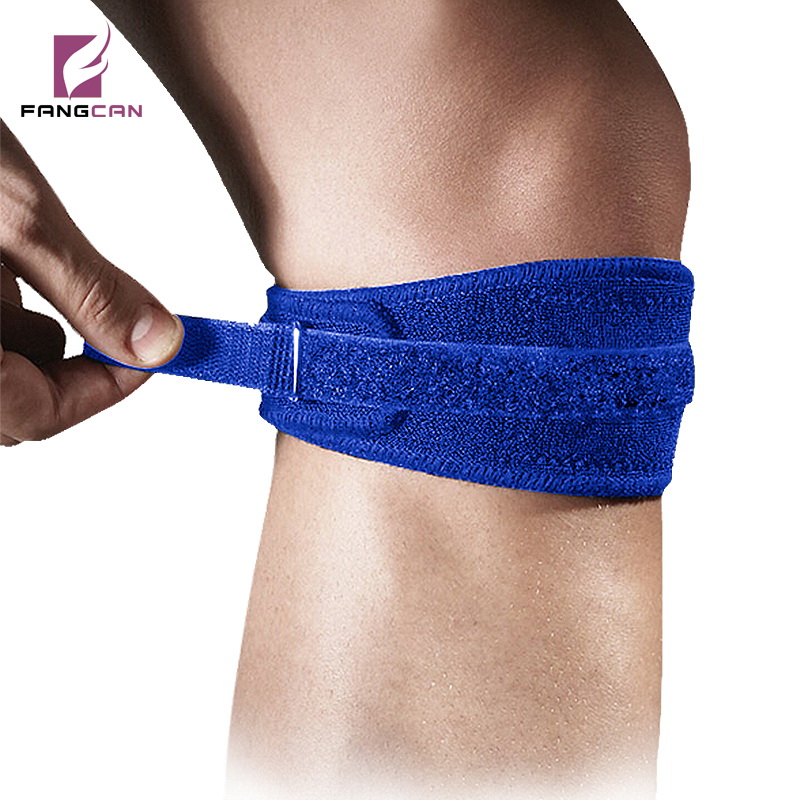
The band sits just under the kneecap, across the tendon, with the pad or the narrow section centred on the tendon rather than on the bone. That placement is what makes the product work, and it is also what makes fit critical — a strap that rides up over the kneecap is being worn wrong, and most negative reviews of this category describe exactly that.
For the buyer, the implication is that instructions are part of the product. A small diagram on the packaging, showing the band position relative to the kneecap, does more for return rate than any change to the material.
Width: comfort against focus
Narrow bands concentrate pressure and feel more targeted; wider bands distribute it and stay in place better during running. Neither is superior — they suit different loads. A short, wide band is the safer general-purpose shape; a narrow band is the shape an experienced user asks for by description.
If you stock one width, take the middle. If you stock two, separate them by use rather than by price: the wider one for running and court sports, the narrower one for lifting and for users who have worn one before and know what they want.
Closure: the part that fails first
Almost every return in this category traces to the closure. Hook-and-loop that loses grab after a few dozen washes, a buckle that presses into the back of the knee, or a strap end that curls and catches. Ask specifically what the hook-and-loop is rated for after washing, and whether the loop face is stitched rather than bonded — a bonded loop face separates from the base fabric, and that failure looks like a manufacturing defect because it is one.
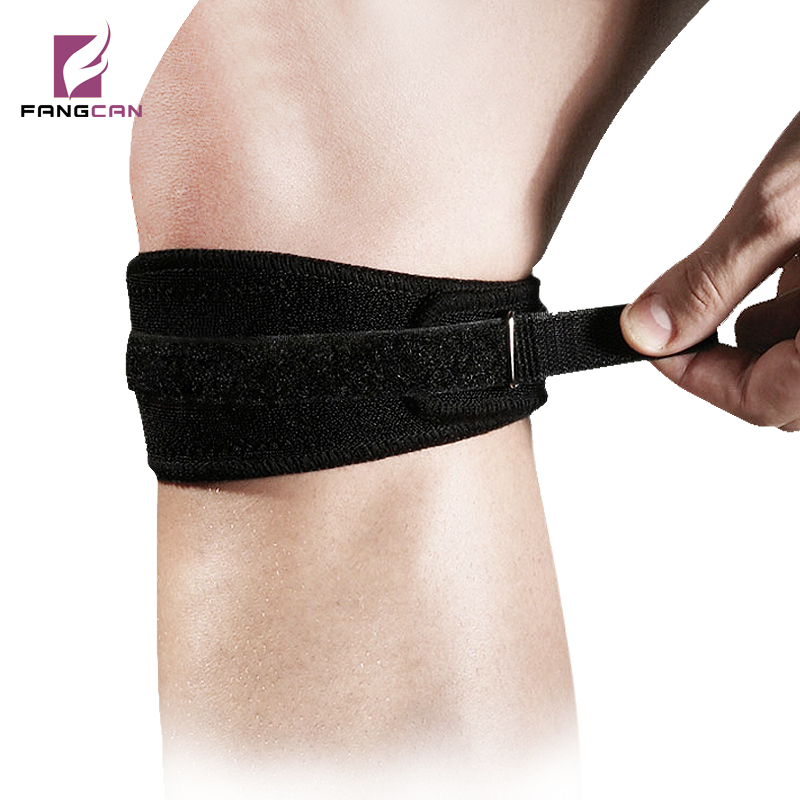
The buckle matters more than it appears. A flat, low-profile buckle is invisible under clothing and does not dig in when the knee bends past ninety degrees. A bulky one will be felt on every squat, and the customer will loosen the strap to compensate — which defeats the purpose and produces a review about “no support”.
Sizing: measure, then give a range
The measurement is the circumference just below the kneecap, not the thigh and not the calf. Sizing sold in a single “one size fits most” is the most common cause of a strap that either cuts in or slides down, and the fix is cheap: offer two or three size bands with an overlap, and print the measurement range on the pack.
An adjustable strap still needs a size band. Adjustment range covers fit within a band; it does not cover a 12 cm difference in circumference, and pretending otherwise just moves the failure from fitting to returning.
What to put on the purchase order
- Band width in millimetres, and whether a pad is included.
- Size bands in centimetres of circumference, with the measurement point stated.
- Closure type, wash-cycle rating, and stitch versus bond for the loop face.
- Buckle profile height, since this decides whether it is wearable under kit.
- Fabric and elasticity, plus a colour range that matches the rest of the protective line.
- Packaging with the placement diagram and the size range printed on it.
For a first order, the sensible structure is one width in two size bands, in two colours. That is four SKUs, which is enough to learn the size mix without carrying a catalogue of variants that will not all sell. Settle the size split after the first season, not before it. The grading logic in our returns note is worth applying here too: decide in advance what counts as a sizing return versus a defect, or the two will be counted together and the numbers will stop telling you anything.
Stock the wider adjustable band as the volume line and the narrower version as the specialist line, and place both next to knee sleeves rather than next to tape — the customer who is looking for a strap is already comparing shapes, not materials.
Washing, and what it does to the product
This is a washable product used against skin, so the care instructions are part of the specification. Elasticity and closure grip both degrade with heat, and a strap washed at 60 degrees and tumble-dried will lose both faster than one washed cold and hung.
Print the care symbols on the strap itself, not only on the tag. Tags get cut off, and the customer who cannot find the instruction will default to the hottest, fastest wash available — which is the one that ends the product’s life early and produces a review about poor quality.