

TPE vs PVC Yoga Mats: Thickness, Grip, Freight
Yoga mats are one of the few categories where the material choice is stated openly on the product, and still misread by most buyers. TPE and PVC are not two grades of the same thing. They behave differently underfoot, they age differently, and — the part that decides the margin — they weigh differently, which changes what the mat costs to move before it costs anything to sell.
The two materials, honestly compared
PVC is the older material. It is denser, which gives it a firm, stable feel and a dry grip that holds up when hands get sweaty. It also resists abrasion well, which matters in studio use where mats are laid out and rolled up several times a day. The trade-offs are weight and environmental perception: a PVC mat is noticeably heavier in the bag, and “PVC” reads poorly to a segment of retail customers regardless of how the mat performs.
TPE is a thermoplastic elastomer. It is lighter for the same thickness, has a softer surface with a closed-cell structure that resists absorbing sweat, and is recyclable in principle. What it gives up is density: a light mat can slide on a polished floor, and the softer surface marks more easily under heavy use. It is also more sensitive to heat in storage.
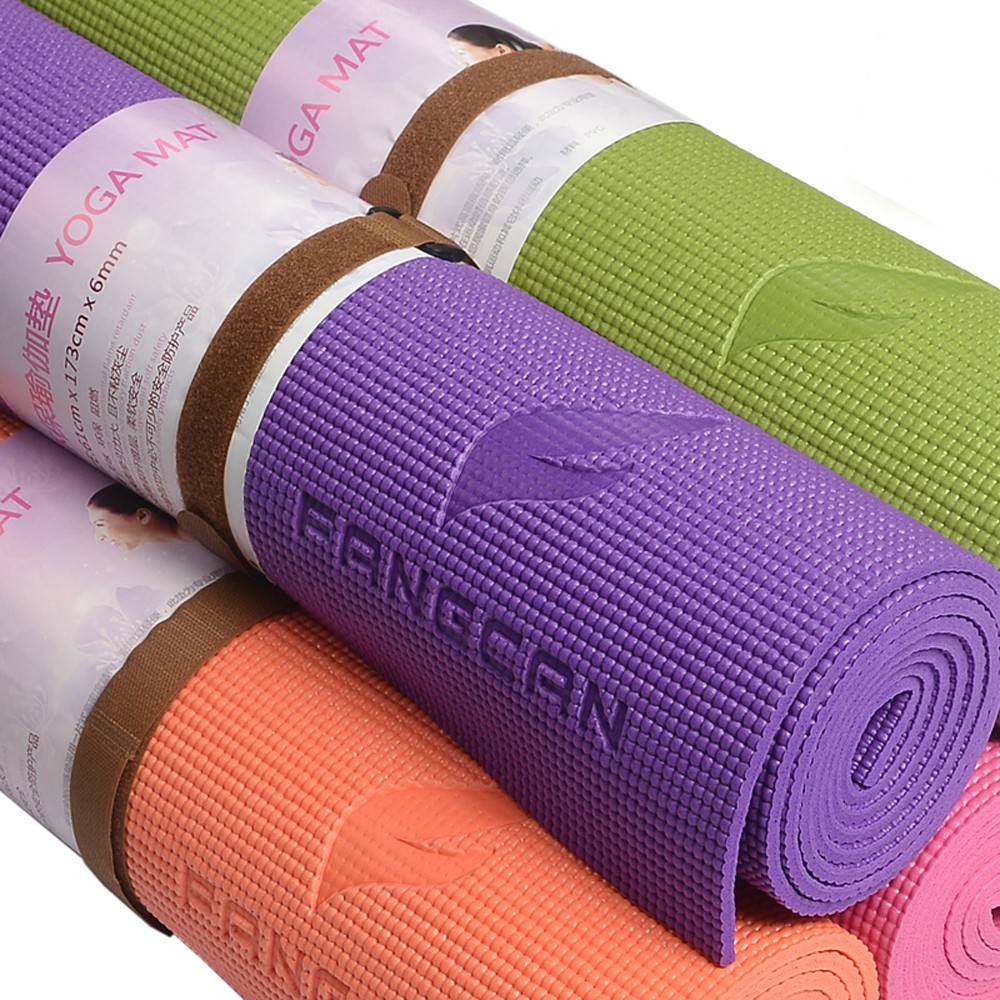
The honest framing for a buyer is that neither material wins. PVC suits studio and hot-practice use where grip and durability matter more than bag weight. TPE suits retail and home use where the customer carries the mat and cares what it is made of.
Thickness: a comfort decision with a stability cost
The two common thicknesses are 6 mm and 8 mm, and the difference is not “more is better”. Extra thickness cushions knees and wrists in floor sequences, and it also raises the centre of gravity in standing balances — a soft mat makes a one-leg pose harder, not easier.
That produces a clean stocking rule. Six millimetres is the general-purpose mat and the right default for a first order. Eight millimetres is the comfort mat, and it sells to a customer who has already decided they want cushioning: older users, people with knee sensitivity, and anyone doing long floor-based sessions.
Thickness also drives freight. An 8 mm mat at the same footprint occupies more wound volume per unit, so the carton count per pallet drops. That is a real cost per unit, and it is the one line of the costing sheet that is easiest to forget when comparing quotes by piece price.
Length and width: the number customers notice last
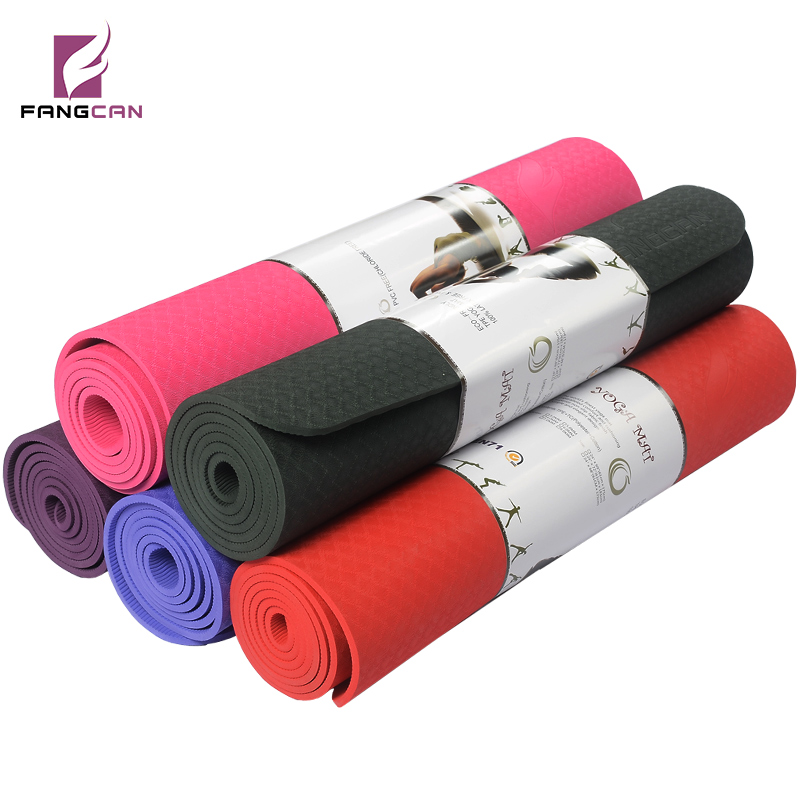
173 cm and 183 cm are the two lengths worth stocking. The shorter mat fits most users and packs smaller; the longer mat matters to taller users and to anyone flowing through sequences where hands and feet leave the mat on a 173. Width is usually fixed at 61 cm, and it is the dimension most often left out of the product name — which is a mistake, because two mats of the same length and different width look identical in a photograph and very different in use.
The freight arithmetic nobody does
A mat is a low-ticket item with high volume per unit of value. A 6 mm TPE mat and an 8 mm PVC mat can sit within a small margin of each other on piece price and land at very different unit costs once carton volume is applied. Run the calculation before agreeing the price: pieces per carton, cartons per pallet, and the volumetric divisor your forwarder actually uses.
This is the same arithmetic that decides whether a mat is worth shipping at all against a locally sourced alternative, and it is worth doing on the PVC 6 mm and the TPE 6 mm side by side before committing to a mixed container.
What to specify
- Material, stated precisely — TPE and PVC are not interchangeable in a purchase order.
- Thickness in millimetres with a tolerance, and the length and width in centimetres.
- Surface texture on both faces, since a one-sided mat slides.
- Edge finish, because a cut edge delaminates faster than a moulded one.
- Odour and phthalate statement, which retail buyers now ask for in writing.
- Whether a carry strap or bag is included — a mat without a strap is a mat that gets left at home.
The strap point is commercial rather than technical. A waterproof carry bag turns a mat into a kit, and kits attach to each other: the customer who buys the bag comes back for the mat, and the customer who buys the mat is a natural second sale. On a low-ticket category, that attachment is where the margin lives.
Roll diameter and pallet maths
Two mats of the same length and thickness can roll to different diameters depending on foam density and how tightly the factory winds them. That difference is invisible on a spec sheet and decisive for freight: a larger roll means fewer units per carton, and the carton is what the forwarder charges for.
Ask for the rolled diameter and the carton dimensions, not just the piece dimensions. Then check whether the carton can be palletised without overhang, because an overhanging stack loses a tier and that tier is where the margin was.