

Ball Tolerances: Rebound Is a Conditional Value
Balls are the category most easily treated as commodity: fixed shape, low unit price, nothing much to choose between them. Yet when claims arrive, the argument is almost always about two things — how far the weight drifted, and whether the bounce was low or high. Those are exactly the two fields the spec sheet states most loosely.
Put our four ball categories side by side and the difference in tolerance width is immediately visible.
Four tolerance bands, one of them twice as tight
| Category | Weight | As a deviation | Size | Rebound |
|---|---|---|---|---|
| Tennis | 56–59 g | ±1.5 g, about ±2.6% | 65–68 mm | 1.3 m |
| Squash | 23–25 g | ±1 g, about ±4.2% | 39.6–41.9 mm | 18.5–21.5 in |
| Basketball | 600–650 g | ±25 g, about ±4% | 75–76 cm circumference | by pressure |
| Shuttlecock | by feather grade and cork | — | — | speed 76 / 77 |
Tennis is the only one held to ±2.6%. Squash and basketball both sit near ±4%. That gap is not accidental: tennis depends on a consistent bounce to read where the ball will land, so consistency is a fairness requirement. Squash and basketball tolerate more because judgement of the ball involves more variables than the ball itself.
What this means for a buyer is plain: ±25 g and ±1.5 g are not the same promise and cannot share one acceptance standard. Hold basketball to a tennis tolerance and no factory can comply; hold a shuttlecock to a tennis tolerance and the standard itself is meaningless.
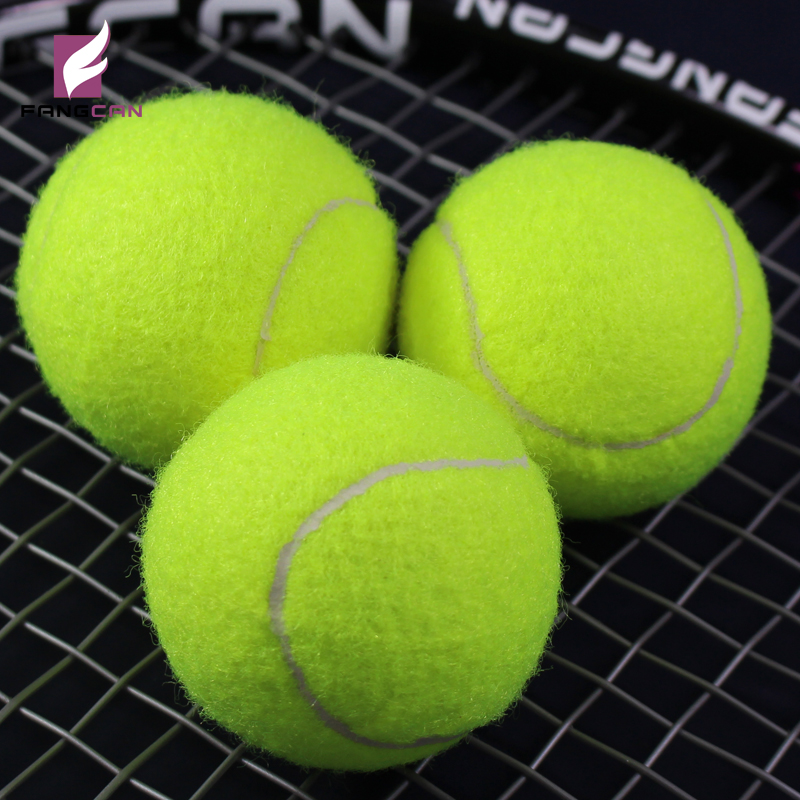
Rebound is a conditional value, not a property
“Rebound 1.3 m” means nothing without drop height, temperature and pressure attached to it.
Rebound is a result, not an attribute. A ball dropped from a fixed height onto a rigid surface rises to a height set by its resilience, and resilience moves with temperature. The same ball measured at 20 °C and at 10 °C will not return to the same height. So any rebound test has to record ambient temperature, or the number cannot be reproduced.
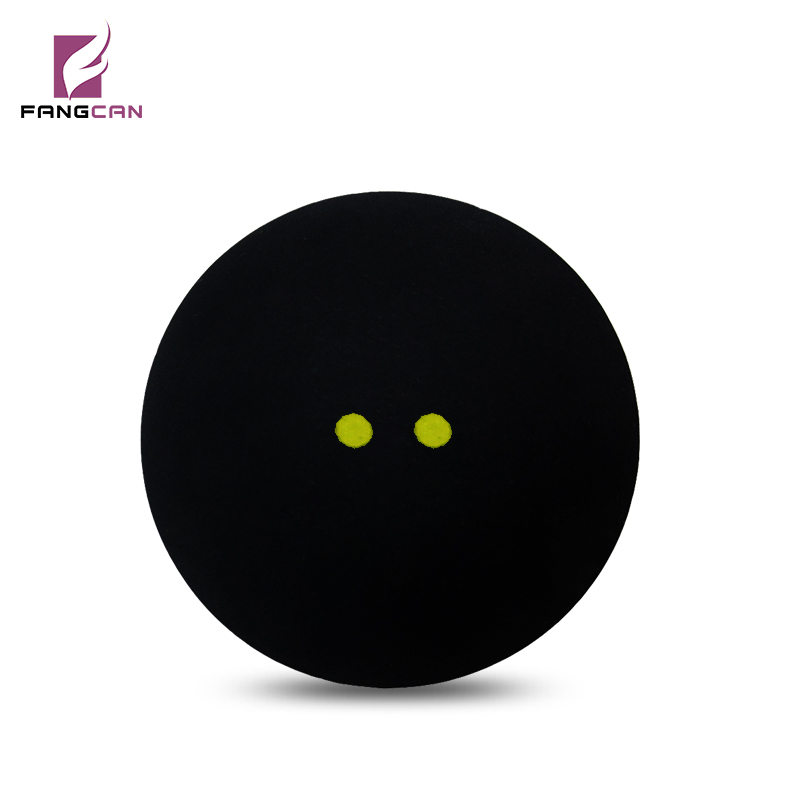
Squash shows this most clearly. Our FCA-06 two-yellow-dot is quoted at 23–25 g, 39.6–41.9 mm and a rebound of 18.5–21.5 inches. A squash ball is a thermoplastic: cold, it barely bounces at all. That is not a defect, it is the design — the pre-match knock-up exists precisely to bring the ball up to working temperature.
The after-sales damage from this is significant. A customer receives stock in winter, opens a box, hits a few shots, and concludes the balls are dead. They are simply not warm yet. A sentence on the listing explaining this removes a large share of those complaints at zero cost.
Two units on one line
Look closely at the squash row: diameter in millimetres (39.6–41.9 mm), rebound in inches (18.5–21.5 in). That is legacy convention, not a typo — squash originated in imperial markets and the rules still describe rebound in inches.
For a buyer it creates a practical problem: the acceptance sheet needs a conversion, and conversion invites error. One inch is 25.4 mm, so 18.5 in is 469.9 mm and 21.5 in is 546.1 mm. If the sheet says only “rebound 18.5–21.5”, a new inspector will measure with a metric tape and reject the entire batch.
The fix is documentary: write the unit immediately after every number, and give the converted value once. Pure paperwork, but it prevents a whole-batch misjudgement.
The shuttlecock column: speed is not a grade
All four of our shuttle models — the FCS-07 goose feather tournament, FCS-09 grade-A cormorant duck, FCS-02 grade-B and FCS-01 grade-C — state a speed of 76 or 77.
That number needs explaining. It is a flight speed rating matched to the air density where the shuttle will be used, not a quality tier. In thin air (hot, high altitude) a shuttle flies further, so you need a slower one; in dense air (cold, low altitude) it falls short, so you need a faster one.
The common buying error is to read speed as grade — to assume 77 is superior to 76 and push 77 as the premium option. In a cold market, 77 will fly noticeably fast, players will call it floaty, and the complaint lands on quality. Match speed to the destination climate, not to the price tier.
One verifiable difference worth separating out: FCS-07 uses goose feather with a three-layer cork base — cork top and bottom with a pressed granule core — while FCS-02 and FCS-01 use a two-piece base. Base construction governs feel and durability. It has nothing to do with speed, and the two should be compared separately.
Building an inspection that holds up
Four actions, all cheap, all requiring a fixed procedure.
Sample by batch. Three to five units from one carton of one batch. Do not mix batches — mixed samples cannot localise a problem.
Stabilise before measuring. Leave the stock 24 hours in the warehouse and record the room temperature. A ball measured straight out of a shipping container carries the transit temperature and the reading is worthless.
Fix the drop height. Use a bracket, not a hand. Hand-held variance is larger than the tolerance being tested.
Record it as a table. Four columns per unit: weight, diameter, rebound, ambient temperature. With four columns a claim has evidence; with “pass/fail” you have nothing.
How to put this into practice
Write acceptance criteria per category rather than one generic template. Three items belong in the contract: the width of the tolerance band, the test conditions for rebound, and the working temperature range.
Temperature is the one most often skipped and the main source of after-sales dispute, particularly for thermoplastics like squash balls. Basketballs invert the problem — wide tolerance, but pressure-dependent, so inflate to standard before weighing or the reading drifts with inflation level.
In one line: ball specifications are conditional values, not nominal ones. When you write the standard, the conditions matter more than the numbers.