

Hybrid or Full Bed: Which One Actually Drifts
A hybrid buys two properties at once: the mains set launch and spin, the crosses set feel and how the stringbed holds. A full bed buys predictability. If your complaint is that the strings feel different every time you play, the hybrid is usually the cause rather than the fix — not because it is badly made, but because its two halves age at different speeds.
Why hybrids exist at all
No single string is both stiff and soft. Stiff strings such as polyester give control and spin at the cost of feel and comfort. Soft strings — natural gut, multifilament, nylon — give feel and power at the cost of control and durability. A hybrid puts the stiff string in the mains, where most of the launch angle and spin come from, and the soft string in the crosses, where most of the feel comes from.
That is a real trade, and it is why the setup is common on tour: players there restring so often that the trade never has time to turn into a problem. It is also why the same setup is common in club tennis, where the rest of that equation is missing.
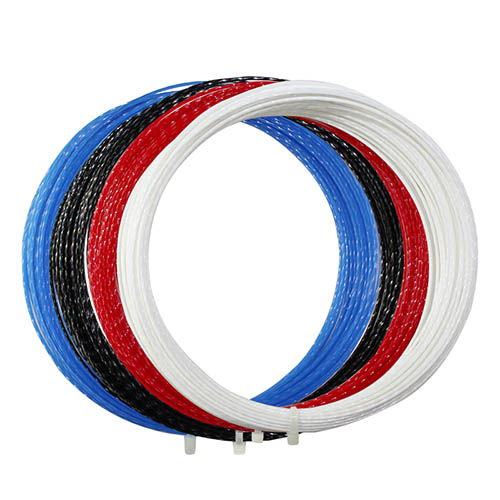
The part nobody mentions: the two halves age at different rates
Mains and crosses are different materials, and different materials lose tension at different speeds. Polyester loses tension quickly in the first hours of hitting and then keeps creeping; natural gut and multifilament hold far better. Put one in the mains and the other in the crosses and the balance between them changes as the stringbed ages — which is exactly the variable you wanted to keep fixed.
| Time in play | What has changed | What you feel |
|---|---|---|
| First sessions | Nothing measurable yet | Setup plays as designed |
| Second to third week | Crosses have lost more than mains | Launch angle rises, the ball flies longer than expected |
| Fourth week and beyond | Mains gone dead, crosses still elastic | Boardy feel with a launch you cannot predict |
A full bed of one string also loses tension — every string does — but it loses it evenly, so the relationship between mains and crosses stays fixed. The bed gets looser; it does not get uneven. That distinction matters more than the absolute tension number, because unevenness is the part you cannot compensate for with technique.
When a hybrid still earns its place
- You break strings before they go dead. If you restring every 8–12 hours of play, the drift never arrives and you get the two-property benefit for free.
- You need arm comfort without giving up poly control. Soft cross, stiff main is the standard answer for a sensitive elbow.
- You want a specific feel you cannot get from one string. Natural gut mains with a poly cross is the classic example, and no single string reproduces it.
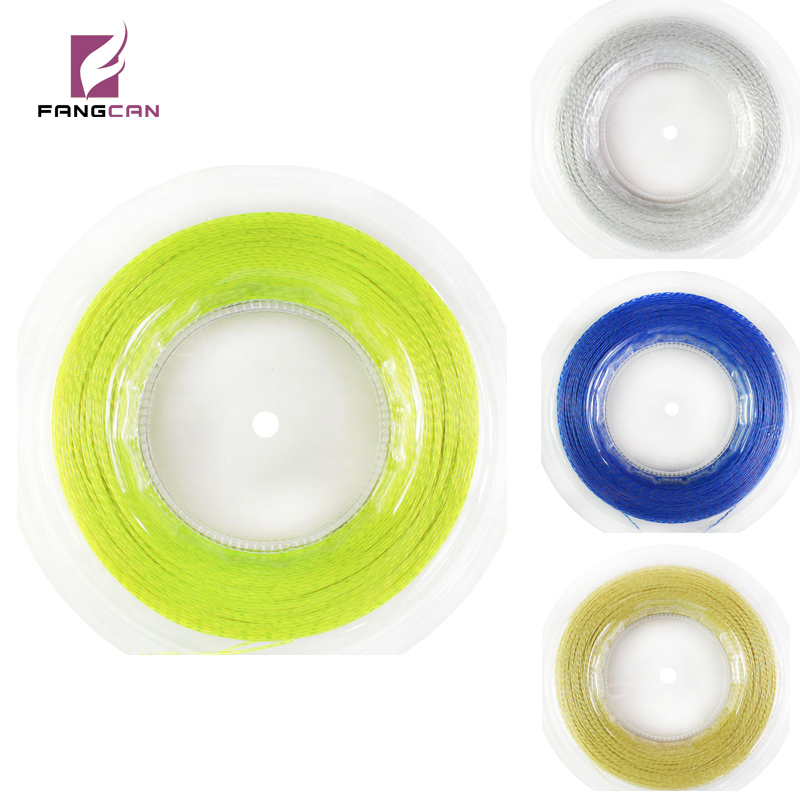
When a full bed is the better buy
- You restring on a calendar rather than on breakage. Anything past three or four weeks is a drifting hybrid, whatever the label says.
- You want the same response on the first ball and the hundredth. Consistency is a property of one material, not of two.
- You are still developing your stroke. A bed that changes underneath you makes it impossible to tell whether you improved or the strings got looser.
How to decide in one table
| Your priority | Choice | Why |
|---|---|---|
| Same feel every session | Full bed, one string | Even tension loss, predictable over a month |
| Comfort plus control | Hybrid, soft cross | Real benefit, but only inside a short window |
| Cost per month | Full bed of nylon or synthetic gut | Cheap enough to restring often, which is the actual fix |
| Tour-style feel | Hybrid, gut mains | Works if you restring on a tournament schedule |
The mistake worth avoiding
Choosing a hybrid is not the error. Playing it for two months is. A hybrid that has been in the frame for six weeks is no longer the setup you chose — it is whatever the two materials drifted into. Judging your game by that stringbed is how players conclude they need a new racket when they need new strings.
Frequently asked questions
Does a hybrid go dead faster than a full bed?
The stiff half does. Polyester in the mains goes dead while the soft cross is still holding tension, which is why the bed feels simultaneously boardy and launchy. A full bed of one material goes off in one direction instead of two.
Can I keep a hybrid playing consistently?
Only by restringing before the drift becomes noticeable. There is no string, tension or accessory that stops two different materials from aging at different rates.
Is a hybrid worth it for a beginner?
Usually not. A beginner needs a constant reference to judge their own stroke, and a hybrid changes under them within a few weeks. A full bed of nylon or synthetic gut is cheaper and more informative.
Which half should be the stiff string?
Convention puts polyester in the mains and the softer string in the crosses, because mains dominate launch and spin. Putting the stiff string in the crosses is done, but it trades away most of the reason to use a hybrid at all.
Related reading
For how string type maps onto a purchasing decision rather than a playing one, see our guide to reading a tennis string spec sheet. If you are specifying string for a retail or club programme and want the material and gauge options we can supply on one production base, tell us the target market and tension range.