

Pickleball Core Thickness: 13 mm vs 16 mm
Two paddles come off the same production line, one 13 mm and one 16 mm, and the difference in the hand is larger than eight hundredths of an inch suggests. Core thickness is the number that decides whether a paddle suits a banger or a dinker, and it is the number most retail listings leave out.
It is also the number that interacts with a rules ceiling, which makes it the first thing to check before designing a whole range around one thickness.
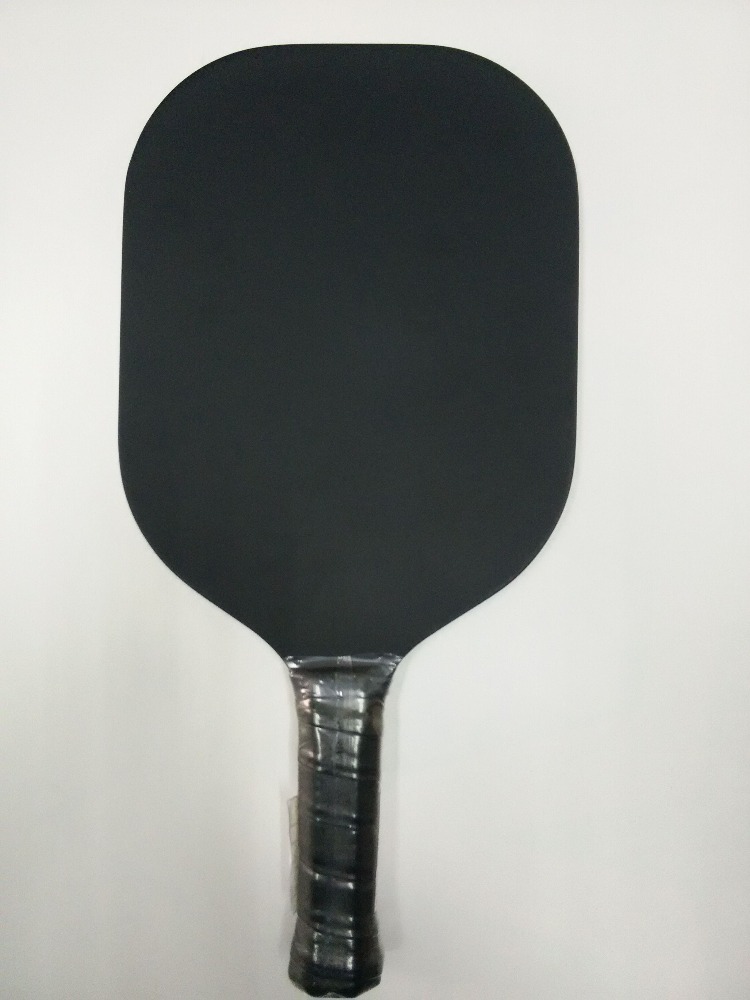
What the core is doing
The core is a honeycomb, usually polypropylene, sandwiched between two face sheets.
Its job is to absorb impact and return it over a short interval. A thicker core has more depth to compress, so it stores and releases energy more slowly: the ball stays on the face a fraction longer, the paddle feels softer, and the ball leaves with more of the player’s swing rather than more of the paddle’s stiffness.
A thinner core compresses less. The face feels firmer, the ball leaves faster for a given swing, and the paddle is lighter for the same face area, which is why thin cores dominate among players who drive the ball.
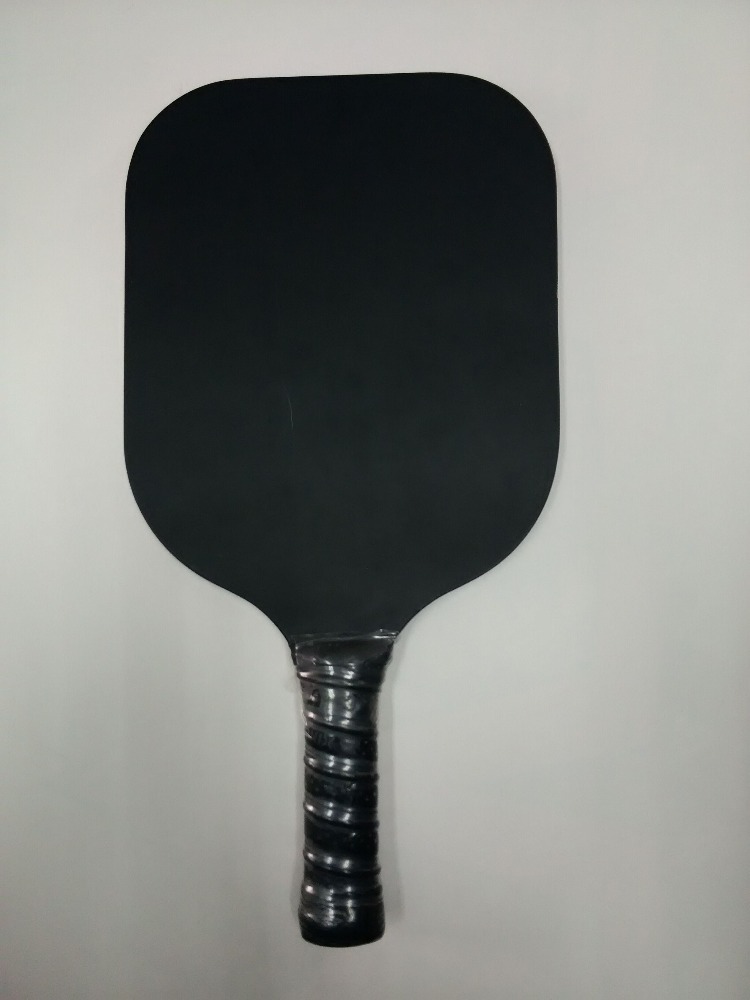
Where the difference shows up in play
Around the kitchen line, a 16 mm paddle gives a slower, more controllable block and a softer drop. At the baseline, a 13 mm paddle returns more of what the player puts in, with less of the trampoline effect that makes hard drives sail long.
Neither is better. A club that sells to beginners sells more 16 mm, because the softer face forgives a late contact. A club that sells to tournament players sells more 13 mm, because those players are generating their own pace and do not want help.
The rules put a ceiling on thickness
Competition standards cap overall paddle thickness at 24 mm, which leaves 16 mm comfortably inside the limit but far from the thinnest option. That matters because the cap is a hard line for tournament play: a paddle built for feel at 20 mm is legal, a paddle built for even more trampoline at 26 mm is not, regardless of how well it plays.
For a buyer, the ceiling is also a reason to ask for the measured thickness rather than the nominal one. Moulded cores vary by a few tenths of a millimetre, and a nominal 16 mm that arrives at 16.4 mm is still legal while a nominal 23 mm that arrives at 24.5 mm is not.
Weight follows thickness, and so does swing
Thickness adds mass, and mass in the head changes how the paddle swings.
A 16 mm paddle and a 13 mm paddle with the same face dimensions are not the same weight, and a heavier paddle at the net is slower to reset. This is the same mechanism that makes two badminton frames of equal mass feel different, applied to a solid body.
That is why a range should not be built on thickness alone. Thickness, face material and total weight have to be specified together, or the catalogue will contain two paddles that look identical in the table and play nothing alike.
Pairing core and face
Core and face are a system. A stiff carbon face over a thin core gives a hard, fast response; the same face over a thick core gives a softer, more controlled one. A fibreglass face over a thick core is the classic beginner configuration: forgiving from both directions.
This is how the range can be explained honestly, T700 carbon at 13 mm for players who want response, JP25 composite at 16 mm for players who want forgiveness, rather than as good, better, best.
What to specify
- Nominal core thickness, and the measured tolerance.
- Core material and cell size, since cell size changes feel at equal thickness.
- Face material and its thickness, stated separately from the core.
- Total paddle weight, measured after assembly rather than calculated.
- Edge guard construction, which protects the core seam and is where delamination begins.
Checking a delivery for core damage
Two checks catch most core problems before the stock goes on the shelf.
Press the centre of the face with a thumb: a healthy core returns without a click or a crease. Then sight along the edge guard from the throat to the tip. A gap or a lifted seam means the core has taken on water or the adhesive has failed.
Both checks take ten seconds and both should be done per carton, not per pallet. A delaminated core does not always look different in a photograph, which is why arrival inspection has to be physical.
One more thing to check on the drawing: whether the core is uniform across the face or graded. A graded core is thicker in the middle and thinner at the edges, which shifts the sweet spot without changing the headline thickness.
The edge guard item is not cosmetic. A core that takes on water at the seam changes weight and stiffness, and the failure looks like a manufacturing defect even when it began as a handling issue, the same class of problem described in this note on edge guards and surfaces.