

Pickleball Paddles: Edge Guard and Surface Texture
Pickleball paddles are bought on three numbers — length, width, weight — and judged on two features that never appear in those numbers. The edge guard decides how the paddle ages; the surface decides what kind of game the player can play. Both are cheap to specify and expensive to get wrong.
The edge guard is a wear part
A paddle is used close to the ground. Low volleys, digs and pickups mean the edge hits the court surface regularly, and the guard is what absorbs that. A moulded guard that wraps the full perimeter protects the core; a thin strip applied to the visible face protects the appearance and nothing else.
What to ask is not whether there is a guard but how it is attached and how far it wraps. A guard bonded only to the face will lift at the seam after a season, and once water reaches the core the paddle’s response changes permanently — a honeycomb core that has taken on moisture does not dry back to what it was.
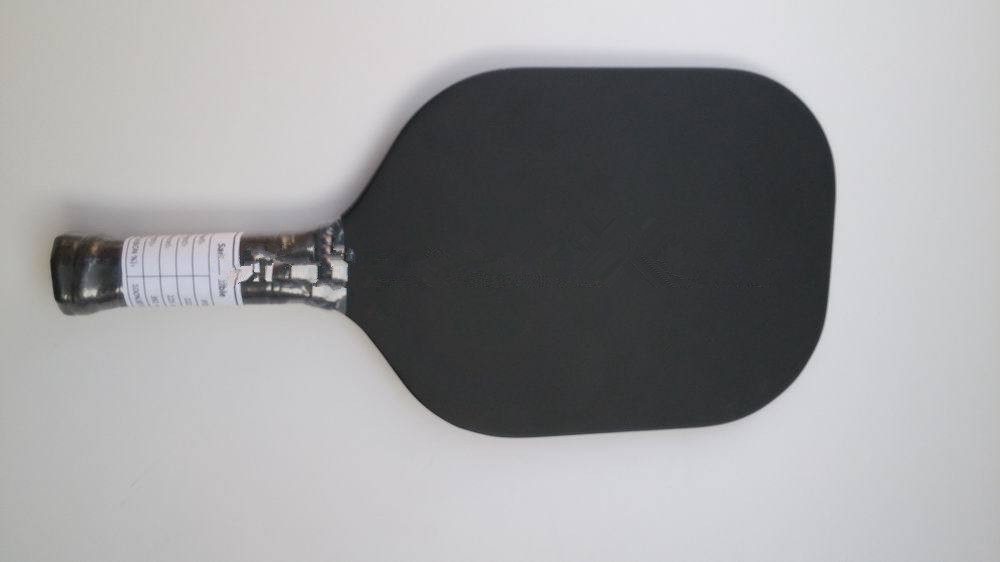
Surface texture and the spin question
Spin comes from friction between the ball and the face, and friction comes from texture. A smooth composite face produces less; a textured or rough face produces more. Manufacturers achieve texture in different ways — a moulded pattern, a sprayed grit, a peel-ply finish — and each has a different wear life.
The procurement question is durability of the texture rather than its presence. A sprayed grit that wears smooth in a season takes the product’s main selling point with it, and the customer experiences that as “the paddle has gone dead”, which is accurate.
Core, thickness and the feel trade
Core thickness sets the sweet spot and the speed. A thicker core is more forgiving and slower; a thinner core is faster and less forgiving. Neither is better — they are two answers to two different players, and the range should present them as such rather than as good and better.
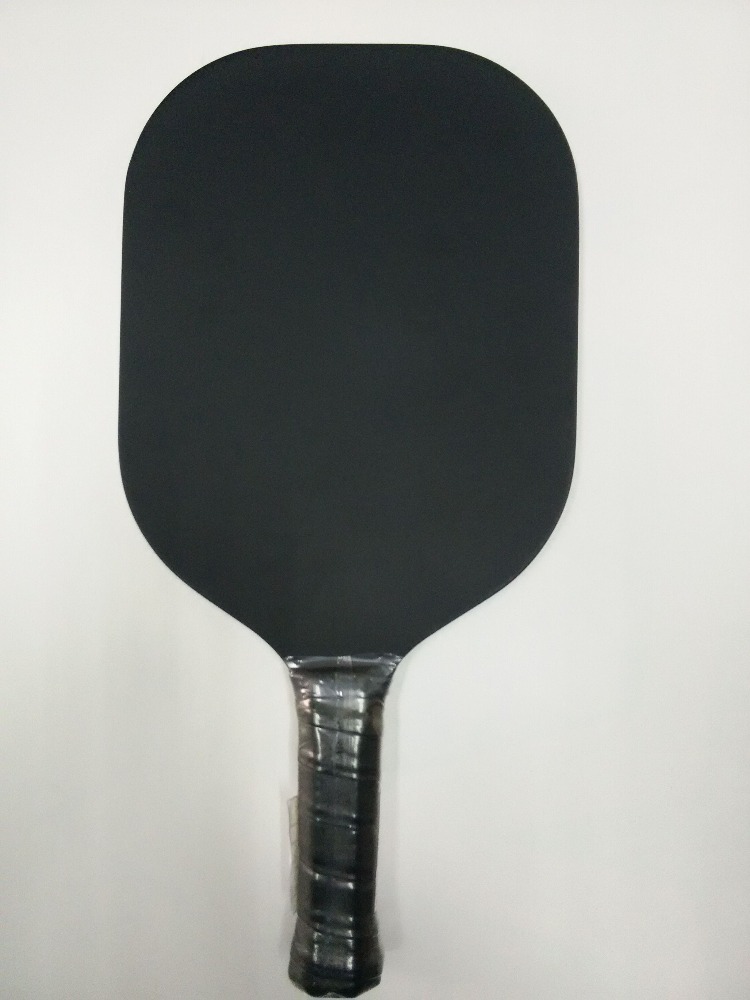
Core material matters for weight distribution: a polymer honeycomb is light for its volume, which lets the manufacturer add mass to the perimeter or keep the paddle fast. That is where the difference between two paddles of the same weight actually lives.
Grip and the handoff to the wrist
The handle is where a paddle is either comfortable or not, and it is the least-specified part. Circumference, grip length and wrap material all change how the paddle feels in a game that is played mostly below the waist, with a lot of wrist. A paddle with an oversized handle forces a grip change that the player will blame on the paddle.
What to put on the purchase order
- Face material and the texture method, with an abrasion expectation.
- Edge guard: moulded or applied, wrap coverage, attachment method.
- Core material and thickness.
- Weight with tolerance, and balance.
- Handle circumference and length, plus overgrip compatibility.
- Whether the paddle is approved for the sanctioning body the market plays under.
The last item is worth stating plainly: tournament eligibility is a real gate in this category, and a paddle that cannot be used in sanctioned play is a paddle sold to a narrower market than the buyer assumed.
For a range, two paddles that differ in core thickness give a shop a real conversation; two that differ only in print give it a colour card. The JP26 and the JP25 are close enough in construction to be compared honestly, which is what makes the comparison useful at the counter.
And when a paddle comes back with a lifted guard or a polished face, the question is whether it wore out or arrived that way — a grading decision that needs the specification to exist in the first place.
Approval lists and market access
In markets where the sport is organised, paddles are often checked against an equipment standard before they can be used in sanctioned play. That makes approval a market-access question rather than a quality one: an unapproved paddle is not a bad paddle, it is a paddle for a smaller market.
Ask the factory directly which approvals exist, for which model and which version. Approvals are model-specific and can lapse, and a claim that is two years old is a claim about a different product.
Selling the difference honestly
Where two paddles are close in construction, the honest difference is in thickness and texture rather than in “technology”. Shops that explain the trade sell more of both, because the customer leaves with a reason rather than a rank.
The same logic protects against returns: a customer who chose thickness deliberately does not come back saying the paddle is too slow.
Common mistakes on this specification
- Treating texture as a claim rather than a durability specification.
- Assuming an edge guard exists without asking how it is attached.
- Comparing paddles by weight while ignoring core thickness.
- Accepting an approval claim with no model or version attached.
- Specifying an oversized handle by default.
Each of these is answerable in one email, and none of them is visible in a product photo.