

Retail Packaging: OPP Bag, Hang Card or Colour Box
For small accessories, packaging is not decoration — it is the product’s interface with the channel. The same strip of head protection tape can be a bin item, a pegboard item or a gift-boxed item, and each form sells through a different route at a different price, with a different cost structure behind it.
OPP bag: the cheapest entry, the shortest story
A plain poly bag with a printed header is the lowest-cost form and the one that works in shops where the customer already knows what they are looking for. It carries almost no information, so it cannot sell a product to someone who does not already understand it.
Its real constraint is durability in handling: a bag without a reinforced header tears at the hanging point, and a torn bag is unsellable stock. If you choose this form, specify the header thickness and the euro-hole reinforcement, because those two details are the entire difference between a cheap bag and a bad one.
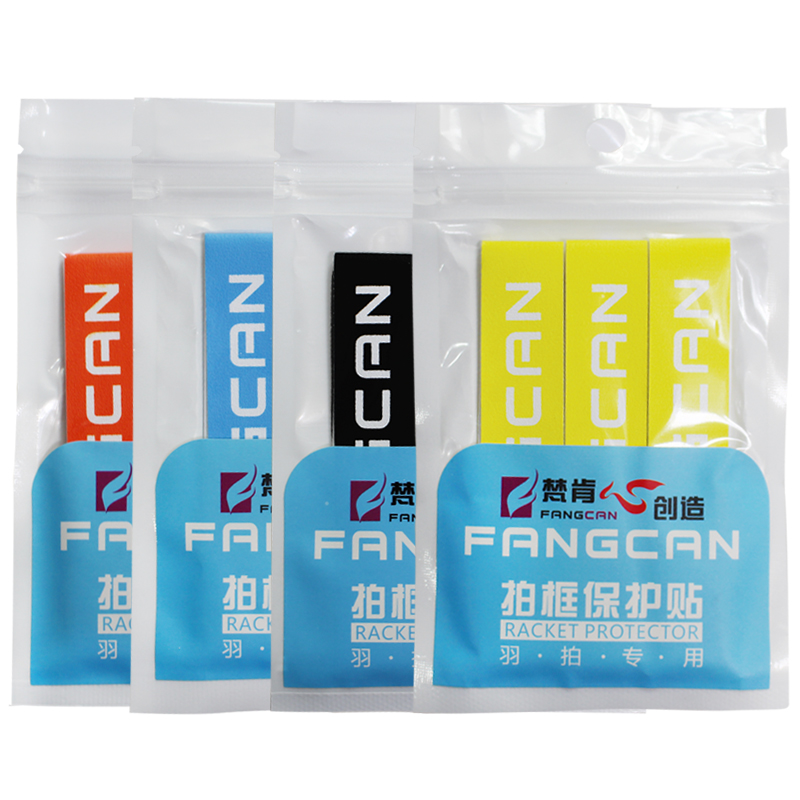
Hang card: the form that explains
A blister or hang card gives you a printed surface big enough to state what the product does, what it fits and how many pieces are inside. That is decisive for any product whose value is not obvious at a glance — a protection strip, a dampener, a set of sealing rings.
The cost is tooling for the card and the sealing process, plus a minimum order that is usually higher than for a bag. The return is a product that can be sold without a member of staff explaining it, which is exactly what a chain or a vending-style display needs.
Colour box: for gifts and for gifting channels
A printed box lifts perceived value further and costs the most. It earns its cost in two situations: when the product is bought as a gift, and when the channel requires a shelf presence that a bag cannot deliver. Outside those, it is money spent on the retailer’s shelf rather than on the customer’s experience.
One design point matters more than the print quality: the box has to survive being opened. A box that tears along the tuck flap on first opening converts a gift into a used item, and the customer notices before they have used the product once.
The barcode question
Every form needs a scannable code, and where it goes matters as much as whether it exists. On a bag, the code must be on a flat area that does not deform when the bag is full. On a hang card, it must not sit across the euro-hole. On a box, it must be on a face that stays visible when the box is shelved — usually the base, not the lid.
Get this wrong and the product is functional but unsellable through any till, which is a more expensive mistake than any print defect.
What to specify
- Form, and the channel it is intended for.
- Material and thickness, with the hanging-point reinforcement stated.
- Printed information set: what it does, what it fits, pack count, warnings.
- Barcode placement and symbology, checked against the destination retailer’s rules.
- Minimum order quantity per form, since this usually decides the choice.
- Whether the packaging is also the shipping unit, or needs an outer.
The cheapest mistake to avoid is choosing a form by appearance. Choose it by the question “who is going to explain this product”, and the answer usually selects the form for you. A three-strip pack sold from a counter needs none of that; the single strip sold from a pegboard needs all of it.
And whatever the form, decide in advance how a damaged package is treated — a scuffed bag on arrival is a grading question, and if it is not answered in writing it becomes a discount argument on every shipment.
Minimum order and the first test
Packaging has its own minimum order, and it is usually higher than the product’s. That makes the first run a test rather than an investment: choose the cheapest form that solves the channel problem, prove the sell-through, and only then pay for the tooling that a hang card or a colour box requires.
Buying tooling before demand is proven is the most common way a small accessory line loses money — the packaging cost per unit only falls with volume, and volume is exactly what does not exist yet.
Printing information that survives translation
Artwork approved in one language rarely fits another. German and Russian expand, Chinese contracts, and the information block that fits on a hang card in English will not fit in either. Design the card with the longest expected language in mind, or accept a second print run later at a worse price.
The same applies to the warning text, which is prescribed and cannot be abbreviated to make it fit.
Common mistakes on this specification
- Choosing a form by appearance rather than by channel.
- Approving artwork in one language only.
- Putting the barcode where the package deforms.
- Paying for tooling before sell-through is proven.
- Forgetting that the packaging might also be the shipping unit.
Every one of these is cheaper to fix before the first print run than after it.