

Junior Rackets: Length Before Weight, Safety Before Price
Junior equipment is bought by adults on behalf of children, and the adult usually shops by age. That is the first mistake in the category, because youth rackets are sized by body height — an eight-year-old and a twelve-year-old of the same height need the same frame length, and two children of the same age can differ by twenty centimetres.
The height ladder
The common youth sizing chart runs on height bands: roughly 21-inch frames for children under about 120 cm, 23-inch for 120–130 cm, 25-inch for 130–140 cm, 26-inch for 140–150 cm, and adult length from about 150 cm upward. These are industry conventions rather than regulation, and they are consistent enough across coaches to be usable as a selling tool.
Print the ladder on the retail packaging. It solves the sizing conversation in one line, and it makes the shop the source of the answer rather than the internet.
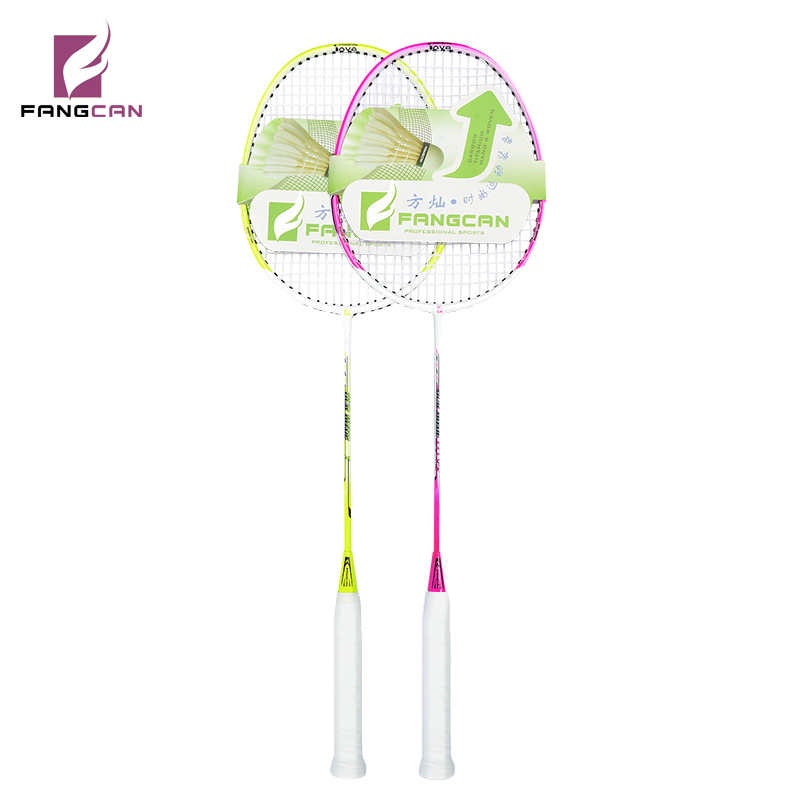
Weight follows length, not the other way round
Once length is fixed, the weight band is narrow: a junior frame should be light enough that the child can hold it with a relaxed grip and swing it without the wrist collapsing. A frame that is too heavy teaches a bad habit — the child swings from the shoulder and stops rotating — and the habit outlives the racket.
For procurement, this means junior models should be specified with a weight ceiling rather than a nominal figure, and the ceiling should be low enough that the smallest child in the band can use it. The alternative, a range that scales weight with length, produces a 26-inch frame no nine-year-old can swing.
What to check that adults never check
Three things matter more on a junior frame than on an adult one. The handle diameter has to be small enough for a child’s hand, because an oversized grip forces the fingers open and kills control. The frame has to survive being dropped, leaned on and used as a walking stick. And there must be nothing on the product that a child can remove and swallow — butt caps, end plugs, decorative inserts.
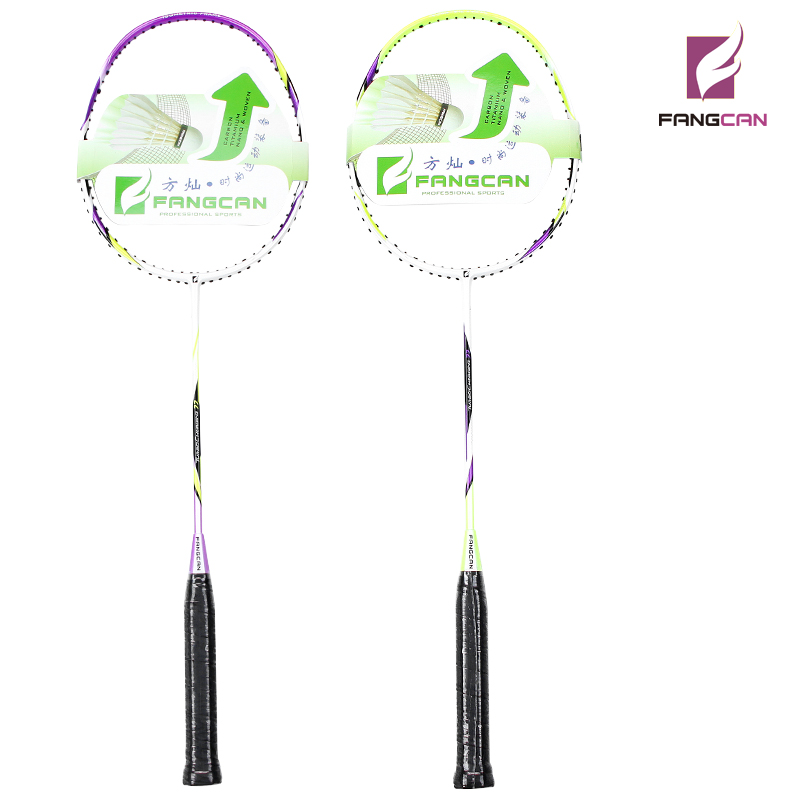
The third point is where compliance and design meet. A removable end cap is a feature on an adult frame and a hazard on a junior one, and the fix costs a design decision rather than money.
Strings and tension for juniors
Junior frames should be strung below the adult recommendation, both to protect the frame and because a child’s swing does not generate the speed that a high tension assumes. A range sold to schools should be delivered at one conservative tension, written on the frame tag, so that a broken string is a maintenance event rather than a mystery.
What to put on the purchase order
- Frame length in inches, with the height band it serves.
- Weight ceiling rather than a nominal figure.
- Grip diameter, and the sizes offered.
- Non-removable end fittings, stated as a requirement.
- Delivered tension, and whether the frame ships strung.
- Age and warning text required by the destination market.
For a range, three lengths cover most school and club demand: 23, 25 and 26 inch, with an adult entry frame as the step up. The OUR HOME composite is the cheap step-up; the STORM 90 is what a promising junior graduates to, and having that progression visible is what makes a junior line look like a programme rather than a bin of small rackets.
Timing matters too, and it is not the adult season: junior demand follows term starts and school programmes, which is a different clock from the club season described in our seasonal note. Ordering juniors on the adult calendar is how a shop ends up with 25-inch frames in stock in June.
Schools and clubs order differently
A school buys once a year, in a single block, against a budget that is approved in advance. A club buys in small quantities when things break. Those two patterns need different products: schools need durability and a standard specification across the whole set, because a hundred children will be issued identical frames; clubs need a progression, because members move up.
Offering both from one range is possible but requires discipline in the pack structure. Mixed-size cartons suit schools; single-size cartons suit clubs.
Why the first school order is a reference
One school order, executed cleanly, generates the next three without a sales visit — provided the frames arrive consistent and the packaging survives a storeroom. That is why junior lines reward conservative specification more than adult lines do: the buyer is not a player and cannot compensate for variation.
Common mistakes on this specification
- Sizing by age rather than by height.
- Letting weight scale up with length without a ceiling.
- Ignoring grip diameter, which decides whether a child can control the frame.
- Shipping removable end fittings.
- Delivering at an adult tension because it was the default.
Each one produces a product a child cannot use properly, and none of them shows up in a photograph.
One practical check before the first school order: ask whether the carton can be opened flat. Storerooms are small, and a carton that cannot be flattened becomes furniture.