

Tennis Racket Head Size: 100, 105, 110 sq in
Head size is the most quoted number in tennis racket marketing and the least understood in procurement. It is not a size label. It sets three things at once: how large the area of effective response is, how much the frame twists on off-centre hits, and how the racket feels to swing. A range built on head size alone will still feel arbitrary, but a range built without it will feel random.
What the three bands actually do
95–100 sq in is the player’s band. Smaller head, tighter string bed, more feedback and more control — and a smaller margin for error. These frames reward clean contact and punish the opposite, which is why they sell to people who already play regularly rather than to people who are starting.
100–105 sq in is the all-round band and the largest part of the market. The sweet spot is large enough to be forgiving, the frame is still manoeuvrable at the net, and the string bed gives enough power without needing a fast swing. Calling this the compromise band is a mistake; it is the band most players should be playing.
106–110+ sq in is the oversize band. The larger face produces more power at lower swing speeds and more forgiveness on mishits, at the cost of control and of feel at the net. It suits beginners, senior players and anyone whose priority is keeping the ball in play.
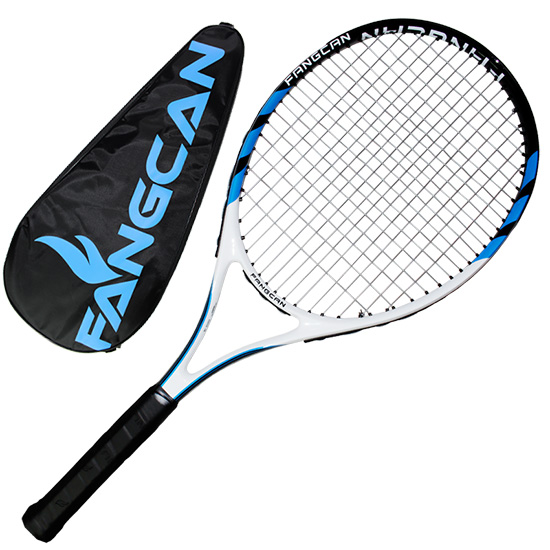
Head size is not weight, and the two get confused
An oversize frame is not automatically light, and a small frame is not automatically heavy. The two specifications move independently, and the combination is what the customer actually feels. A 110 sq in frame at 280 g swings very differently from a 100 sq in frame at 280 g, because the mass is distributed over a larger face — the swing weight goes up even though the static weight did not.
For procurement this means the range has to be described on two axes, not one. If your catalogue only lists head size, the retailer will order by looks and the customer will buy the wrong thing twice: once too demanding, once too powerful.
Balance and length: the other two numbers
Balance point determines whether the frame feels head-heavy or head-light, and it interacts with head size more strongly than most spec sheets admit. An oversize frame with a head-heavy balance is easy power and slow hands; an oversize frame with a head-light balance is the same power with better recovery, at a higher cost to manufacture.
Length matters for reach and for the swing arc. Standard adult frames sit at 68.6 cm; longer frames add reach on serve and are usually sold to beginners as a help. Anything beyond that is a niche, and stocking it is a decision about serving one customer rather than a market.
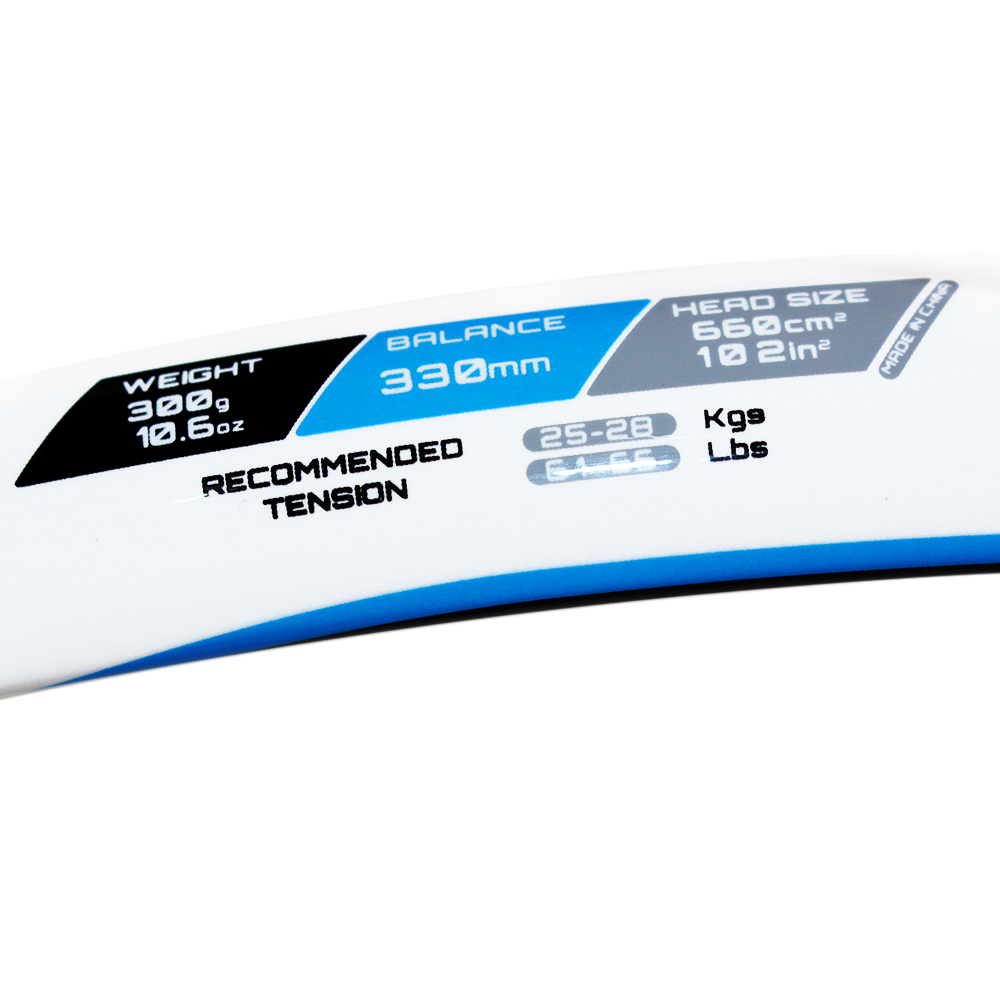
Grip size: the specification that decides returns
Grip size is the most common cause of a return in this category, and it is the easiest to get right. The measurement is the circumference of the handle, and the rule of thumb is that the player’s hand should wrap with the fingertips just touching the palm. Too small and the player over-grips, which produces forearm strain; too large and the wrist loses range, which produces a different strain.
Offer at least two grip sizes per model. A racket range sold in one grip size is a range that returns a predictable percentage of every order, and the return has nothing to do with the frame.
What to put on the purchase order
- Head size in square inches, plus the beam width if the range varies.
- Unstrung weight and balance point, both stated with tolerance.
- Length in centimetres, and grip sizes offered.
- String pattern, since 16×19 and 18×20 behave differently at the same head size.
- Whether the frame ships strung, and with what string.
- A cover included or not — a racket sold without one arrives scratched.
For a first range, two models at different head sizes and the same grip offering will teach you more than four models at one size. The A6 and the A8 are a workable pair for that test: same construction family, different faces, so the sales conversation stays about the number that matters. And decide in advance how a grip-size return is classified, or it will be counted as a quality failure in the return statistics and mislead the next order.
String bed: the specification that changes everything above
Two frames with the same head size and different string patterns are different products. An open 16×19 pattern produces more spin and a livelier response; a denser 18×20 produces a flatter, more controlled ball and a firmer feel. The customer who describes a racket as “too powerful” is often describing an open pattern rather than the frame.
Stock pattern as a specification, not as a footnote. And decide whether frames ship strung: an unstrung frame puts the stringing decision on the retailer, which is fine if they string, and a lost sale if they do not.