

Team Kit: Ball Bags, Pumps and Pressure Upkeep
A club’s ball problem is not a shortage of balls. It is that a set of twelve balls, bought together and used together, degrades at different rates: three go soft, two lose grip, one disappears, and by mid-season the coach is picking through a bag to find four that play the same. The fix is not more balls. It is a small system around them.
The bag is a logistics decision
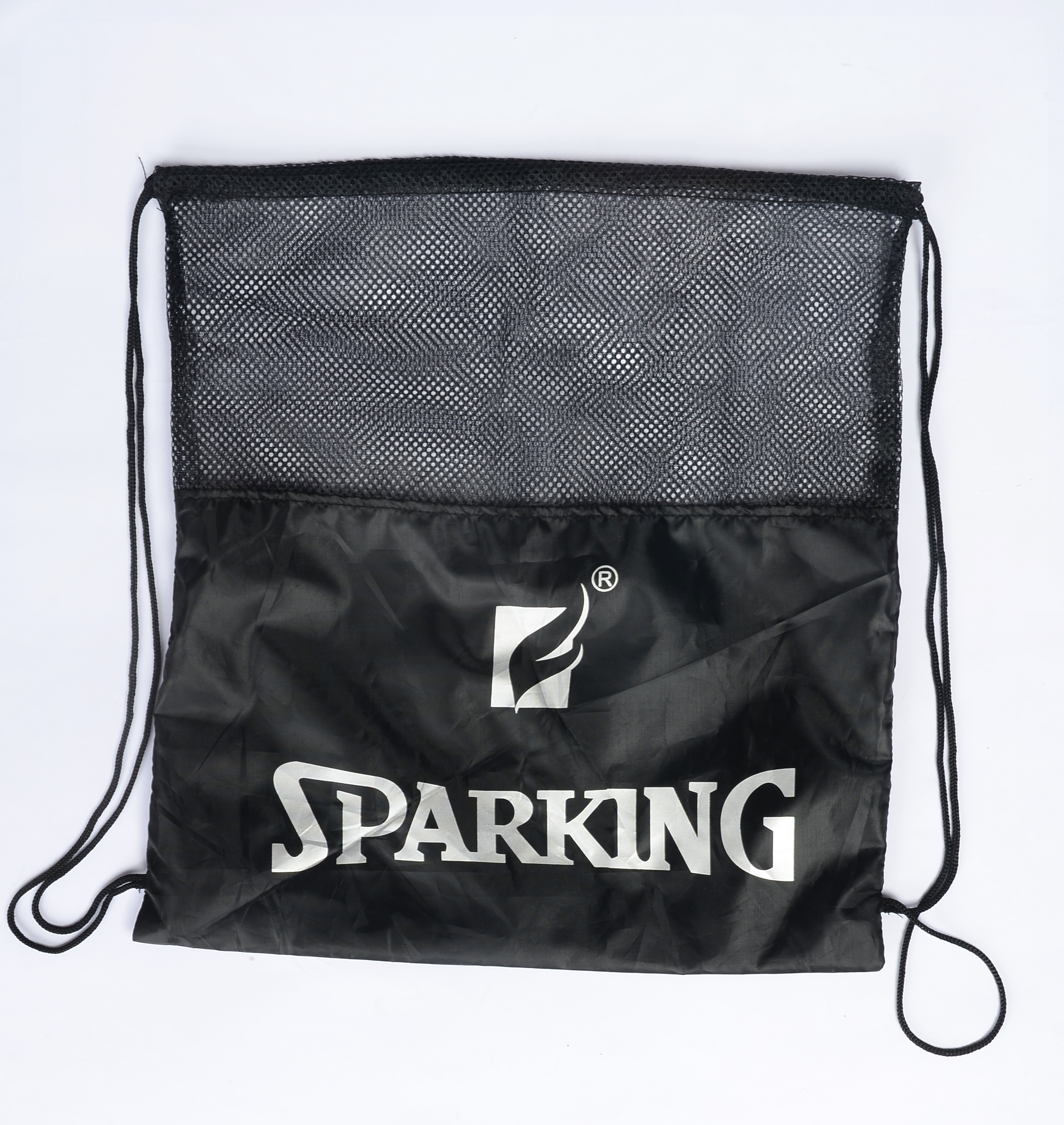
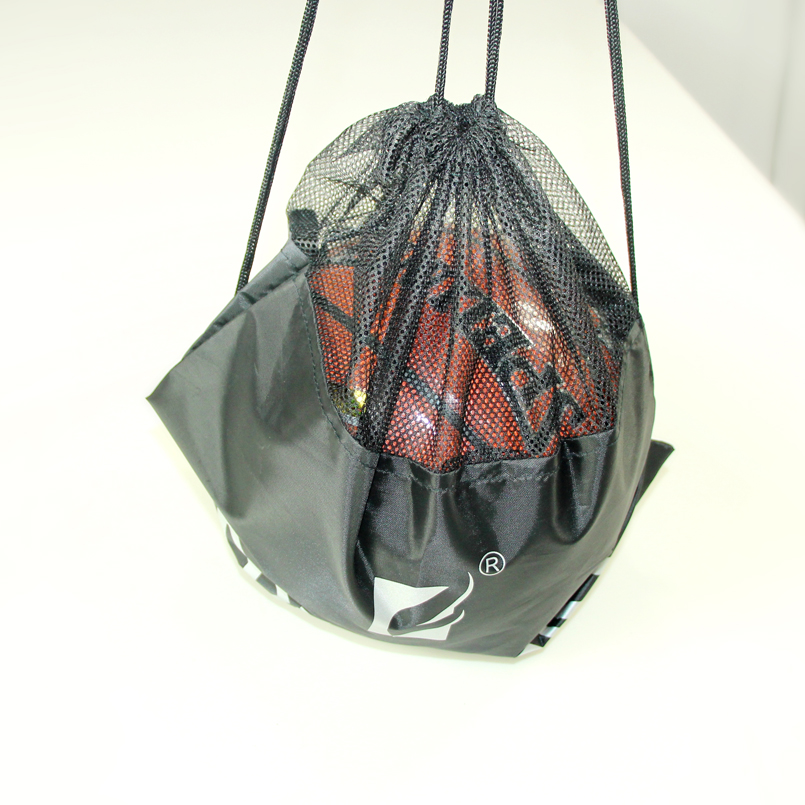
A mesh bag exists so that balls can be carried, counted and aired. Mesh matters for the last of those: balls stored in a closed bag after a session keep moisture against the cover, and a cover that stays damp loses grip faster and smells.
What to specify is less obvious than it looks. The seam is the failure point, not the mesh — a bag that splits at the drawstring channel is unusable, and that is where cheap bags fail. Strap attachment is the second: a single stitched point will tear under a full load of twelve balls. Ask for bar-tacked or double-stitched attachment, and check the stated load rather than the stated capacity.
The pump is the maintenance tool
Most clubs own one pump and it is usually lost. That single fact determines how the balls perform, because a ball is only at spec when it is at the specified pressure, and pressure drops in storage whether or not the ball is used.
For procurement, the specification is the gauge, not the barrel. A pump without a gauge gives the user no way to hit a target, and “firm enough” is how a set of balls ends up at three different pressures. A pump with an integrated gauge, and a needle that fits the valve without leaking, converts an approximate routine into a repeatable one. Include a spare needle in the carton; needles bend and disappear, and a pump without a needle is a pump that stops being used.
Pressure routine, written down
The routine that keeps a set consistent is short enough to print on a card and hand to a coach:
- Check pressure before each session, not after.
- Inflate to the figure on the ball, in the unit the gauge reads.
- Let a ball rest for a few hours after inflation before match use.
- Store slightly under target rather than over — over-inflation stresses the seam.
- Retire a ball that will not hold pressure for a week; the leak is in the valve or the bladder, and no amount of pumping fixes it.
This is the part that most supply relationships skip, and it is the cheapest form of after-sales service available. A club that knows why a ball went soft does not file a claim; a club that does not, blames the supplier for the whole set.
What to put on the purchase order
- Bag: mesh specification, seam construction, strap attachment, stated load.
- Pump: gauge type and range, valve compatibility, needles included.
- Balls: size band, pressure target, and the bounce check as acceptance.
- Whether the kit ships as a bundle with a single SKU and a single barcode.
- Carton quantity across the three lines, so freight is calculated once.
The bundling point is where the margin is. Sold separately, a bag and a pump are two small orders that a club makes once. Sold as a kit alongside the training ball, they become part of the consumables order that repeats every season — and the repeat is the only part of this business that compounds.
For a first club-facing offer, the mesh bag and the pump together with a dozen training balls is a complete and defensible package. It is also easy to quote, which matters more than it sounds: a kit that can be quoted in one line gets ordered, and a kit that needs three lines gets discussed.
The consumables budget a club actually runs
Clubs plan for equipment and forget consumables, and this is where a supplier can be useful rather than just competitive. A season for a twelve-player squad typically consumes balls faster than rackets, and the accessories around them are what determine how many of those balls stay playable.
A one-page budget line — balls per season, one bag, two pumps, a box of needles — is more convincing than a discount. It also gives the club a reason to place a repeat order on a date, rather than when someone notices the bag is empty.
Quoting a kit instead of three lines
A club buyer is usually not a professional purchaser. Given three separate prices they will compare them separately and order the cheapest; given one kit price they will compare the kit against doing nothing, which is a much easier comparison to win.
The kit also protects the margin. Priced separately, the bag competes with every bag on the market and the pump competes with every pump. Priced as a kit with the balls, the comparison moves to what a squad actually needs for a season.
One kit, one barcode, one reorder point
The operational argument for bundling is that it collapses three reorder decisions into one. A club that has to notice the balls are low, then the bag is torn, then the pump is missing, will reorder each of them late and separately. A single SKU with a single barcode gets reordered when someone scans it, which is when it is actually needed.