

Racket Bags: Compartments, Shoe Pocket, Square Shape
Ask a customer how many rackets a bag holds and you will get an answer. Ask them where the shoes go and you will get a better one. Compartment structure, not capacity, is what decides whether a bag gets carried every week or left in the boot of a car — and it is the part of the specification most purchase orders leave to the factory.
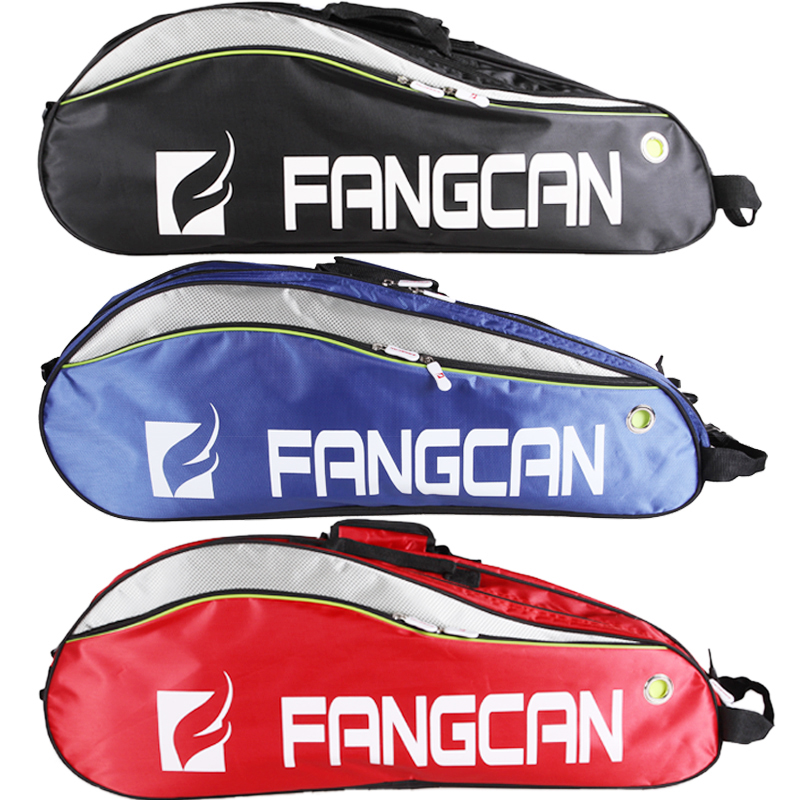
Single compartment: the committed player’s bag
One main compartment, one or two rackets, a small accessory pocket. It is light, it is cheap, and it does one job: carry a racket to a court. What it cannot do is separate wet from dry, which is why it belongs to the player who showers at home and plays one session at a time.
For a retailer, this is the entry price point and the highest turns per square metre. For a buyer, the specification to hold is the lining and the zip, because those are what fail first. A bag with unlined seams will fray at the racket head contact point within a season, and the fraying is visible before the bag is unusable — which means the customer complains while still using it.
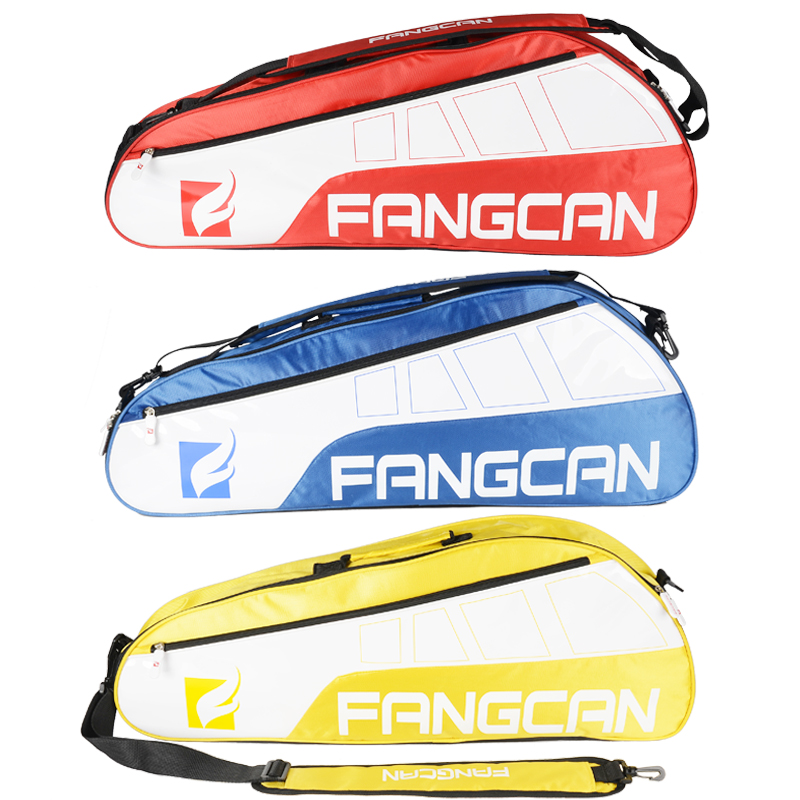
Double compartment with a shoe pocket: the club player’s bag
The second compartment is not extra capacity. It is separation. Shoes, towel, wet shirt and a bottle go in one side; rackets stay dry in the other. That single change is what makes a bag usable for a player who trains twice a day, and it is why this format outsells everything else in markets with a club culture.
Two specifications matter more than the rest. The shoe pocket has to be ventilated — a sealed pocket holds moisture and the whole bag smells within a month, which is a return that has nothing to do with the bag’s construction. And the divider between compartments has to be a real panel rather than a soft lining, or the separation stops working the first time the bag is overfilled.
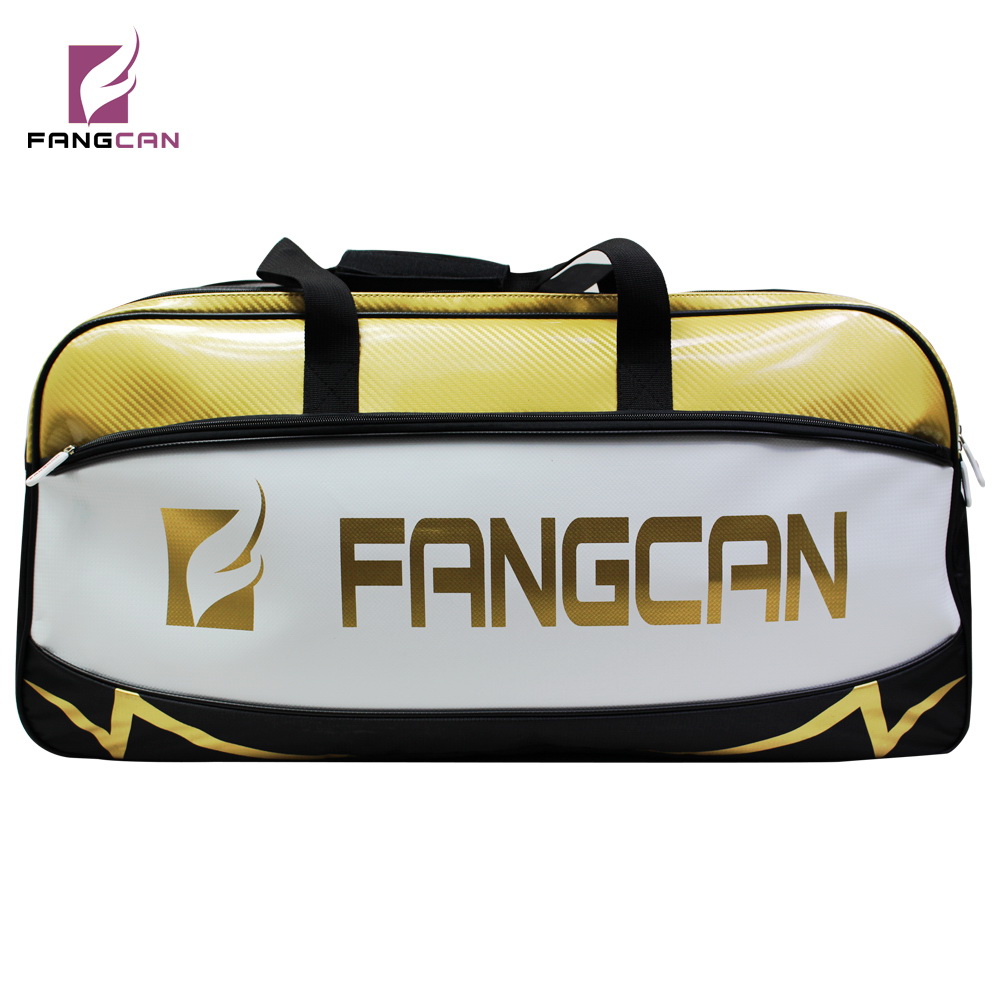
Square bag: the multi-sport bag
A square or box-shaped bag is bought by people who carry more than rackets: several sports, or a coach’s kit, or a family’s gear. It has the most volume and the least structure, and that combination is its strength and its weakness. It swallows everything, and everything moves around inside it.
What to specify here is internal organisation — at least one internal pocket for keys and phone, and a base panel that does not sag. A square bag with a soft base will lose its shape under load and start to look cheap long before it wears out.
Hardware: the small parts that decide the review
- Zips: a bag is judged by its zip, and a coil zip on a curved run will fail before the fabric does.
- Shoulder strap: padded, detachable, with metal rather than plastic hardware at the load points.
- Base: reinforced, since a bag is put down on wet courts more than it is carried.
- Attachment points: bar-tacked, because a single stitch tears under a full load.
- Fabric: oxford for abrasion, PU for water resistance, flannel for scratch protection — and the choice follows from what is being carried.
What to put on the purchase order
State compartment count and purpose, not just capacity. “Three rackets” tells the factory nothing about whether the shoes share the space. Specify the divider as a panel, the shoe pocket as ventilated, the base as reinforced, and the strap hardware as metal at the anchor points. Then ask for one sample to be filled with the actual load and carried for a week — a bag that survives an empty showroom is not evidence of anything.
For a range, the useful structure is one of each: the single compartment at the entry price, the double compartment with shoe pocket as the volume line, and the square bag for the multi-sport customer. Three shapes, three jobs, and no SKU that exists only to fill a colour card.
Testing a bag properly, before the order is placed
The standard sample review is a bag held in a showroom, empty, in good light. It tells you about stitching and colour and nothing about whether the bag works. The useful test is to load it as the customer would — rackets in, shoes in, water bottle in, towel in — and carry it for a week.
What fails in that week is predictable: the strap anchor, the zip on the curved run, and the base panel. Ask for the sample to be tested this way before approval, and ask the factory which of the three they have reinforced. Their answer tells you more about the product than the specification sheet does.
The colour question, answered by returns
Colour drives the first sale and the second sale equally, and it drives returns in a way that is easy to underestimate: a bag in a colour the shop cannot display well will sit, and a bag in a colour that shows dirt will be returned as “used”. Dark neutrals move fastest for a reason that has nothing to do with taste — they survive a season of being put down on wet courts.