

Tennis Trainers: Capacity Decides Stability, Not the Rebound Figure
Tennis trainers look interchangeable: a plastic base, an elastic cord, one ball. Two suppliers can quote prices a factor apart while both spec sheets say the same sentence — 3.8 m cord, 7–8 m rebound. What actually determines whether the thing works is the last line of the sheet: capacity.
Three versions of one model, three differences
| Version | Size | Capacity | Colours | Cord / rebound |
|---|---|---|---|---|
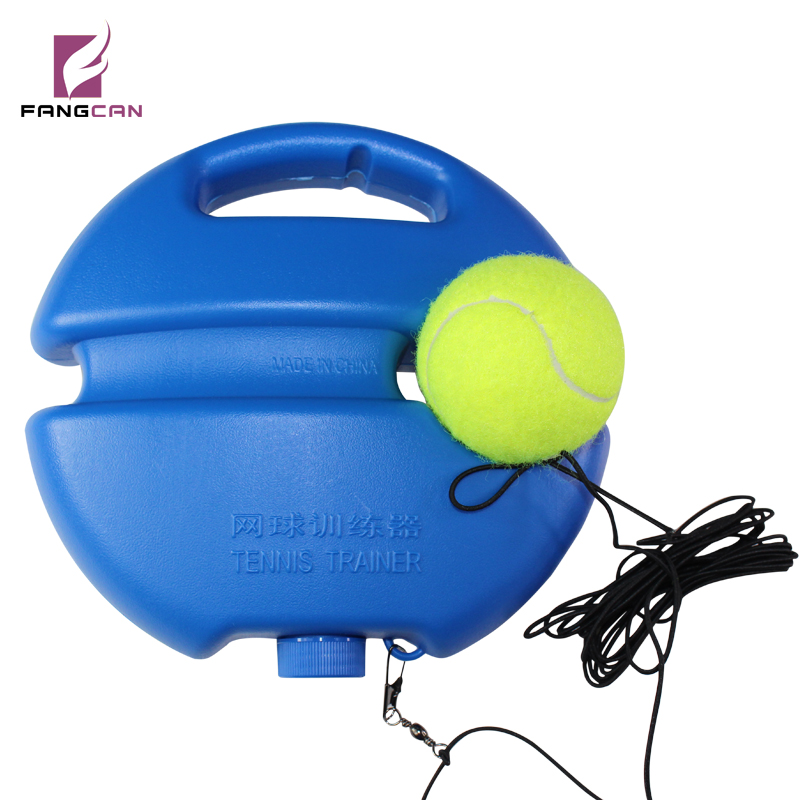
| Classic | 23 × 15 × 5 cm | 0.8 L | Blue, red | 3.8 m / 7–8 m |
| New style | 21 × 21 × 5 cm | 1.1 L | Blue | 3.8 m / 7–8 m |
| Disk | 32 × 20.5 × 7 cm | 1.2 L | Orange, green | 3.8 m / 7–8 m |
All three are PE, with identical cord length and rebound. So selection comes down to two numbers: capacity and footprint. Both answer the same question — does the base stay put when the ball comes back.
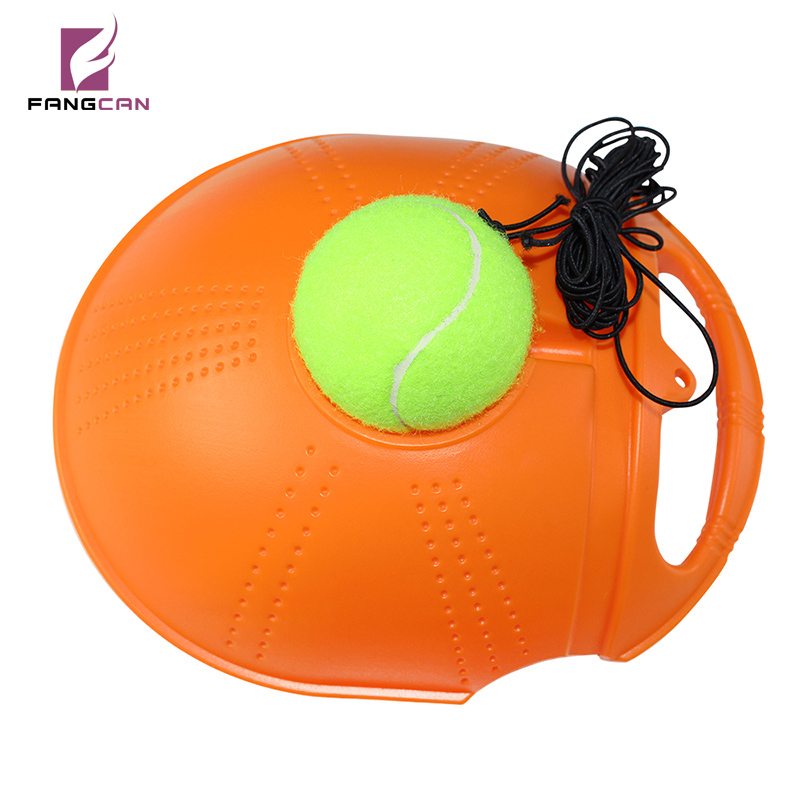
Capacity decides stability, not the rebound figure
The trainer works by filling the base with water or sand, and the weight of that fill is what holds it down. So the governing number is not the elastic cord but how heavy the base gets when full. A 0.8 L classic weighs roughly 0.8 kg filled with water; the 1.2 L disk reaches 1.2 kg — a 50% difference that maps onto two ways of practising. A light base suits slow, controlled hitting at short range; a heavy one holds up to a full swing.
Footprint adds a second layer. At equal weight, a wider base resists tipping and sits more steadily. The disk’s 32 × 20.5 cm is clearly larger than the classic’s 23 × 15 cm, so it takes more pull on hard courts. The 21 × 21 cm square of the new style sits between them — the compromise that takes less floor space than the disk while staying steadier than the classic.
For a buyer this means the three are not good-better-best. They are three levels of use intensity. Match them to how the customer actually plays: classic for children and first-timers, new style for adult self-practice, disk for anyone with a real swing.
The ball side: with a cord and without are different products
There are two training balls: FCA-02, plain (wool and rubber, 56–59 g, 65–68 mm, 1.3 m rebound), and FCA-03, identical but with a cord attached.
That cord changes the use case entirely. A corded ball is the companion piece to a trainer — the ball returns on the cord, so nobody collects it. A plain training ball is a consumable — ball machines, multi-ball drills, wall practice. Their purchasing logic therefore differs: corded balls ship with trainers, plain balls are stocked as consumables.
The usual mistake is treating them as one item and stocking a single SKU. The result is either trainer buyers with no matching ball, or ball buyers discovering there is no cord to use. On a purchase order these are two lines, not one.
Don’t price by appearance
Cost differences across the three come mainly from plastic volume and tooling; colourway is secondary. Price the disk up because it “looks more advanced” and the customer will not follow — on paper the cord and rebound are identical, so there is no visible reason for the premium.
A defensible structure is capacity and footprint: 0.8 L and 1.2 L are two levels of use intensity, and the customer can verify it by filling the base and lifting it. That argument sells far better than “new style”.
One practical note: PE bases become brittle under prolonged UV. That is a material property, not a defect — telling customers up front removes a wave of “it cracked after six months” complaints.
How to plan the buy
Pick a hero first. In most markets the new style (1.1 L, square) is the best balance: modest footprint, adequate stability, sensible carton size. The classic handles the low price point; the disk carries the “advanced/adult” slot.
Stock balls separately. Corded balls at roughly one per trainer; plain training balls as their own consumable line. Never merge them into one SKU.
Trim colours by channel. The three offer 2 / 1 / 2 colours — five in total. A low-ticket item does not need the full set: two for the hero, single colour for the rest.
Cost the carton. At 32 × 20.5 × 7 cm the disk is more than twice the volume of the classic, and volumetric weight makes it visibly more expensive to ship. Size orders so a batch fills a carton.
Frequently asked questions
Do all three share the same cord?
The stated cord length and rebound match (3.8 m / 7–8 m), so in principle yes — but the attachment and fixing differ by version and must be confirmed if cords are sold as spares.
Water or sand in the base?
Sand is heavier and steadier, suited to hard courts and full swings; water is easier to carry and empty for temporary use. Both are supported.
Can a trainer replace a ball machine?
No. A trainer solves “how one person practises alone”; a machine solves high-repetition feeding to a fixed point. Different tools.
Can a corded ball be used on its own?
Yes, but the cord needs an anchor. Without the trainer base the return effect is much weaker.
Want a stocking plan for training equipment?
If you are setting the trainer line — which version leads, how balls are paired, how cartons are costed — send us your customer base and channels and we will return a combination built on capacity and size. Talk to our team.