

Pre-Stretch and Machine Calibration: Why Two Shops Give Two Tensions
A player asks for 26 lb in two shops and comes back with two rackets that do not play the same. Both stringers did what they were asked. The difference sits in three places that no customer ever names: how the string was pre-stretched, what the machine does when it reaches the number, and whether the number was true in the first place.
For a distributor, this is not a curiosity. It is the reason a market can develop a reputation for “soft stringing” without any single shop doing anything wrong.

What pre-stretch does
New string is not a linear spring. Pulled to a tension and held, it keeps extending for a while — the polymer chains straighten and settle. Pre-stretch pulls a length of string beyond the target before it goes into the frame, so most of that settling happens off the racket.
The effect is not more tension. It is less immediate loss: a pre-stretched bed arrives closer to the number requested and stays there longer. A shop that skips pre-stretch delivers a bed that will drop a couple of pounds in the first session, which the player experiences as “it went soft after a week”.
Constant pull versus lockout
A constant-pull machine keeps drawing until the head stops moving, so the string reaches the set tension and stays. A lockout machine stops when it hits the number and clamps; the string then relaxes against a fixed head, and the actual tension in the frame ends up below the dial.
On the same nominal setting, the gap between the two is commonly one to two pounds, and it widens with stretchier string. Neither machine is wrong. A shop that knows which it has can compensate; a shop that does not will quote a number it cannot deliver.
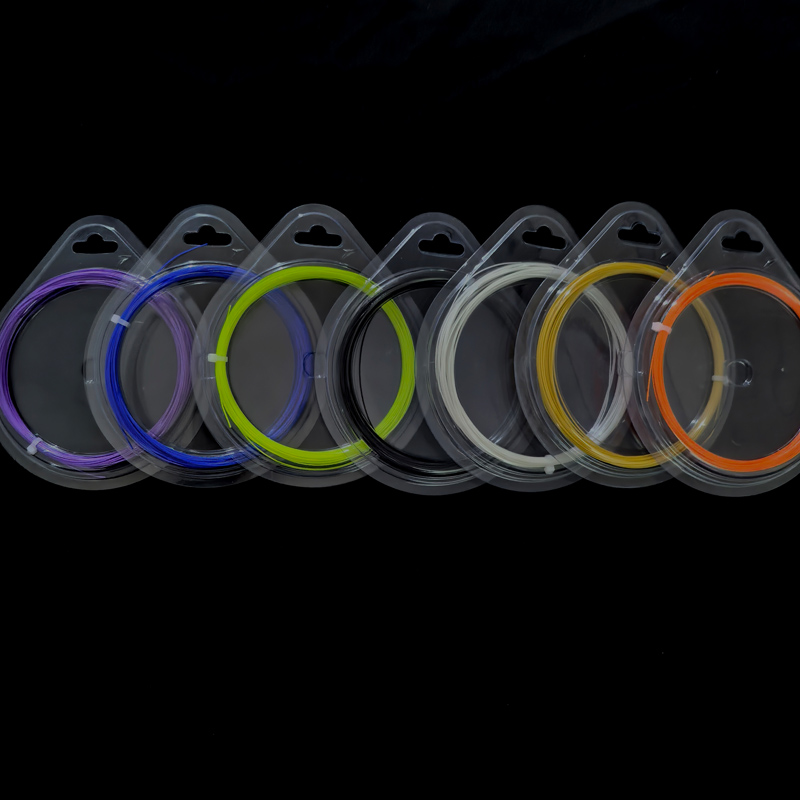
Calibration drift is the invisible one
Every machine has a load cell or a spring that drifts. A machine reading 5% high at 26 lb is delivering 24.7 lb, and the stringer has no way to know without checking against a calibrator. Annual calibration is normal in serious shops; in most markets it is not, which means the same nominal tension means different things in different towns.
This is why tension is a poor cross-shop comparison and a good within-shop comparison. A player who moves between shops is not comparing stringers; they are comparing calibration dates.
What the customer actually feels
Below the frame’s ceiling, the player feels three things: how firm the bed is at contact, how much it moves, and how long it stays that way. Pre-stretch changes the third. Constant pull changes the first. Calibration changes all three at once, silently.
None of these are visible in a photograph, which is why the conversation usually ends in a blame-free standoff. It also means a shop that documents its method — machine type, pre-stretch percentage, calibration date — can win an argument it would otherwise lose on feel alone.
Where this meets the frame specification
A frame’s maximum tension is a ceiling, not a recommendation, and the way a bed behaves near that ceiling is partly a stringing question. The two-stage loss that follows a fresh stringing is described in this note on tension ceilings and loss, and the deliberate two-pound gap between mains and crosses is covered here.
Both of those mechanisms get harder to control when the machine is uncalibrated, because the stringer can no longer trust the number they are working from.
What to write into an order
- Machine type: constant pull or lockout.
- Pre-stretch: yes or no, and the percentage if the machine offers one.
- Calibration: the date of the last check, and the instrument used.
- Whether quoted tension is measured at the head or in the finished bed.
- The recommended band for the frame, expressed as a range rather than a single number.
For an OEM order, the fifth item is the one worth insisting on. A frame that ships with a recommended band of 24–27 lb tells the buyer’s stringer where the design intent sits, and it stops a retail shop from stringing a light frame at the top of its ceiling because a customer asked for “what the pros use”.
Why it matters commercially
Stringing variance is invisible in a catalogue and obvious in a player’s hand. A brand whose frames arrive consistently strung builds a reputation for consistency it did not have to advertise. A brand whose frames vary gets the opposite, and usually blames the frame.
What a shop should keep on file
Three lines per stringing job are enough: machine type, nominal tension and pre-stretch setting, plus the date the machine was last checked. Written on a card and handed over with the racket, that record does two things. It lets the player reproduce the job at another shop, and it lets the shop answer a complaint with data instead of opinion.
Over a season the same card becomes a record of what a particular player actually likes, which is a more useful sales asset than any catalogue page.
Frames like the CC6.0 are specified with a conservative ceiling precisely so that a ±1 lb variance in the shop does not push the frame into a region it was not validated for. That is a design decision made for the stringer’s benefit, and it is worth telling a distributor about, because it is the kind of detail that turns a price comparison into a supply relationship.