

Squash Balls: The PU Training Ball and the Step Up
Squash has an unusual barrier for a racket sport: the ball does not bounce unless it is warm, and a beginner cannot keep it warm because a beginner cannot hit it hard enough. The result is a first session where nothing rallies, and a second session that never happens.
The training ball exists to remove that barrier, and it is the single most useful product a club can stock for retention. Understanding why makes it easier to sell and easier to specify.
Why a competition ball is the wrong first ball
Competition squash balls are made from a rubber compound that is deliberately dead at room temperature and comes alive only after repeated hard hitting. Their dot markings indicate how much the ball rebounds when cold. The more dots, the slower and deader it is, so a double-yellow ball is the slowest and the hardest to use, not the “best” one.
A beginner given a double-yellow spends the session scraping the ball off the floor. The correct first ball is either a training ball with a livelier compound or a fast, single-dot ball, and the difference in the first month of play is the difference between joining and quitting.
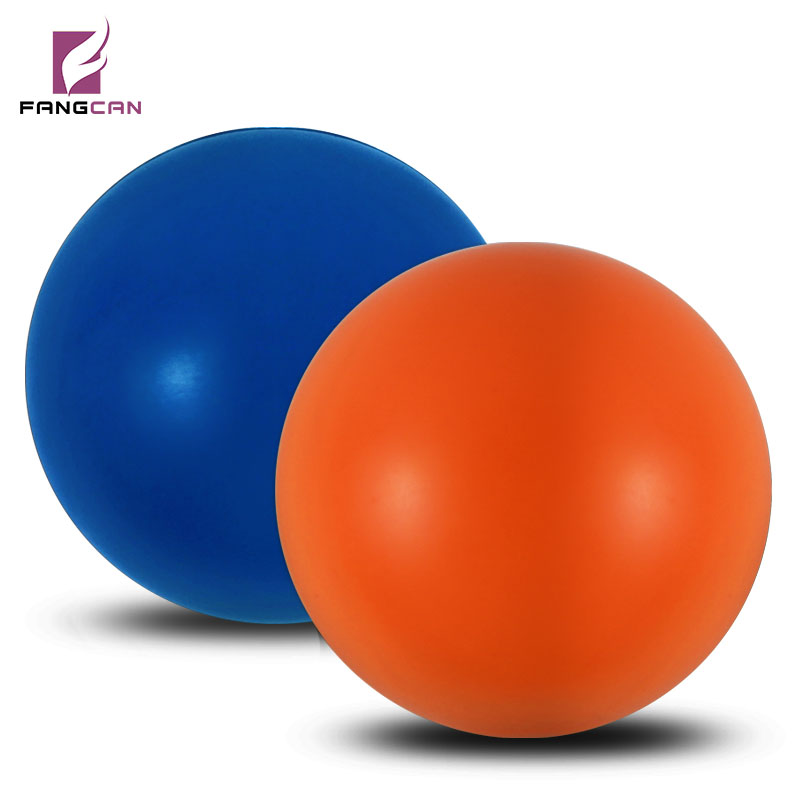
What the PU training ball does differently
A PU training ball is built to bounce at low impact.
It is not a competition ball and it is not trying to be: it is a teaching tool that lets a beginner rally, learn the swing, and get enough repetitions to develop timing. Its specification is the rebound at low speed, not the rebound after a hundred hard hits.
Its weaknesses are worth knowing because they are what the club will complain about: it does not behave like a competition ball at high pace, and it wears differently. That is acceptable for a training product and unacceptable if it is sold as an all-purpose ball.
The step-up ladder
The progression that works is: training ball, then a fast dot-coded ball, then medium, then the slow ball the game is played with. Each step should happen when the player can keep the previous one warm through a rally, not on a calendar.
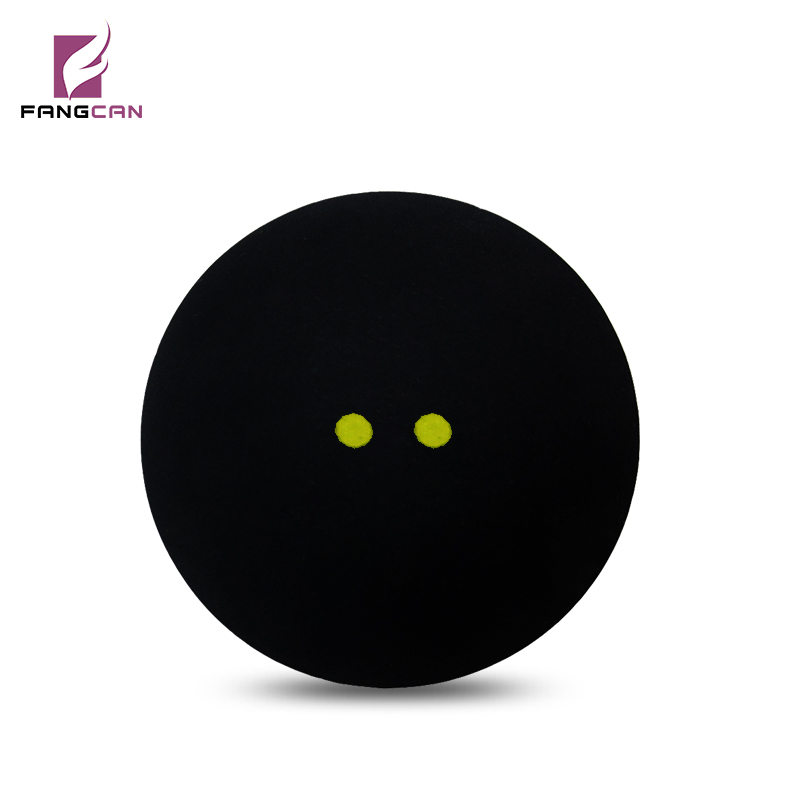
For a club, that ladder means stocking three products rather than one, and the trainers being able to say which one a member should buy this month. That is a small inventory decision with a large retention effect.
Durability, and the cost per session
Squash balls are cheap and they last a long time, which means the cost per session is trivial and the decision should never be made on price. A club that buys the cheapest available ball and hands it to beginners is saving a few cents and spending a member.
What to put on the purchase order
- Ball type: training, or competition with the dot rating stated.
- Rebound specification and the temperature at which it is measured.
- Compound and hardness, since this is what the rating describes.
- Colour, and whether the dot marking is printed or moulded.
- Pack quantity, since these are sold loose from a box in most clubs.
The dot marking point matters at retail: a printed dot wears off and the ball becomes unidentifiable, which is a slow-moving problem in a club basket where balls are shared.
For a first stock, the sensible pair is the PU training ball plus one competition ball at the fast end, with the slow double-yellow held for members who have already graduated. Order them on the club season rather than the retail calendar, squash demand follows court bookings, which the three-clock note describes for the wider range.
Court temperature and the ball
Squash balls are temperature-sensitive by design, and a cold court changes every player’s experience of the same ball. A club that heats its courts poorly will have members concluding that the balls are wrong, when the ball is behaving exactly as specified.
That is worth a line in the club’s own guidance: warm the ball before play, keep a spare in a pocket, and expect the first five minutes to be different from the next fifty.
What the buyer can control
The buyer cannot control the court, but can control what is stocked. Keeping one fast ball available means a beginner is never handed something unplayable, and that single stocking decision affects retention more than any coaching programme.
Common mistakes on this specification
- Handing beginners a slow competition ball.
- Treating dot count as a quality ranking.
- Buying on price when cost per session is trivial.
- Printing dots that wear off in a shared basket.
- Ignoring court temperature when diagnosing complaints.
Four of the five are retail behaviour; the fifth is a specification a buyer can fix with one line.
One practical habit closes the loop: keep one ball of each rating at the desk and let a new member hit each for thirty seconds. Choosing by feel is faster and more convincing than any explanation of dots.
And the corollary: a club that stores balls cold will always think its supplier changed something.