

Multifilament String: Core, Wraps and What Ages First
“Multifilament” appears on packaging as though it were a material, like polyester or natural gut. It is a construction: many fine filaments bundled into a core, then wrapped, then coated. The behaviour of the string comes from how those three layers are built, not from the word on the packet.
The distinction matters at the buying stage, because two strings sold as multifilament can differ more from each other than either differs from a monofilament.
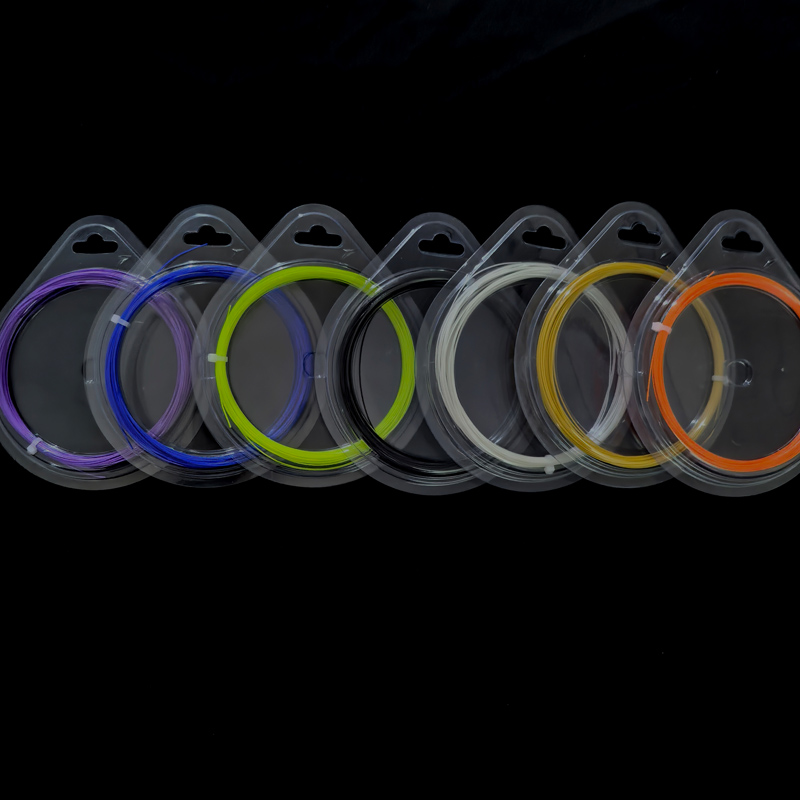
The core carries the tension
The core is a bundle of filaments, sometimes thousands of them, running the length of the string. It carries most of the load and it is what determines how the string stretches and recovers. A core made of many fine filaments is softer and more elastic; one made of fewer, thicker filaments is firmer and holds tension longer.
That single choice explains most of the price range within the category, and it is the one a catalogue never states.
The wraps protect and locate
The outer wraps bind the core and give the string its surface. They are what the string bed actually rubs against, so they decide how much friction there is between mains and crosses, and therefore how quickly the string notches and breaks.
A string with many thin wraps feels smoother and slides better; one with fewer, thicker wraps feels rougher and lasts longer against abrasion. Players describe the first as “spin friendly” and the second as “durable”, which is the same mechanism seen from two sides.
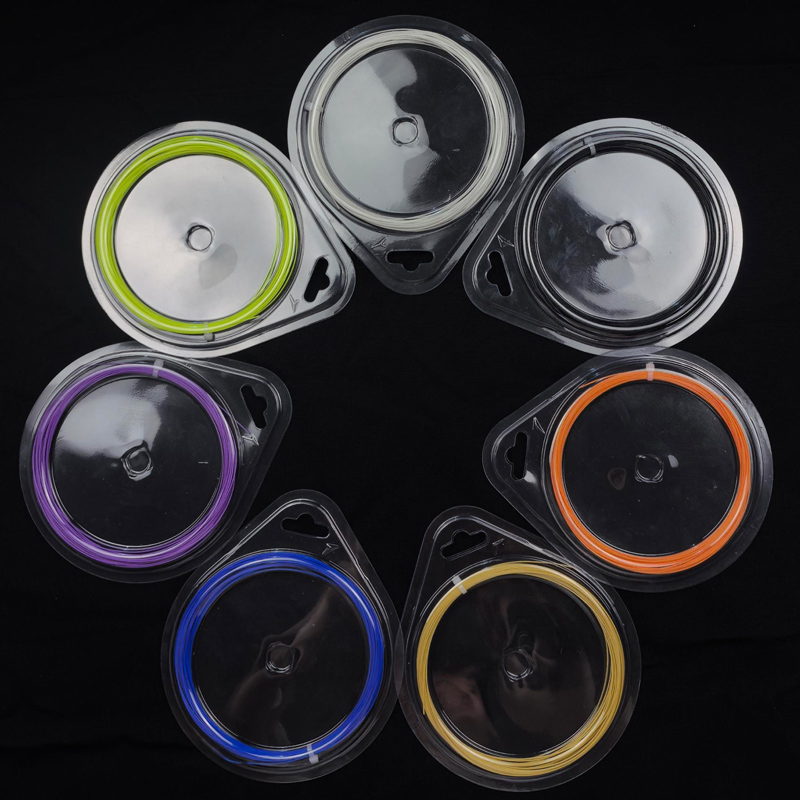
The coating is what the player feels first
The coating is a thin layer applied over the wraps, and it is what the hand feels at contact before any of the structure matters. It is also the first thing to wear. A coated string plays its best in the first few hours and then changes, which is why some players restring more often than the tension requires.
For a buyer, this is a commercial fact worth knowing: the perception of quality in this category is created in the first session, and the coating is what creates it.
Why the best-feeling string ages fastest
The construction that gives the most elasticity also has the most filaments moving against each other, and movement is what wears a string out. A soft, responsive multifilament notches internally as well as externally, so it loses playability faster than a firmer string that felt less impressive on day one.
This is not a defect. It is the trade the player chose when they picked feel over durability, and a shop that explains it retains the customer instead of replacing the product.
What to specify
- Construction: number and size of core filaments, and the wrap pattern.
- Gauge in millimetres, measured, with the tolerance.
- Coating type, and whether it is intended to wear or to persist.
- Tension holding, stated as a percentage loss over a defined period at a defined tension.
- Recommended tension band for the string itself, separate from the frame’s.
The fourth item is the only one that can be checked objectively, and almost no catalogue provides it. A string that loses 8% in 24 hours and one that loses 15% behave completely differently in a shop that strings once a month.
Where it belongs in a range
Multifilament sits between natural gut and monofilament polyester on both price and behaviour, and it is the string most retail customers should be sold first. It is forgiving, it feels good immediately, and it does not require the player to generate their own power.
The cross-colour version used in squash, such as TM101, adds a visual dimension that matters in a market where players choose by look as much as by specification — but the construction underneath is what decides whether they come back.
Pairing it with something firmer
A hybrid that puts a firm string in the mains and a multifilament in the crosses is a way to buy durability and feel at the same time, but the two halves age at different rates. The crosses lose elasticity first, so the bed gradually becomes mains-dominant, which the player experiences as the racket getting harsher.
That is worth telling a customer when selling the hybrid, because the alternative is a complaint about the string rather than about the setup. It is also worth telling a shop: a hybrid should be restrung as a unit, not by replacing the worn half, because a new cross against an old main produces a bed that is neither of the two things the player chose.
For a supplier, the opportunity is a packaged hybrid with both halves in one box and a stated tension split. It is a small product decision that removes a large amount of guesswork at the counter.
Storage is part of the same story: a multifilament left in a hot shop loses the properties it was bought for, as set out in this note on string storage and ageing. And a player who wants to combine two strings should understand that hybrid setups drift differently from a full bed, because the two halves age at different rates.