

Handle Length: Why Doubles Players Want More Grip
Total racket length is capped by the rules at 680 mm for badminton. Handle length is not capped at all, which means two frames of identical overall length can put the throat in different places and feel like different rackets.
That freedom is worth understanding, because handle length is one of the cheapest ways to differentiate a range and one of the most commonly ignored specifications in a catalogue.
Where the millimetres come from
A racket has three zones: handle, shaft and head.
Overall length is fixed, so any extra handle length is taken from the shaft. A shorter shaft means a higher throat, which moves the frame’s flex point closer to the hand and changes how the frame loads on a swing.
That is the physical trade. The marketing version, “long handle for better drives”, is describing the same thing from the player’s side.
What a longer handle does for a doubles player
Doubles is played with a short grip: the hand sits higher, close to the cone, so the racket is shorter and faster. A longer handle gives that hand position more room, and it also lets the player slide down for a smash without running out of grip.
Singles players grip lower and use the full length for reach.
They gain less from extra handle and lose some shaft. This is why the same frame geometry can be sold as two models, and why the distinction should be stated rather than left to the buyer to discover.
The cost is in the shaft
Removing shaft length removes the part of the frame that flexes most.
A frame with a short shaft feels stiffer, because the same swing produces less deflection over a shorter span. Players describe this as “more direct” or as “less whip”, depending on whether they like it.
The structural consequence is that a short shaft concentrates stress at the throat, so the layup there has to change. A long-handle model built on a standard layup is not a different handle; it is a different load path, and it should be validated as one.
What the handle itself carries
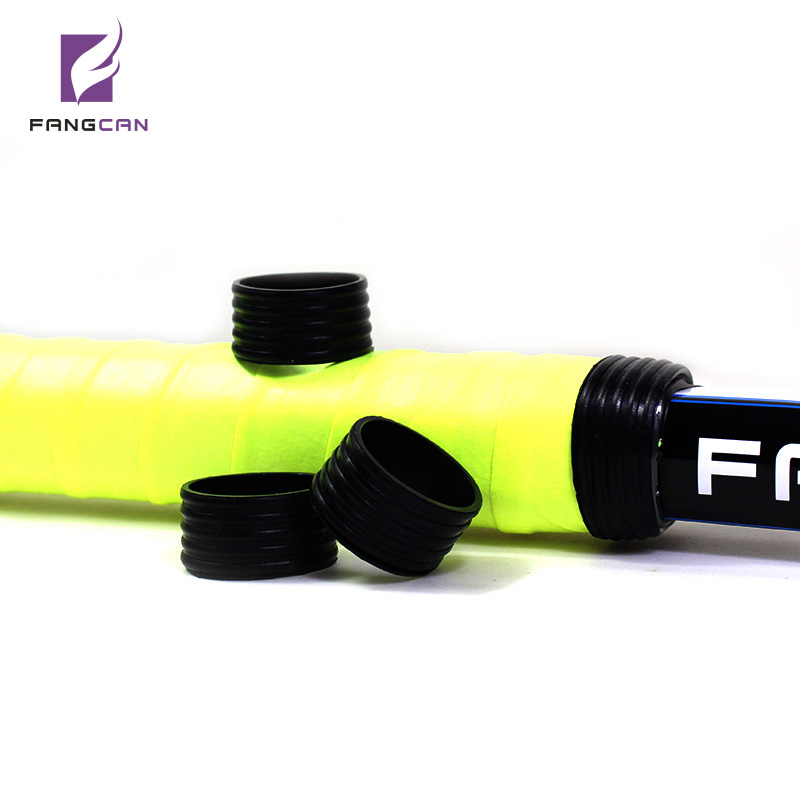
The handle is not a passive tube. It holds the butt cap, the base grip and the sealing ring, and its wall thickness decides how much vibration reaches the hand. A longer handle has more of all three, which adds a small amount of mass at the hand end, the one place where mass lowers the balance point without slowing the swing.
That is a real benefit for a player who finds a frame too head-heavy, and it is invisible in every catalogue that lists only weight and balance.
What to specify
- Overall length, as measured, and the tolerance on it.
- Handle length from butt cap to cone, and the shaft length that results.
- Shaft stiffness or flex rating, if the handle change alters it.
- Handle wall thickness and handle mass.
- The balance point measured on the finished frame, not extrapolated.
The fifth item is where the arithmetic usually goes wrong. Balance is quoted from the butt cap, so lengthening the handle at constant overall length does not move the balance point the way a buyer expects. The head has not moved, but the reference has.
How to use it in a range
Handle length is a legitimate axis for two models that share a head and a mould family. CC6.0 and the N9 can be presented as two grip philosophies rather than two price points, which is a more useful distinction for a shop than another model number.
It also settles a customer argument that shops have every week: two players comparing rackets of the same weight and finding them different. Often one has a longer handle and neither has noticed. The difference is in the hand, and it is exactly where the hand is.
The wrap has to cover it
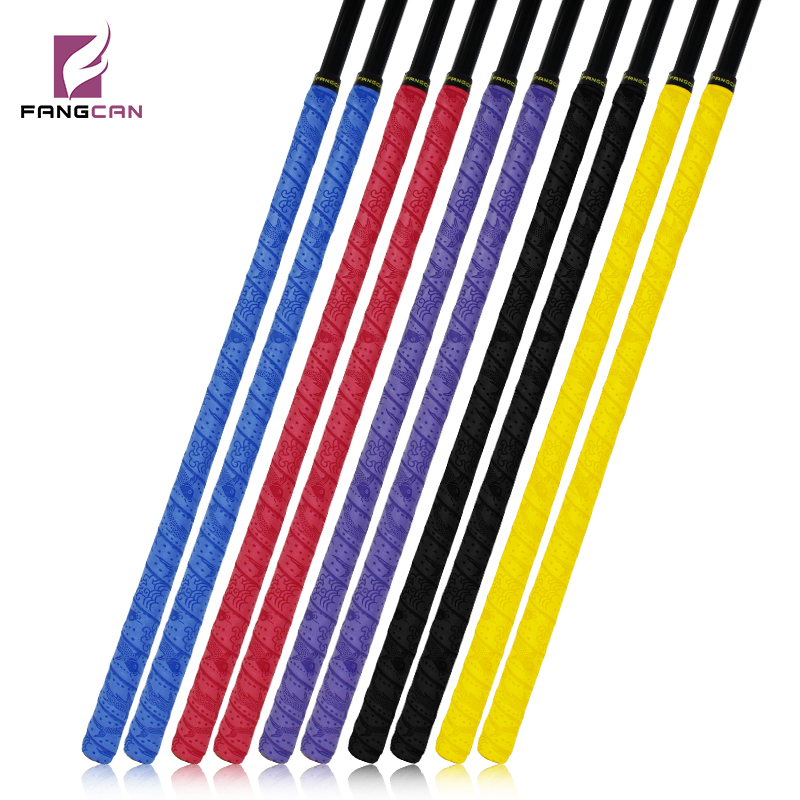
A longer handle needs a longer overgrip, and this is where a range built on standard accessories breaks down. A standard 1100 mm overgrip will not cover a long handle with the overlap a player expects, and the result is a racket that arrives with the bottom of the handle bare.
The arithmetic is simple: handle length plus the overlap required at each end determines the minimum length, and the overlap in turn depends on the thickness of the tape. A 1500 mm overgrip exists precisely because long handles and two-handed grips need the extra length, and pairing the wrong length with the wrong handle is a specification error that shows up at the counter rather than in the factory.
For a distributor, the practical move is to stock the longer length alongside any long-handle model. It costs almost nothing and prevents the most visible kind of unfinished product: one where the customer can see where the tape ran out.
Measure the handle, not the frame, when comparing two models.
The general principle is the one that governs balance point itself: a number without its reference length means nothing, as set out in this note on balance and length.