

Isometric vs Oval Heads: What the Shape Actually Changes
Head shape is described in catalogues with two words, and the words carry a claim: the square-ish head has a larger sweet spot. That claim is true in a limited sense and misleading in a useful one, because the shape changes three other things at the same time.
For a buyer choosing between two frames that otherwise look identical, the shape is often the real difference, and it is the difference that decides who the racket suits.
What the sweet spot actually is
The sweet spot is not one point. There is a region where the string bed returns energy efficiently, and it is bounded by two things: how far the strings can deflect, and how much the frame resists twisting when the shuttle is struck off-centre.
A square-ish head puts more string length in the corners than an oval, so the effective area, the part of the bed that still returns a usable shot, extends further towards the frame. That is the mechanism behind the marketing claim, and it is a real one.
The cost is in the corners
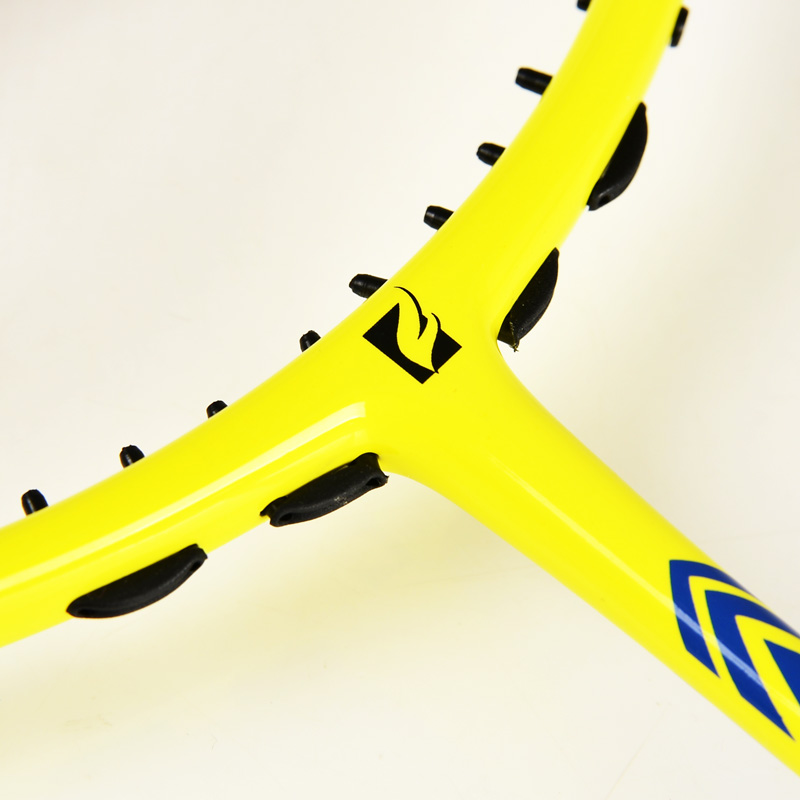
The same geometry that extends the bed also creates corners where the string changes direction sharply and the frame is furthest from a straight run. Those corners are where string tension is least even and where frames are most likely to crack under a mishit.
This is why isometric frames tend to be specified with slightly thicker sections at the shoulders, and why a cheap isometric frame often fails at the top corners rather than at the shaft. The shape is a structural decision as much as a playing one.
String length and feel
Longer strings at the same tension feel softer and return more energy; shorter strings feel firmer and more controlled.
An oval head concentrates longer mains in the centre; an isometric spreads them wider. The result is that the same string at the same tension plays differently in the two shapes, before any difference in the frame is considered.
This is why copying a stringing spec from one frame to another of a different shape produces a racket that the player describes as “not the same”. The bed is doing something different, and the number on the machine has not changed.
Drilling and pattern
An isometric head needs its holes drilled on a different path, and the pattern of mains and crosses has to be laid out to keep the corner strings from crossing at too sharp an angle. That layout is where a copy differs from an original: the outline can be copied from a photograph, the hole path cannot.
This is why the string pattern and the head shape belong in the same specification, and why two frames with the same pattern number can still play differently.
What to specify
- Head shape described as a ratio, not as a word, length to width.
- Head area in square centimetres, and whether it includes the frame.
- String pattern as mains × crosses, with the corner routing described.
- Frame section thickness at the shoulders, where the shape does its work.
- The tension band validated for that shape, not carried over from another.
The second item is where catalogues are least reliable. A head quoted as “isometric 10% larger” is a comparison, not a measurement, and the comparison is usually against a frame the buyer has never held.
Reading a range with it
For a distributor, the shape is one of the cleanest ways to give two models distinct roles. An isometric frame for the player who needs forgiveness on off-centre contact; an oval frame for the player who hits the middle and wants a firmer, more direct bed.
Stringing the two shapes
A stringer who moves from an oval frame to an isometric one at the same reference tension will hand back a bed that feels looser, because the longer corner strings deflect more. The correction is usually one to two pounds, and it is a correction the player notices immediately even though nobody measured anything.
This is why a range that carries both shapes should publish a tension band for each, rather than one band for the family. It is also why a shop that strings both should keep a note of which tension suits which shape. The difference is small enough to be forgotten between jobs and large enough to generate a complaint.
The same logic applies to the pattern. A frame with more crosses in the same head area will feel firmer at the same tension, so the two variables, shape and pattern, move the feel in the same direction and should be specified together.
One more practical note: an isometric frame with a worn grommet set wears faster at the corners than an oval, because the angle does more work. Replacing the set on schedule matters more on this shape than on the other.
Neither is advanced and neither is beginner. The shape decides which mistake the racket forgives, and a shop that can say that out loud sells more of both, because the customer stops wondering which one is better and starts checking which mistake they actually make.