

Squash Grip Shape and Handle Size: What Buyers Can Actually Specify
A squash handle is a small piece of the product and a large part of the experience. Two frames with identical heads and different handles feel like different rackets to the same player, and the handle is the part most catalogues describe in one word: standard.
For a buyer building a private label, the handle is also one of the few areas where a change is cheap, visible and genuinely useful, which makes it worth understanding before the specification is frozen.
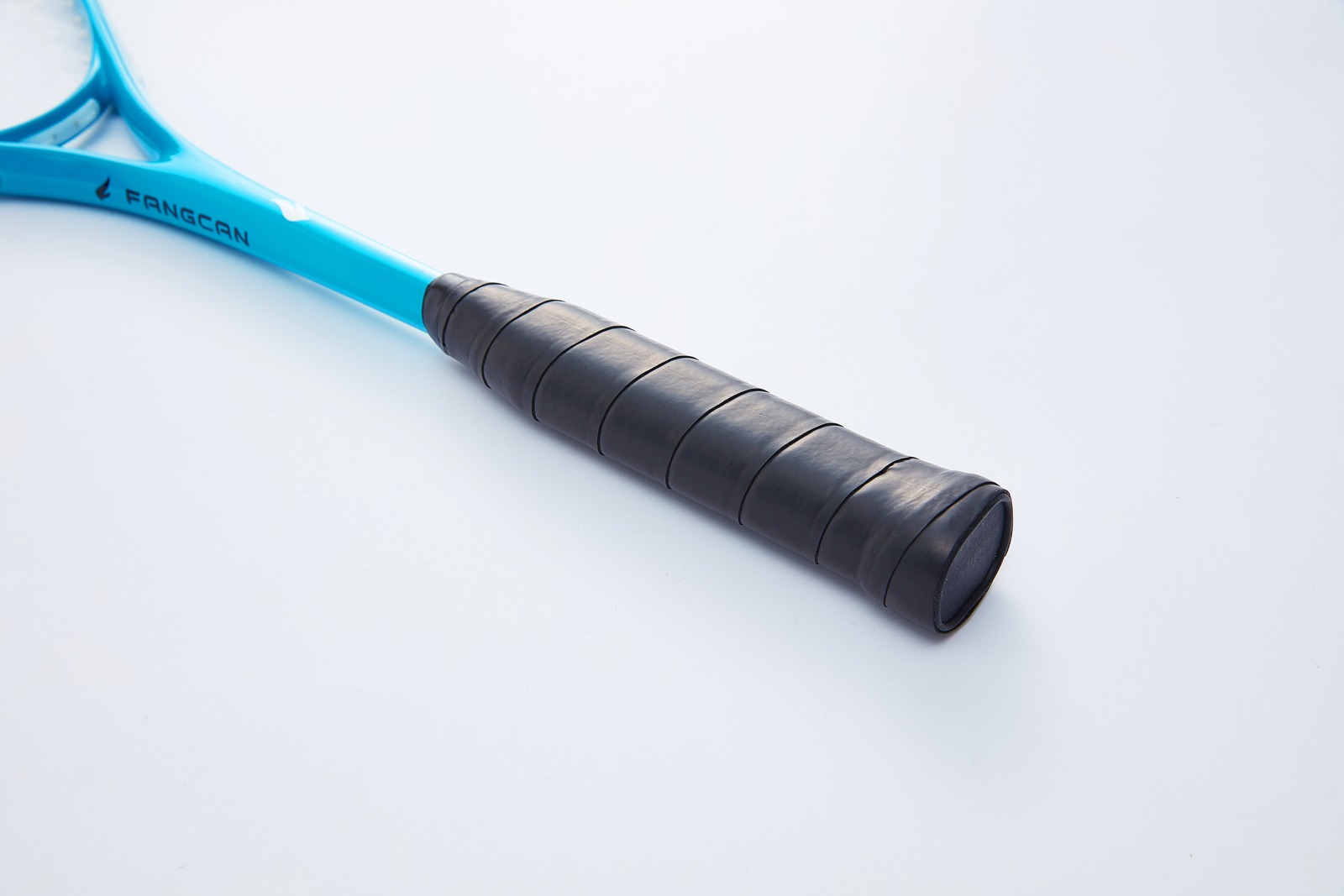
The three dimensions that matter
Circumference is the one everybody knows: it decides grip size and, indirectly, how much the player’s hand has to work.
Length matters because squash players grip high for volleys and low for length, and a short handle limits the second. Taper is the third and the least discussed: some handles narrow towards the top so the hand sits differently at different heights.
A handle that is too tapered forces the player’s hand into one position.
A straight handle allows the full range. Neither is wrong, but the choice should be deliberate.
Taper in practice
On a tapered handle, the top of the grip is thinner, which makes the racket feel lighter in the hand at the volley and heavier when gripped low. This is a real effect, and it is why some players describe two frames from the same brand as behaving differently even when their specifications match on paper.
Commercially, is straightforward: if a range uses one handle across several models, the models will feel more similar than their heads suggest. If each model has its own handle, the range differentiates more, at the cost of more part numbers.
Circumference and grip layers
Handle circumference is set by the core and the base grip together, and then modified by whatever the player wraps on top. A 0.60 mm overgrip adds roughly 1.2 mm to the circumference, which is a third of the step between one grip size and the next in most sizing systems.
Which makes the base grip a specification, not an accessory. A buyer who specifies a handle size without specifying the base grip has specified half a product.
Balance and handle weight
Squash frames are light, many sit between 110 and 140 grams, so the handle assembly is a larger fraction of total mass than on a tennis frame. A heavier handle lowers the balance point and raises static weight, which changes the swing without changing the head.
Which is why a handle swap can rescue a frame that a player finds too head-heavy, and why the handle’s mass belongs in the specification rather than being treated as a constant.
What to specify
- Circumference at the butt and at the top of the grip, so taper is defined.
- Handle length from the butt cap to the throat.
- Base grip thickness and material, and the resulting finished circumference.
- Handle mass, if it differs from the standard assembly.
- Whether the butt cap is removable and what it weighs.
First, is the one that turns “standard handle” into a number. Two frames that both quote a size but differ by two millimetres at the top will feel like different products, and the buyer will not know why.
Where it fits the range
Handle also the cheapest place to differentiate a private label. A full carbon frame and an aluminium-carbon model can share a head geometry and still be positioned as different products if their handles differ, because the handle is what the player’s hand actually reports to them.
Grip tape and the finished feel
The wrap the player adds on top is part of the handle specification in practice, even though it is bought separately. A squash player typically uses a thin overgrip and replaces it often, because the hand sweats against a small handle faster than against a tennis grip.
That replacement cycle is a commercial opportunity: a distributor who supplies the frame and the overgrip in the same order keeps the customer for the consumable as well. It also means the handle’s finished size should be quoted with a stated overgrip thickness, so the shop and the buyer are describing the same object.
The butt cap is not a detail
Squash players grip low, and the butt cap is what stops the hand sliding off on a hard swing. Its diameter, its edge radius and its weight all feed back into how secure the handle feels, and a cap that is too small makes a correctly sized handle feel slippery.
Because the cap is a separate moulded part, it is also one of the cheapest changes in a private label programme: a different cap profile changes the feel of the handle without touching the frame tooling. That is worth knowing before a buyer spends money on a new handle core, because the cap is often the change they actually wanted.
One thing to keep consistent is the fixing method. A cap that is glued can be replaced; one that is moulded into the handle cannot, and that difference decides whether a shop can repair a frame or has to replace it.
Other specifications that decide how a squash frame plays. The tension ceiling and the string pattern, are structural and expensive to change, as set out in this note on tension and frame limits. Handle the cheap variable, and it is the one most often left unmentioned.