

27 vs 27.5 Inch Tennis Rackets: What the Extra Half Inch Buys
Half an inch does not sound like a specification. On a tennis racket it changes the serve, the two-handed backhand and the frame’s swing weight at the same time, which is why extended frames are a distinct category rather than a variant.
The length sits inside a rules limit, and the limit is the first thing a buyer should know before ordering.
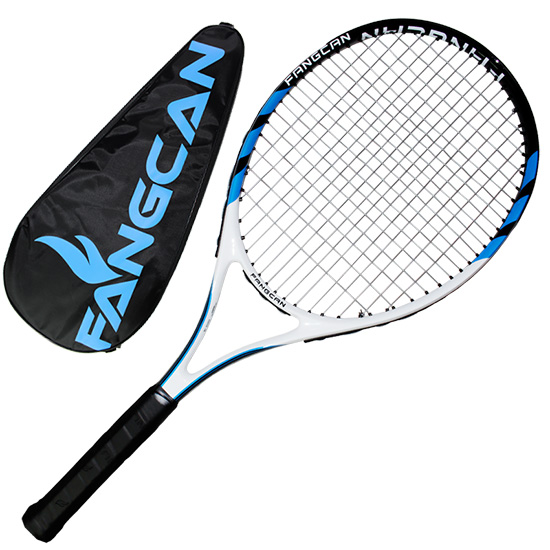
Where the rule sits
Competition rules cap racket length at 29 inches overall, with a maximum head width of 12.5 inches. Within that, 27 inches is the standard adult length and 27.5 is the most common extended option; longer frames exist, but they are specialist and harder to swing.
Because 29 inches is the ceiling, there is room above 27.5 — but the further you go, the more the frame behaves like a different sport. The limit is not the constraint that matters commercially; playability is.
What the extra length changes mechanically
Length moves mass away from the hand, so it raises swing weight even when the total mass is unchanged. It also raises the sweet spot in absolute terms, because the head is further from the pivot. And it increases the leverage available on the serve, which is why the category exists at all.
Those three effects come together. A player who gains reach also gains a frame that is slower to change direction at the net, and the trade is not adjustable after purchase.
Who the category is for
Extended frames are bought by players who serve and volley, by players with a two-handed backhand who want more room, and by shorter players looking for reach without changing their swing. They are a poor fit for players whose game depends on quick hands at the net.
That is a merchandising point rather than a technical one. A range that carries one extended model and explains who it is for sells more of the standard models, because the comparison does the selling.
Balance has to be specified with length
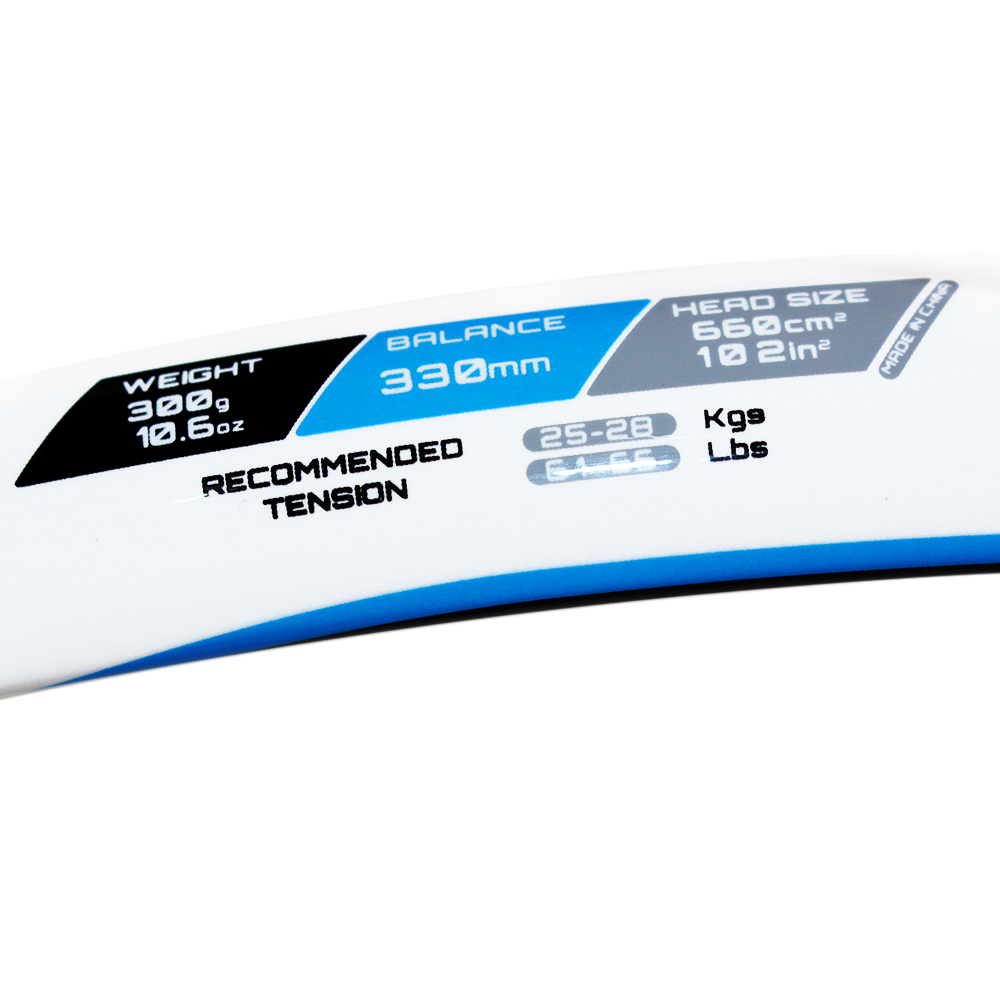
Balance point is measured from the butt cap, so a longer frame with the same balance number is not the same frame. Ten millimetres of extra length at the same balance figure shifts mass further out and raises swing weight more than the number suggests.
This is the same arithmetic that makes balance meaningless without length, and it is why a lengthened frame should be specified with all three figures: mass, balance and length.
What to ask before ordering
- Overall length, measured, and the tolerance on it.
- Strung and unstrung balance, at the stated length.
- Swing weight, measured, not calculated from the other two.
- Head size, since the extended category often pairs with a larger head.
- Grip length, because a longer frame usually needs a longer handle for a two-handed backhand.
The fifth item is routinely forgotten and immediately noticed by the customer. Extra length in the shaft does not help a two-handed backhand if the grip is the same length as a standard frame’s.
How it sits next to the standard models
The A8 and the A6 cover the standard-length range; an extended model belongs above them as a specific tool, not as a premium version of either. Positioning it as “the pro model” is the fastest way to sell it to the wrong player and get it returned.
Stringing an extended frame
A longer frame has more string in it, so the same reference tension produces a softer bed. Stringers who work mostly with 27-inch frames tend to string an extended frame at the same number and hand back something the player describes as loose.
The fix is a note in the specification: state the recommended tension band for the extended model separately from the standard one, and say whether it assumes the same string. Without that, the model will be judged on a stringing decision rather than on its design.
What the customer will actually complain about
Extended frames generate a predictable set of complaints, and knowing them in advance changes how a shop sells the product. The first is that the racket feels heavy, which is true and is the design intent — it is described as a defect only when nobody explained it. The second is that it feels slow at the net, which is the same trade seen from the other side.
The third is more interesting: players report that the frame feels different from the demo they tried. That usually means the demo was strung at a different tension, or that the model ordered was 27.5 while the demo was 27. Half an inch is invisible in a photograph and obvious in the hand, which is exactly why a shop should keep both lengths on the wall rather than in the storeroom.
Neither length should be sold as an upgrade, because neither is one.
Head size follows the same logic. A 100 square inch head is already the mainstream choice, and an extended frame with a 110 head is a different proposition again — the combination changes both reach and forgiveness, as set out in this note on head sizes.