

How Many Rackets Fit a 40HQ: The Carton Maths Buyers Get Wrong
A quotation says “40HQ holds approximately 4,000 rackets” and the buyer plans a season around it.
The container arrives, and the actual figure is 3,300 because the cartons were palletised and the pallets do not tessellate. The gap is not a lie; it is a calculation nobody showed.
Loading quantity is worth doing properly, because it sits directly on the freight cost per unit, and freight is often the second-largest line in a landed cost sheet.
Start from the carton, not the container
Every calculation begins with the outer carton: length, width, height in centimetres, and the number of units inside.
Multiply the three dimensions and divide by a million to get cubic metres. A carton of 78 × 42 × 34 cm is 0.111 m³; if it holds 30 rackets, each racket occupies 0.0037 m³ before any packing inefficiency.
That last phrase is where the estimates diverge. Cartons never fill a container exactly, and the unused space is real money.
Usable volume, not nominal volume
A 40HQ has a nominal capacity around 76 m³ and a practical usable volume closer to 65–68 m³ once you allow for the door area, the roof curvature and the fact that the last row rarely fits perfectly. A 20GP has roughly 33 m³ nominal and around 28 m³ usable.
Dividing by the nominal figure is how a supplier arrives at a number that cannot be loaded. Dividing by the usable figure and then applying a stacking pattern gets closer.
Pallet or floor-loaded
Palletising costs volume: a standard pallet is 120 × 100 cm and the deck plus the gap above it consumes height that cartons could have used. In most light-goods shipments, pallets reduce the loaded volume by 10–20% and add cost at both ends.
Floor loading recovers that volume but costs labour at destination and slows unloading. For rackets and bags, floor loading is normal; for goods going into an automated warehouse, pallets may be mandatory regardless of the arithmetic.
Weight is the other ceiling
A 40HQ is limited by road weight as much as by volume: many markets cap a laden container around 26–28 tonnes gross. Sporting goods are usually volume-limited rather than weight-limited, but dense items, dumbbells, weighted ropes, ball cartons, flip the constraint, and then the volume calculation is irrelevant.
The practical rule is to compute both and take the smaller number. Sellers who quote only one have usually quoted the flattering one.
What to put in the quotation
- Carton dimensions and units per carton, as measured, not estimated.
- Cartons per layer and layers per container, for the actual pattern used.
- Whether the quote assumes pallets or floor loading.
- Gross weight per carton and total gross weight.
- Whether mixed SKUs are loaded in one container, and how they are separated.
The fifth item is where small orders lose money.
Mixing ten SKUs in one container means partial layers, and partial layers mean unusable space. A buyer ordering a mixed container should expect the effective loading quantity to be lower than the sum of the individual optimisations, and should price accordingly.
Working it through for a bag order
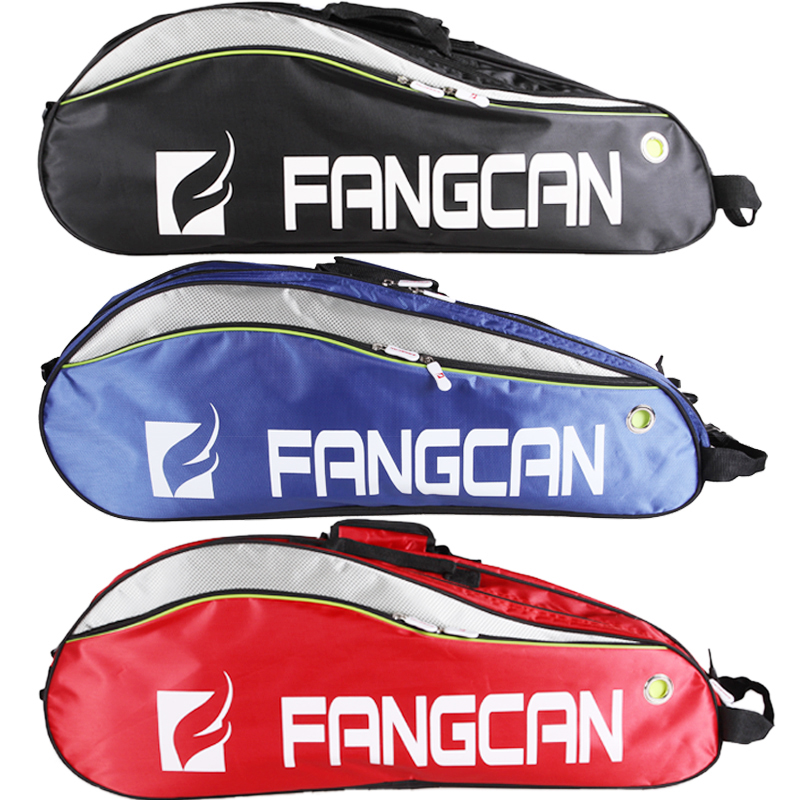
Take a carton of double-compartment racket bags at 0.09 m³ holding 10 pieces, floor loaded. At 66 m³ usable, that is 733 cartons, or 7,330 bags, before any loss for pattern. Apply a realistic 8% pattern loss and the number is around 6,700.
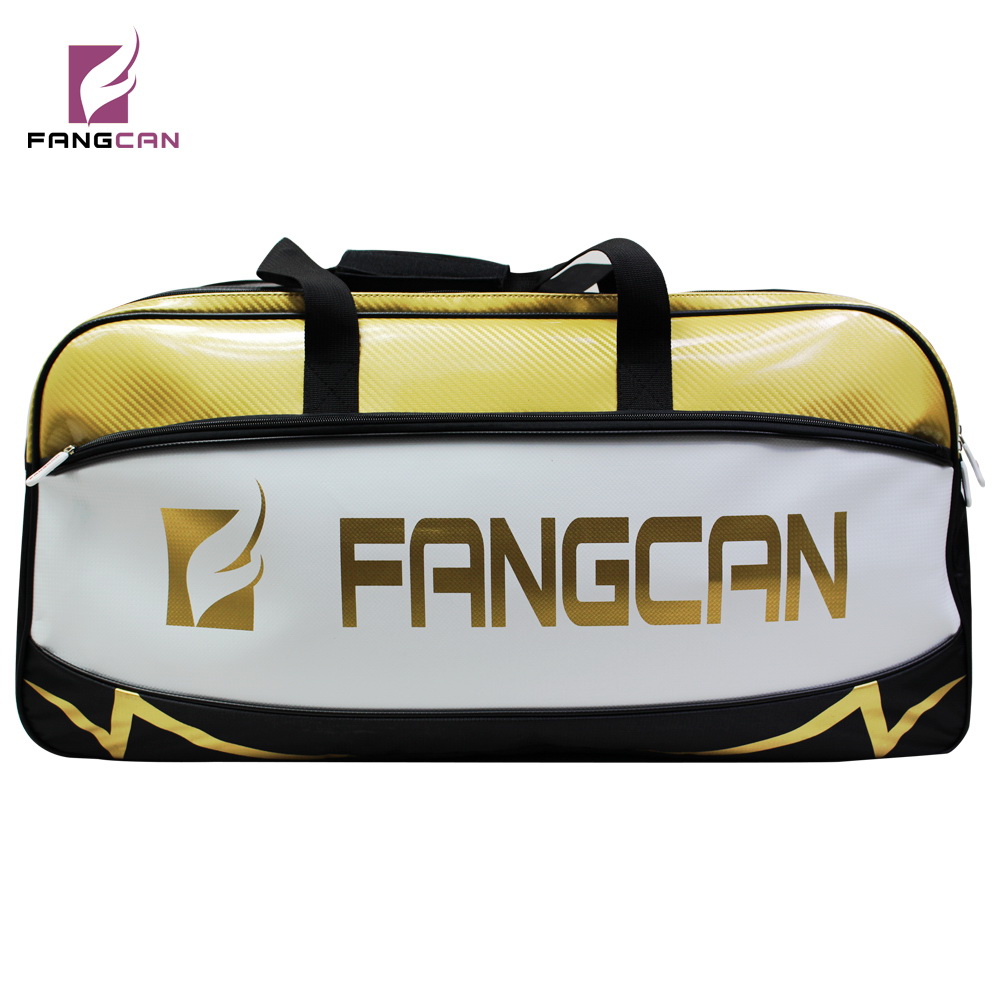
Now run the same order with a square sports bag in the same container: different carton, different units per carton, different answer. A mixed container of the two will not add the two figures, because the two carton sizes do not interlock.
Carton strength limits the pattern
How high a container is stacked is decided by the carton, not by the space.
A single-wall carton rated for four high will crush at six, even if the container has the height. That is why a loading calculation has to include a stacking figure and a safety margin on top of it.
Two practical additions: keep heavy SKUs at the bottom, and never stack cartons from different suppliers in the same column, because their compression strengths are not the same. Both rules cost nothing and prevent a claim that arrives as a photograph of a collapsed pallet.
The number to write on the quotation
A quotation that says “approximately 4000 pieces” invites a dispute the moment the loading list is finalised. A quotation that says “3300 pieces, floor loaded, 78 × 42 × 34 cm carton, 30 pieces per carton, 6 high” can be checked by the buyer with a calculator in two minutes, and it can be re-run for a different carton without renegotiating.
That level of detail also protects the seller.
When a buyer later adds a second SKU to the container, the loading figure has to be recomputed, and a seller who has shown the arithmetic can explain why the total is not the sum of two separate shipments. A seller who quoted a round number has no way to do that except by looking unreliable.
The habit worth building is simple: never quote a loading quantity without the carton dimensions next to it. Every argument about freight cost per unit starts with a number nobody can reproduce, and ends with someone paying for space that was never used.
None of this is complicated. It is arithmetic that has to be shown, and the carton measurements behind it have to be real, which is also what makes stacking strength and shipping marks worth agreeing at the same time.