

Elbow Sleeves and Ankle Supports: The Other Half of a Protection Range
A protection range usually grows from the wrist outward: wristbands first, because they sell in volume, then patella straps, because knee pain is common. The elbow and the ankle tend to arrive last, and they are where most ranges stop — which leaves a gap that a competitor fills with three SKUs.
The gap is worth closing, but not with the same logic. Elbow and ankle supports behave differently from wristbands: they are sized by joint circumference, they are usually worn during play rather than between points, and they are bought for a specific complaint rather than as a fashion item.
What an elbow sleeve is for
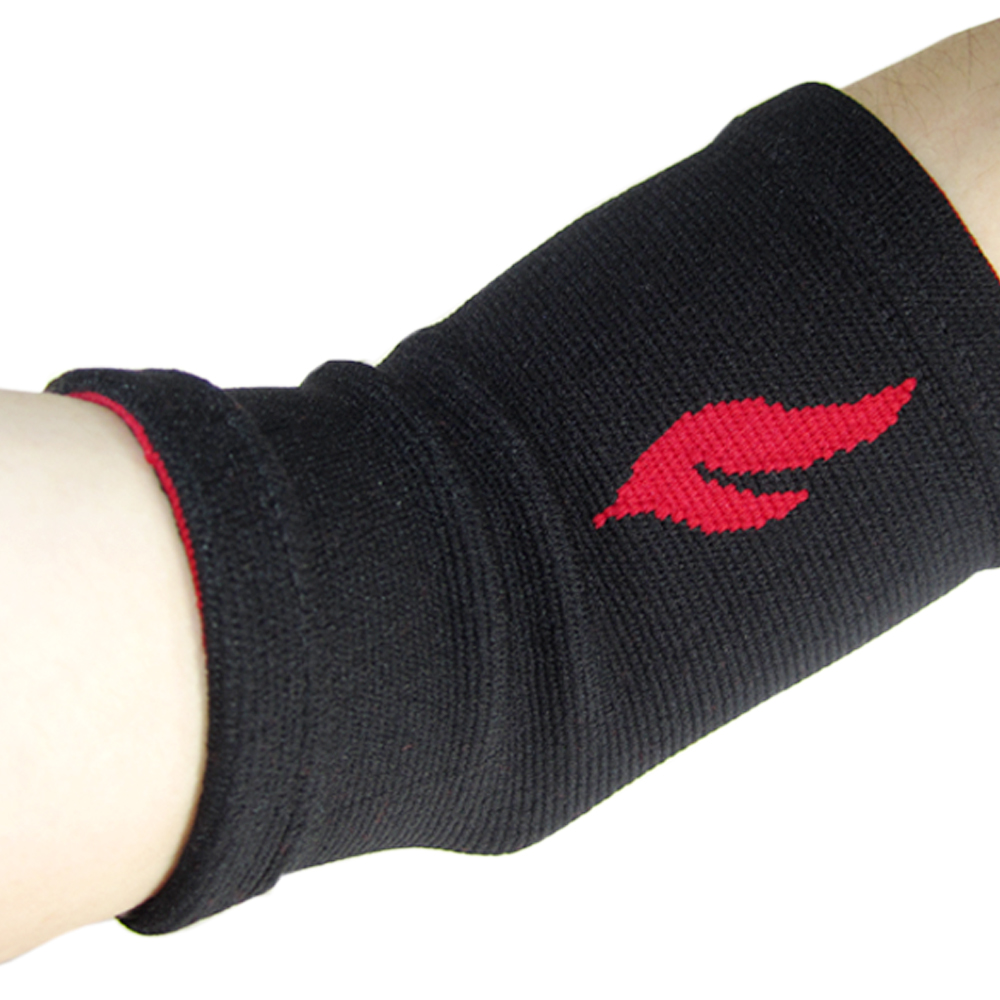
An elbow sleeve applies compression around the joint and, in some designs, a pad over the lateral epicondyle — the bony point on the outside of the elbow that becomes tender in the condition players call tennis elbow. The sleeve does not treat the tendon; it changes the load pattern and keeps the area warm.
That distinction matters commercially. A product sold as a treatment invites a claim; a product sold as support does not. The honest positioning is support during activity, which is also what the product actually does.
Ankle supports and the taping substitute
An ankle support exists because players tape, and taping is slow and expensive. A sleeve or a brace with figure-eight straps gives most of the stability of a taped ankle in a fraction of the time, and it can be adjusted during play.
The trade-off is bulk inside a shoe. A support thick enough to be effective will change how a shoe fits, which is why the specification has to include thickness at the heel and the instep, not just circumference.
Materials decide the price band
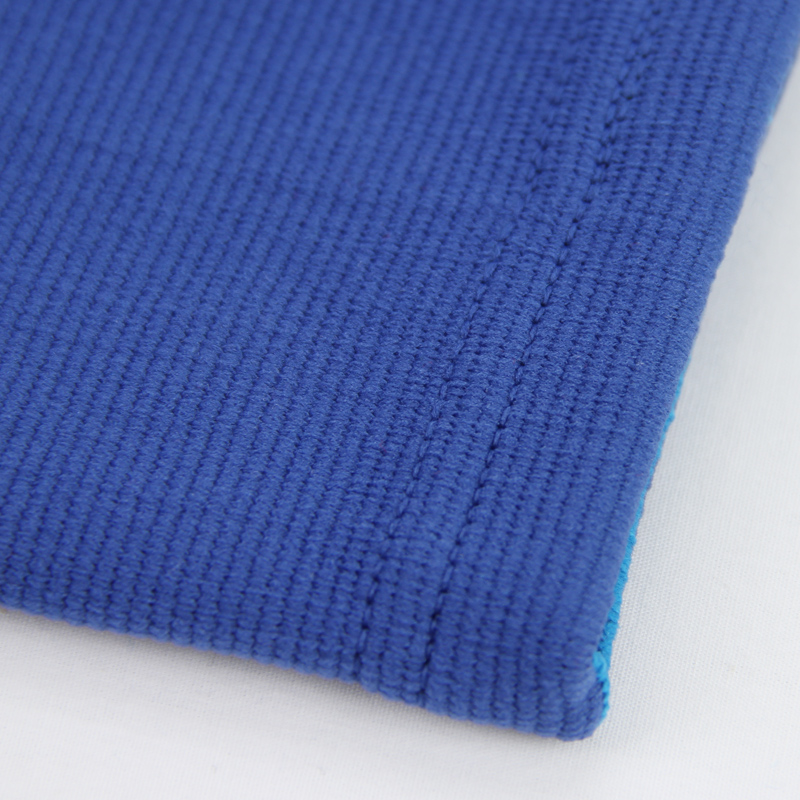
Knitted supports are breathable and thin, and they are the right answer for continuous wear. Neoprene gives more compression and retains heat, which is why it dominates in colder markets and in products sold for pain relief. Elastic bandage with a hook-and-loop closure is the cheapest form and the easiest to size, because it adjusts.
Each material has a different failure mode: knits lose elasticity at the cuff, neoprene delaminates at the seam, bandages fray at the cut edge. Those are the three things to inspect on arrival, and they are the three things a factory will fix if the specification named them.
Sizing is the whole product
- Circumference at the joint, and the range each size covers.
- Length along the limb, since a sleeve that is too short rolls.
- Thickness at the heel and instep for ankle products.
- Closure type and its adjustment range.
- Care instructions, because heat and detergent destroy elasticity.
The first item is where returns come from. A support sized in three bands will fit most players and pinch the ones at the boundaries; a support sized in five will fit nearly everyone and cost more to stock. The right number of sizes depends on whether the product is sold through a shop with a fitting bench or online without one.
How it fits the range
The natural extension runs from the existing knit: a knitted sports sleeve uses the same machines and the same yarns as a wrist sleeve, so adding an elbow version is a low-tooling decision. Ankle support is a different construction and usually a different supplier.
Compression is a specification, not a feeling
Sleeves are sold on “compression”, which is not a number on any label. In clinical and textile testing, compression is measured in millimetres of mercury at defined points along the limb, and the value changes with the knit structure, the yarn and the size.
A factory cannot quote that figure without testing equipment, and most do not have it. What can be specified instead is the practical proxy: the force needed to stretch a defined band by a defined amount, measured on a tensile tester. It is not the same number, but it is repeatable, and it separates a support that grips from one that slides.
For a buyer, this is the difference between a product that can be described on a listing and one that can only be described with adjectives.
The range map most distributors never draw
Laid out properly, a protection range is a grid rather than a list: joint by mechanism. Wrist, elbow, knee, ankle on one axis; compression sleeve, strap, bandage, pad on the other. Most catalogues fill four or five cells and leave the rest empty, which is why the range feels both crowded and incomplete.
The empty cells are the opportunity. A knee already covered by a patella strap does not need another strap; it needs a full sleeve for a player whose complaint is general rather than localised. An ankle covered by a bandage does not need another bandage; it needs a support that stays in place during lateral movement.
Drawing the grid takes an afternoon and usually reveals that two products in the range are competing for the same cell, while three cells are empty. That is a merchandising finding, not a manufacturing one, and it is the cheapest kind of range expansion available.
Bandage is the third leg and the cheapest entry point, which is why cotton sports bandage is often the first protection product a new distributor stocks. It also pairs naturally with the wrist range described in this note on the four wristband types, because the same customer buys both.